
Current real estate market data, news and analysis for the Lawrence, KS metropolitan area — 120,920 residents across Douglas county.
Data as of May 2026. Sources: Redfin Data Center, U.S. Census Bureau.
Latest Lawrence Real Estate News
Coverage of this market is coming soon. Browse all housing market news.
Lawrence Real Estate Market Overview
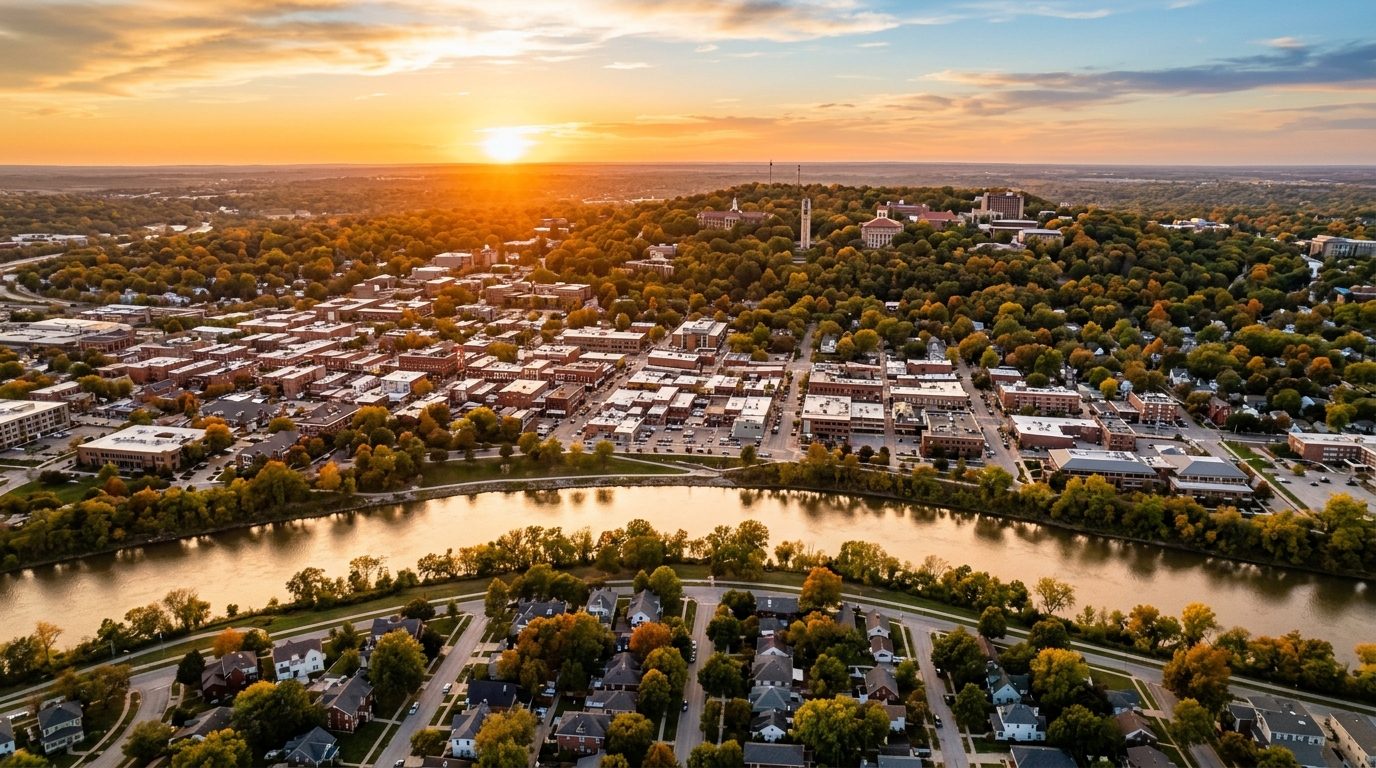
Lawrence sits along the Kansas River in northeastern Kansas, roughly midway between Topeka and Kansas City, with the smaller Wakarusa River defining the metro’s southern edge. The city rises from the river bottoms in North Lawrence up a series of low bluffs toward Mount Oread, the hill that anchors the University of Kansas campus, before leveling into rolling prairie terrain to the west and south where most newer subdivisions have been built. Housing stock reflects this layered growth: brick and frame homes from the late nineteenth and early twentieth centuries cluster near downtown and campus, mid-century ranch and split-level houses fill blocks built during the university’s postwar expansion, and contemporary houses, duplexes, and townhomes dominate newer subdivisions along the west and southwest edges. Beyond Lawrence itself, the surrounding towns of Eudora, Baldwin City, and Lecompton retain a more rural, small-town character, with older farmhouses mixed among newer subdivisions built for commuters.
Homes closest to the University of Kansas campus and the historic downtown corridor along Massachusetts Street tend to command higher prices, prized for walkability, mature tree canopy, and century-old architectural detail, even though many are smaller and require more upkeep than newer construction. Neighborhoods just west of campus, built up in the postwar decades with larger lots and established landscaping, also draw a premium for combining proximity to downtown with a quieter residential feel. Farther west and south, homes tend to be larger and more energy-efficient but trade some central-city walkability for a more conventional suburban layout. North Lawrence, separated from downtown by the river, and pockets of East Lawrence historically tied to the rail corridor, have traditionally been more affordable, though renovation and infill activity has been narrowing that gap in parts of both areas.
The University of Kansas is the dominant force in the local economy, employing a large share of the workforce across its teaching, research, and medical operations and drawing a steady flow of students, faculty, and researchers who shape housing demand citywide. Lawrence Public Schools and the City of Lawrence are major public-sector employers, while Lawrence Memorial Hospital anchors local health care. Private employers with a long history here include Hallmark Cards, which operates a manufacturing and distribution facility in the city, and The World Company, the local media firm. Douglas County government and a mix of light manufacturing and logistics firms round out the employment base, keeping the economy comparatively insulated from swings affecting more industrial or agricultural regions.
Buyers should pay attention to the Kansas River floodplain, which runs through North Lawrence and portions of the river bottoms; the city maintains flood hazard maps and participates in a federal floodplain management program that can affect insurance requirements in mapped flood zones, worth checking before making an offer there. Kansas property taxes are levied by several overlapping jurisdictions, including the county, city, and local school district, with effective rates varying by neighborhood and attendance zone. As a university town, Lawrence has a substantial off-campus rental market concentrated near campus, shaping both investor demand and the owner-occupied-versus-rental mix; buyers wanting a more settled character often look farther from campus. Zoning and infill density remain active local debates, and public transit is limited mostly to campus and city bus routes, making a car nearly essential outside the walkable core.
Cities and Towns in the Lawrence Metro Area
Notable Communities and Neighborhoods
Lawrence Real Estate Market FAQ
How is the Lawrence housing market organized geographically?
The market radiates outward from the University of Kansas campus and downtown Lawrence. Older, historic homes cluster near campus and the Massachusetts Street corridor, mid-century housing fills the neighborhoods built during the university’s postwar growth, and newer subdivisions extend along the western and southwestern edges of the city. North Lawrence, across the Kansas River, and the surrounding small towns of Eudora, Baldwin City, and Lecompton form the outer ring of the metro.
Which Lawrence neighborhoods tend to be pricier, and why?
Areas closest to campus and downtown, such as Old West Lawrence and Oread, along with established neighborhoods just west of campus, tend to draw premium pricing for their walkability, mature landscaping, and architectural character. Newer subdivisions in west and southwest Lawrence also command higher prices for larger, more energy-efficient homes, while areas farther from campus and downtown, including parts of North Lawrence and East Lawrence, have historically been more affordable.
What should buyers verify before making an offer in the Lawrence market?
Buyers should confirm a property’s flood zone status with the city or county, check the specific tax jurisdictions and school attendance zone that apply, and, in neighborhoods near campus, verify whether nearby properties are used as long-term rentals versus owner-occupied homes, since that mix can vary block by block in a university town.
Is flood risk a concern for real estate in the Lawrence area?
Yes, in specific areas. The Kansas River floodplain affects North Lawrence and portions of the river bottoms, and the city maintains flood hazard maps and participates in a floodplain management program. Properties in or near mapped flood zones can carry additional insurance requirements, so buyers should check flood determination before purchasing in those areas; most of the rest of the metro sits well above the floodplain.
Nearby Markets