
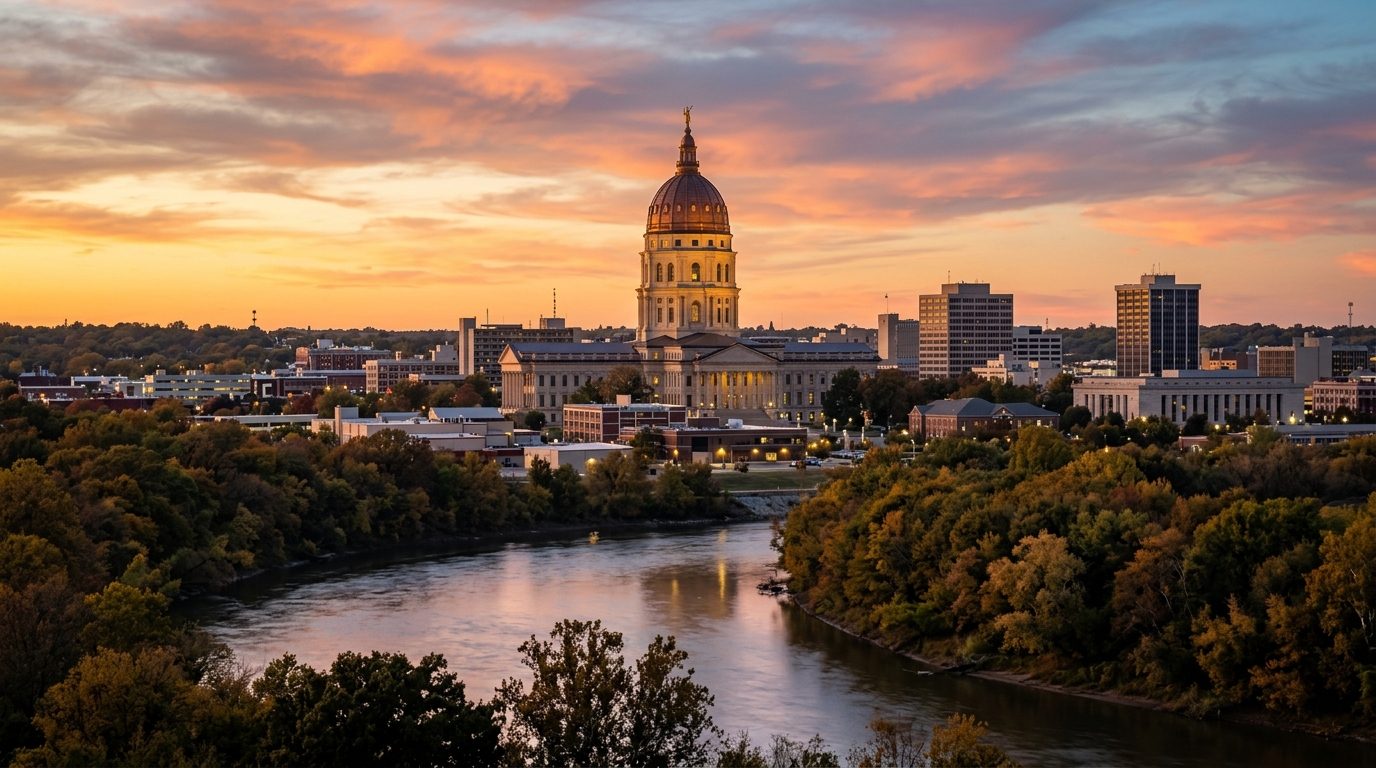
Current real estate market data, news and analysis for the Topeka, KS metropolitan area — 233,052 residents across 5 counties in Kansas.
Data as of May 2026. Sources: Redfin Data Center, U.S. Census Bureau.
Latest Topeka Real Estate News
Coverage of this market is coming soon. Browse all housing market news.
Topeka Real Estate Market Overview
Topeka is the capital of Kansas and sits along the Kansas River, known locally as the Kaw, in the northeastern part of the state on gently rolling plains. The metro area extends across a mix of the city itself, its surrounding suburbs, and a wide ring of smaller farm towns spread across several rural counties. Downtown, the Statehouse, and the oldest residential neighborhoods sit close to the river’s south bank, with the city spreading outward in rough rings of increasingly newer construction toward the west and southwest. Housing stock ranges from brick Victorian and craftsman homes in the historic core to postwar ranch houses in inner-ring neighborhoods and newer subdivisions on the city’s growing edge.
Central historic districts near Washburn University, including Potwin Place and Westboro, command a premium for their tree-lined streets, mature landscaping, and architecturally distinctive homes, many listed on historic registers. Newer subdivisions in west and southwest Topeka, closer to the Wanamaker Road retail and commercial corridor, also draw higher prices because of newer construction and convenient access to shopping and services. North Topeka, across the river from downtown, and older core neighborhoods such as Oakland and Highland Park tend to be more affordable, reflecting older housing stock and, in parts of North Topeka, ongoing revitalization efforts. Proximity to the river floodplain, rather than to the river itself, is a more relevant price factor here than water views, since the Kansas River does not carry the recreational cachet of a coastline or major lake.
As the state capital, Topeka’s economy is anchored by state government employment, supplemented by a diversified base of healthcare, insurance, manufacturing, and transportation employers. Stormont Vail Health and the University of Kansas Health System’s St. Francis campus are major hospital employers, and the Colmery-O’Neil VA Medical Center adds a federal healthcare presence. Blue Cross Blue Shield of Kansas and Security Benefit are both headquartered in Topeka and anchor its insurance and financial services sector. BNSF Railway maintains a significant operational presence reflecting the city’s historic role as a railroad hub. Hill’s Pet Nutrition operates a large manufacturing facility in the area. Washburn University and Topeka Public Schools add to the base of stable public and quasi-public employment that keeps the local economy comparatively insulated from broader economic swings.
Kansas sits within the central Plains tornado corridor, and Topeka itself has been struck by a destructive tornado in the past, so buyers should expect storm shelters, safe rooms, or basements to be a normal part of local home shopping and insurance conversations. Property taxes are assessed by Shawnee County and vary by school district and municipal mill levy, with a homestead exemption available to reduce the taxable value of an owner-occupied primary residence. The metro’s flat terrain limits flood exposure to defined floodplain areas along the Kansas River and its tributaries, which buyers should check against FEMA maps rather than assuming risk based on elevation alone. Development has generally spread outward on open land, so newer subdivisions on the city’s edges are common relative to infill construction.
Cities and Towns in the Topeka Metro Area
Notable Communities and Neighborhoods
Topeka Real Estate Market FAQ
How is the Topeka metro organized geographically?
Topeka is the Kansas state capital and county seat of Shawnee County, sitting along the Kansas River, with downtown and the Statehouse close to the river’s south bank. The city spreads outward from a historic core in rough rings, with older neighborhoods closer in and newer subdivisions toward the west and southwest edges. The broader metro also includes a wide ring of small farm towns spread across several surrounding rural counties.
Which Topeka neighborhoods tend to be pricier, and why?
Central historic districts near Washburn University, such as Potwin Place and Westboro, draw a premium for their mature landscaping, architecturally distinctive homes, and historic-register status. Newer subdivisions in west and southwest Topeka near the Wanamaker retail corridor also command higher prices because of newer construction and convenient access to shopping. Older core neighborhoods and areas across the river in North Topeka tend to be more affordable, reflecting older housing stock.
What should Topeka home buyers verify locally before making an offer?
Buyers should check whether a home has a basement, safe room, or storm shelter, since severe weather preparedness is a routine local consideration. It is also worth confirming a property’s flood zone status if it sits near the Kansas River or a tributary, and checking the applicable property tax mill levy, which varies by school district and municipality within the metro.
What is the biggest region-specific risk for Topeka property owners?
Tornado and severe convective storm risk is the defining regional hazard, since Topeka sits within the central Plains tornado corridor and has experienced a destructive tornado in the past. This makes storm shelters, safe rooms, and basements a standard part of local home shopping, and buyers should discuss wind and hail coverage specifically with insurers rather than assuming standard homeowners policies fully address it.
Nearby Markets