
Current real estate market data, news and analysis for the Las Cruces, NM metropolitan area — 229,091 residents across Doña Ana county.
Data as of May 2026. Sources: Redfin Data Center, U.S. Census Bureau.
Latest Las Cruces Real Estate News
Las Cruces Real Estate Market Overview
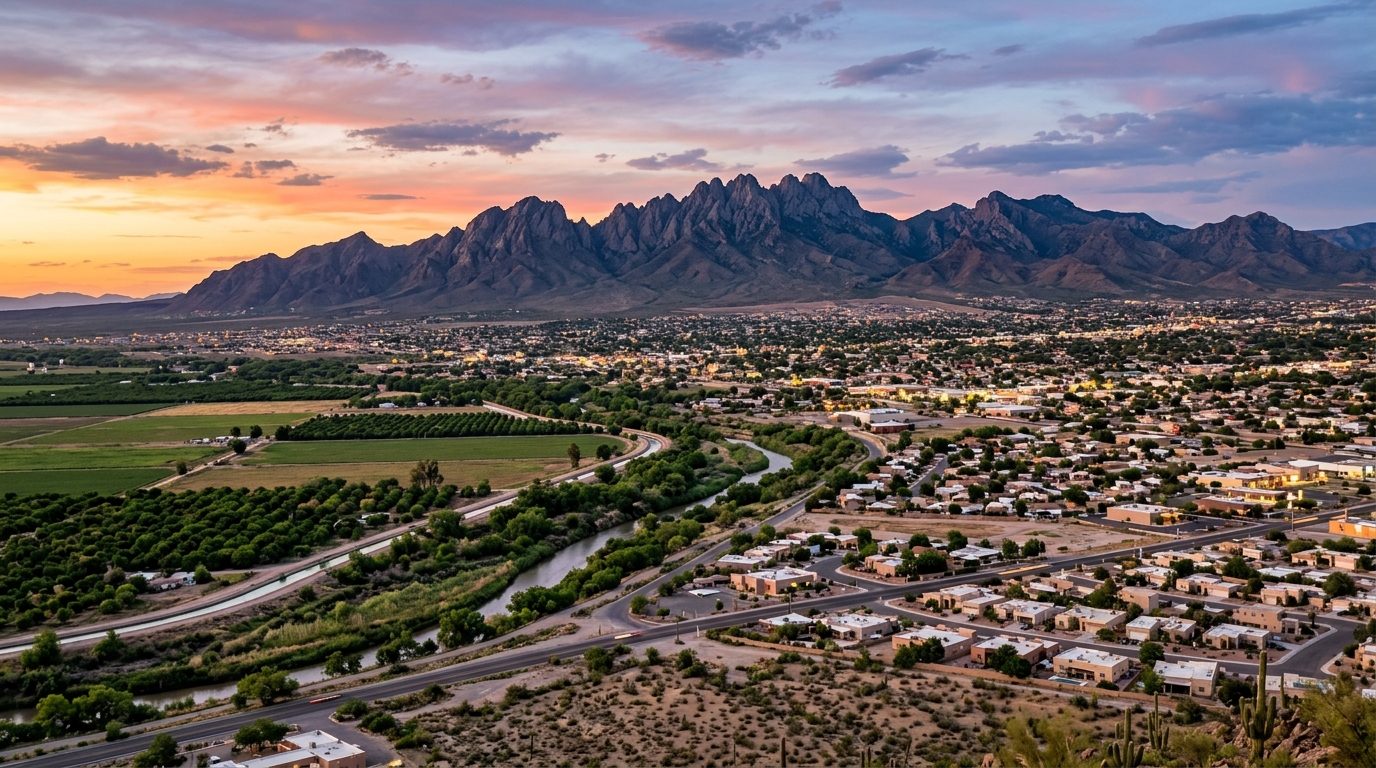
Las Cruces sits in the Mesilla Valley, a strip of irrigated farmland following the Rio Grande through the Chihuahuan Desert in the southern tip of New Mexico. The Organ Mountains rise sharply along the eastern edge of the city, while the valley floor and the West Mesa spread out flat and open toward the river and the Texas border. Housing stock reflects the desert setting: single-story stucco and adobe-style homes with flat or low-pitched rooflines dominate, a legacy of both the region’s Spanish Colonial and Territorial building traditions and modern energy-conscious construction. Older core neighborhoods mix modest brick and frame houses with historic adobe compounds, while newer subdivisions on the mesas favor stucco tract homes on larger, xeriscaped lots.
Price tiers in Las Cruces track proximity to mountain views, golf amenities, and distance from older industrial and commercial corridors. Picacho Hills, west of the Rio Grande and outside city limits, commands some of the highest prices thanks to its private country club, golf course, and sweeping views back across the valley toward the Organ Mountains. Sonoma Ranch, on the east side, pairs similar mountain-view appeal with a public golf course and newer construction. Mesilla, the historic village adjoining the city, draws a premium for its adobe architecture, plaza, and pecan-orchard setting. Central and south Las Cruces, with older, smaller housing stock near commercial strips and rail lines, tends toward the lower end of the market, as does much of the university-adjacent rental zone.
The local economy is anchored by New Mexico State University, the region’s largest single employer, and by the federal government presence at White Sands Missile Range and NASA’s White Sands Test Facility in the foothills east of town. Public-sector employment extends further through Las Cruces Public Schools, the City of Las Cruces, and Dona Ana County government. Health care is a major employment sector as well, led by Memorial Medical Center and MountainView Regional Medical Center. Agriculture remains economically significant in the surrounding valley, with chile peppers, pecans, onions, and dairy operations supporting processing and distribution jobs, while cross-border trade and manufacturing tied to the Santa Teresa port of entry add a growing industrial component.
Buyers should weigh a handful of desert-specific factors. Wildfire risk is concentrated in the mountain foothills and canyon subdivisions on the city’s edges, where wildland vegetation meets development, while low-lying areas near arroyos face flash-flood risk during summer monsoon storms even though annual rainfall is otherwise sparse; local floodplain and arroyo drainage maps are worth checking before purchase. Water supply and irrigation rights tied to the Rio Grande and to older agricultural parcels can be complicated and should be verified directly with the relevant irrigation district or water authority. Property tax rates differ between land inside Las Cruces city limits and unincorporated Dona Ana County, and some outlying subdivisions rely on private wells or septic systems rather than municipal water and sewer, both worth confirming before closing.
Cities and Towns in the Las Cruces Metro Area
Notable Communities and Neighborhoods
Las Cruces Real Estate Market FAQ
How is the Las Cruces housing market organized geographically?
The market centers on the Mesilla Valley along the Rio Grande, with the historic core and downtown near the river, the West Mesa and Picacho Hills across the river to the west, and the East Mesa and foothill subdivisions climbing toward the Organ Mountains. Most new construction in recent years has occurred on the east side of the city, while the historic village of Mesilla and the older downtown grid retain the oldest housing stock.
Which parts of Las Cruces tend to be pricier, and why?
Picacho Hills, an unincorporated area west of the city with a private golf club and valley views, and Sonoma Ranch on the east side, a master-planned community with its own golf course and mountain views, both sit at the higher end of the market. Historic Mesilla also commands a premium for its adobe architecture and plaza setting. Older central and southern neighborhoods with smaller, dated homes generally price lower.
What should buyers verify locally before purchasing in the Las Cruces area?
Buyers should confirm whether a property is inside Las Cruces city limits or unincorporated Dona Ana County, since tax rates and services differ, check whether water and sewer are municipal or private well and septic, and, for older agricultural parcels, verify any attached water or irrigation rights directly with the local irrigation district rather than relying on listing descriptions.
What is the main climate-related risk to understand in Las Cruces?
The desert setting brings two related hazards: wildfire risk concentrated in foothill and canyon areas where development meets wildland vegetation, and flash-flood risk in low-lying areas near arroyos during summer monsoon storms, even though the region receives little rainfall overall. Reviewing current floodplain and arroyo drainage maps for a specific address is worthwhile before buying.
Nearby Markets