
Current real estate market data, news and analysis for the Albuquerque, NM metropolitan area — 925,279 residents across Bernalillo, Sandoval, Torrance and Valencia counties.
Sources: U.S. Census Bureau.
Latest Albuquerque Real Estate News
Coverage of this market is coming soon. Browse all housing market news.
Albuquerque Real Estate Market Overview
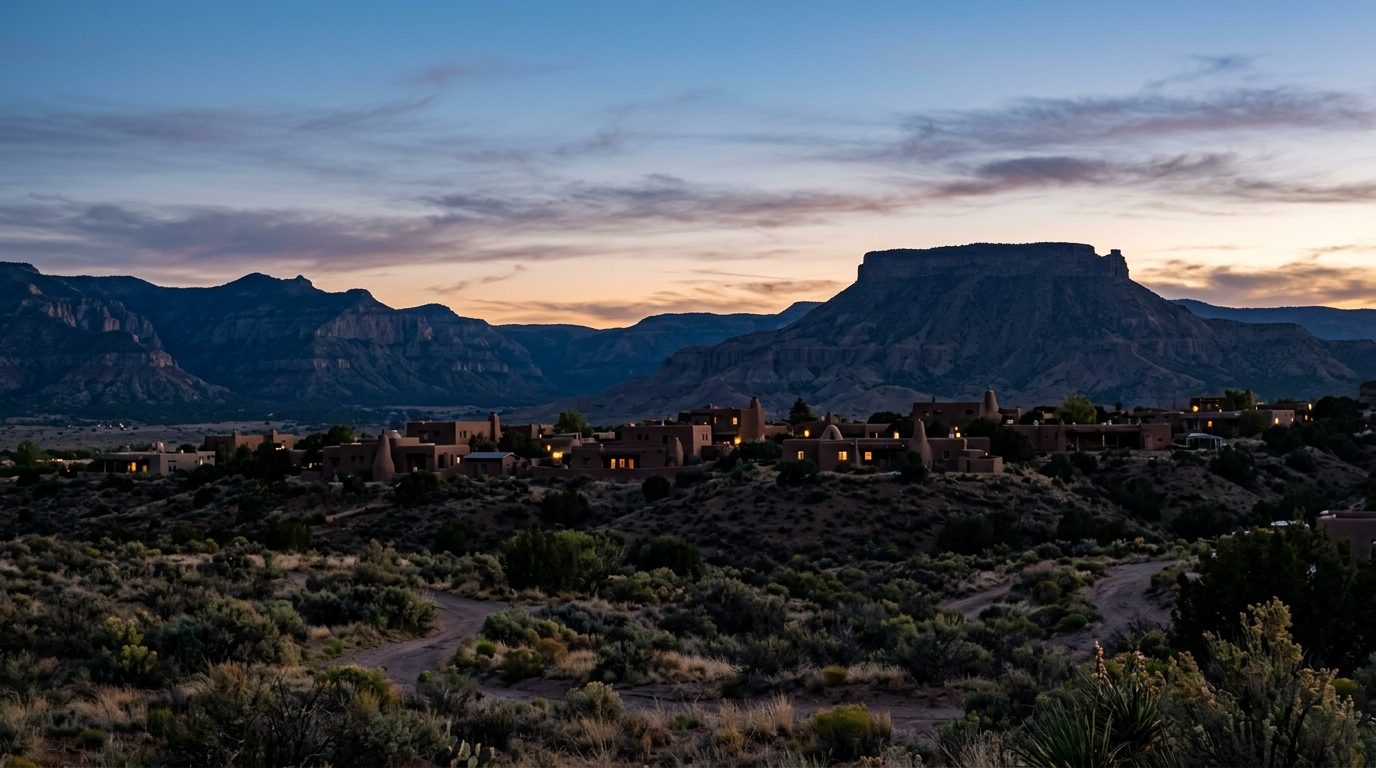
Albuquerque sits in the Rio Grande Valley at over a mile of elevation, framed by the fault-block Sandia Mountains to the east and the volcanic West Mesa escarpment across the river to the west — a high-desert setting with intense sun, wide temperature swings, and a cottonwood-lined bosque tracing the Rio Grande through the city. Housing stock varies with era and geography: adobe and Pueblo Revival homes cluster in Old Town and the North Valley, mid-century subdivisions from the Route 66 era fill the near Heights, newer suburban tract housing dominates Rio Rancho and the outer Southeast and Northwest, and rural, large-lot properties with working irrigation ditches persist in the valley villages and in Corrales.
The Northeast Heights, especially foothill neighborhoods close to the Sandias, sit toward the top of the market, built up over decades and valued for mountain views and easy access to hiking and biking terrain near Kirtland Air Force Base and Sandia National Laboratories. Corrales, an incorporated village that has deliberately resisted annexation and dense development since the 1970s, occupies a similar tier for different reasons — large lots, orchards, vineyards, and horse pasture inside a metro area that has otherwise suburbanized around it. The South Valley, by contrast, is one of the region’s more affordable areas, a historic farming community along acequia-irrigated land whose lower cost reflects a longer history of underinvestment relative to the Heights. The older core and West Central corridor likewise skew more affordable than the Heights or Corrales, with housing stock reflecting an earlier, denser era of the city’s growth.
Federal institutions dominate the employment base: Kirtland Air Force Base and the co-located Sandia National Laboratories are among the state’s largest employers, doing engineering and nuclear-security research, and the University of New Mexico anchors both education and a large share of local jobs. Healthcare is a major sector as well, led by Presbyterian Healthcare Services alongside UNM Health and Lovelace. Film and television production has become a genuine growth industry on the strength of New Mexico’s production tax incentives, with a major studio operation in the city drawing sustained investment. Rio Rancho carries its own distinct economic base in semiconductor manufacturing, anchored by a long-established and recently expanded chip-packaging plant.
Wildfire risk is real and rising in the Sandia foothills and the East Mountains communities toward Tijeras, Moriarty, and Estancia, and is worth checking for any property backing up to open wildland. Water scarcity is a persistent regional planning concern given a river basin that has spent much of the past quarter-century in drought. Older valley neighborhoods, particularly in the South Valley, carry acequia irrigation easements and community water obligations that buyers should understand before purchasing land there. New Mexico’s property tax rates are comparatively modest, though a state cap that limits annual increases in assessed value resets to full market value upon sale, meaning a long-time owner’s tax bill can look very different from a new buyer’s on an identical home. The Rail Runner commuter rail connects several of the metro’s outlying towns to the city center, a genuine transit option in an otherwise car-oriented region.
Cities and Towns in the Albuquerque Metro Area
Notable Communities and Neighborhoods
Albuquerque Real Estate Market FAQ
How is the Albuquerque housing market organized?
It ranges from historic adobe-style homes near Old Town and the North Valley to mid-century Heights subdivisions, newer suburban tract housing in Rio Rancho, and large-lot rural properties in Corrales and the valley villages.
Which areas tend to be pricier and which more affordable?
The Northeast Heights foothills and Corrales sit toward the top of the market, while the South Valley, the older core, and the West Central corridor tend to be more affordable.
What should buyers verify before purchasing here?
For any property in the South Valley or other older irrigated areas, confirm acequia easements and water obligations tied to the land; for foothill or East Mountain properties, check wildfire risk and defensible-space requirements.
What regional risk factor is most important to understand?
Water scarcity is a long-term planning concern across the Rio Grande basin, and New Mexico’s property tax assessment cap means taxes can jump significantly for a new buyer relative to the prior owner — worth factoring into a purchase budget.
Nearby Markets