
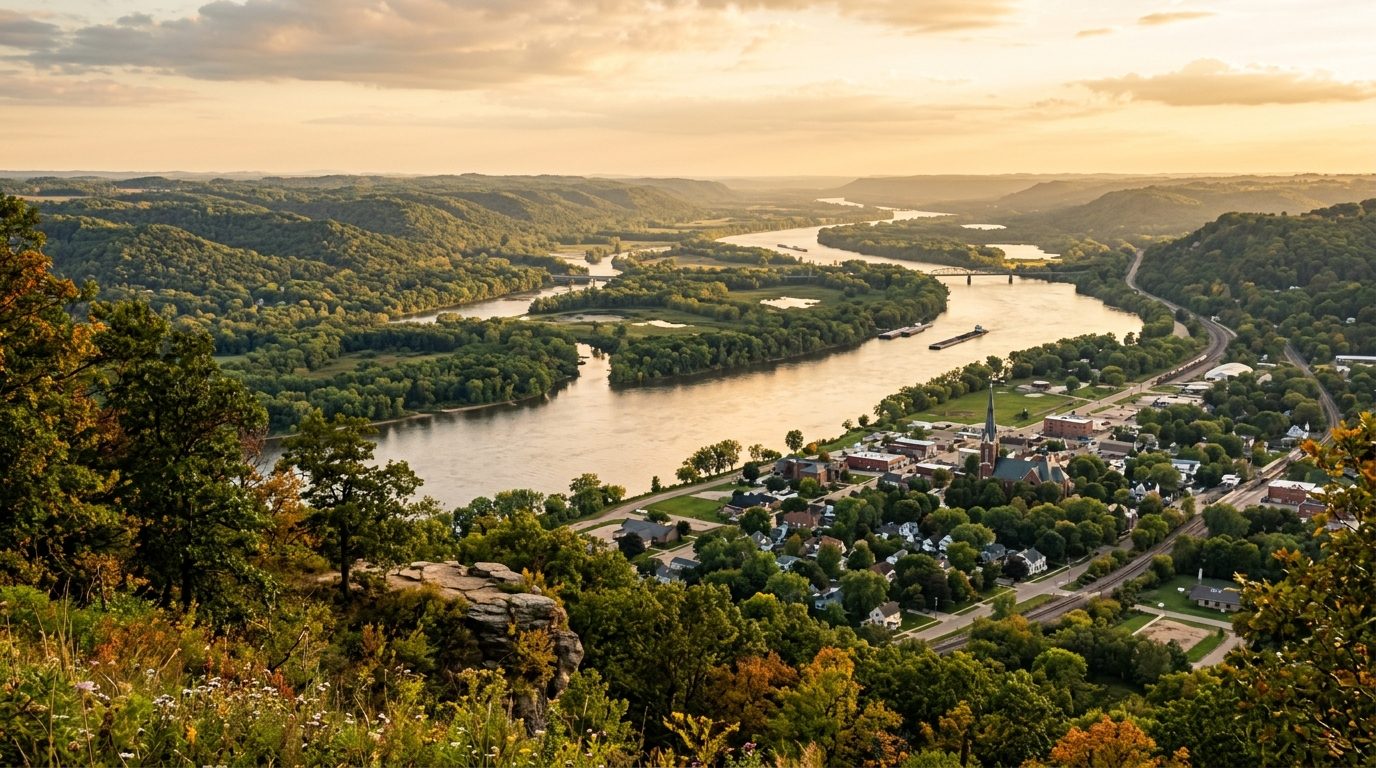
Current real estate market data, news and analysis for the La Crosse-Onalaska, WI-MN metropolitan area — 171,182 residents across Houston, MN, La Crosse, WI and Vernon, WI counties.
Data as of May 2026. Sources: Redfin Data Center, U.S. Census Bureau.
Latest La Crosse Real Estate News
Coverage of this market is coming soon. Browse all housing market news.
La Crosse Real Estate Market Overview
The La Crosse-Onalaska metro sits within the Driftless Area, the unglaciated region of western Wisconsin and southeastern Minnesota bypassed by the last continental ice sheets, producing steep, forested bluffs, narrow spring-fed valleys known locally as coulees, and karst limestone terrain cut through by the Mississippi River and its tributaries, the Black and La Crosse rivers. The urban core — La Crosse, Onalaska, Holmen and La Crescent, Minnesota — occupies the narrow, flat river-bottom land squeezed between the Mississippi and the surrounding bluffs, limiting buildable flat land and pushing newer development onto bluff tops or into the rolling farmland around Holmen and West Salem. Housing stock in La Crosse’s older, river-adjacent neighborhoods includes Victorian, Craftsman and bungalow homes, while Onalaska, Holmen and outlying Vernon and Houston county towns have seen more recent subdivision growth. Rural Vernon and Houston counties remain agricultural, home to an active organic-farming sector and one of Wisconsin’s larger Amish settlements around Cashton, Ontario and La Farge.
Scenic, bluff-driven scarcity sets the top of the local market. Bluff-adjacent areas near Grandad Bluff on La Crosse’s east side command a premium for wooded lots and river-valley views that the terrain itself makes inherently limited, and La Crescent, Minnesota, sitting along the bluffs across the river on designated scenic byways, carries a similar view-driven premium along with a small-town, orchard-country character. Onalaska and Holmen have grown with newer-construction subdivisions and strong local schools, trading a longer commute into La Crosse for newer housing stock. French Island, low-lying between the Mississippi and Black rivers, has historically carried lower property taxes tied to its town rather than city governmental status, offset by real flood exposure; it recently incorporated as its own village, worth confirming when researching a specific property. Rural towns in Vernon and Houston counties are generally more affordable, though Viroqua stands out for the organic-food economy it has built around itself.
Healthcare, food and beverage, and manufacturing anchor the local economy. Gundersen Health System, a physician-led nonprofit founded in La Crosse, and Mayo Clinic Health System’s Franciscan Healthcare hospital are the metro’s two major health systems. Kwik Trip is headquartered on a large corporate campus in La Crosse, and Trane, the HVAC company, was founded there and still operates a manufacturing and engineering campus. City Brewing Company operates out of the historic downtown site that once housed G. Heileman Brewing, and OptumServe, a health-services company founded in La Crosse and now part of UnitedHealth Group, remains headquartered downtown. The University of Wisconsin-La Crosse, Viterbo University and Western Technical College anchor higher education, and Organic Valley, the country’s largest farmer-owned organic cooperative, is headquartered in La Farge.
Flood risk from the Mississippi and Black rivers is a genuine, metro-defining factor: levees built after a historic flood decades ago were constructed quickly and were never formally certified to federal engineering standards, so river-adjacent buyers should independently verify current flood-zone status rather than assume levee protection is federally recognized. French Island has a documented history of periodic flooding and voluntary evacuations. Because the metro straddles Wisconsin and Minnesota, cross-border commuters should expect to file income tax in both states, and Wisconsin’s higher property tax rate versus Minnesota’s homestead exclusion is worth weighing when comparing the two sides of the river. Rural buyers in the karst counties should have septic and well water checked.
Cities and Towns in the La Crosse Metro Area
Notable Communities and Neighborhoods
La Crosse Real Estate Market FAQ
How is the La Crosse-Onalaska market organized?
The metro is built along the Mississippi River in Wisconsin’s Driftless Area, with the city of La Crosse, Onalaska and Holmen forming the urban core on the Wisconsin side, La Crescent, Minnesota sitting across the river, and rural Vernon and Houston county towns filling out the surrounding bluff-and-coulee countryside.
Which parts of the La Crosse-Onalaska area tend to be pricier?
Bluff-adjacent and bluff-top property near Grandad Bluff, and view lots in La Crescent, Minnesota, tend to command the most, reflecting how scarce buildable land with river-valley views is in this terrain. Onalaska and Holmen offer newer construction and strong schools at a somewhat lower price than the bluff areas, in exchange for a longer commute.
What should buyers verify locally in La Crosse-Onalaska?
River-adjacent buyers should independently verify current FEMA flood-zone status for any property, since the levees protecting parts of La Crosse were built quickly after a 1965 flood and were never formally certified to federal standards. Buyers considering the Minnesota side of the metro should also understand that Wisconsin-Minnesota income-tax reciprocity for cross-border commuters ended in 2010.
What’s a region-specific risk to know about in La Crosse-Onalaska?
Flooding along the Mississippi and Black rivers is a genuine, recurring risk in low-lying parts of the metro, particularly French Island, which has a documented history of periodic flooding and voluntary evacuations. Buyers near either river should treat flood-zone verification as a standard part of due diligence rather than an afterthought.
Nearby Markets