
Current real estate market data, news and analysis for the Helena, MT metropolitan area — 97,153 residents across Broadwater, Jefferson and Lewis and Clark counties.
Data as of May 2026. Sources: Redfin Data Center, U.S. Census Bureau.
Latest Helena Real Estate News
Coverage of this market is coming soon. Browse all housing market news.
Helena Real Estate Market Overview
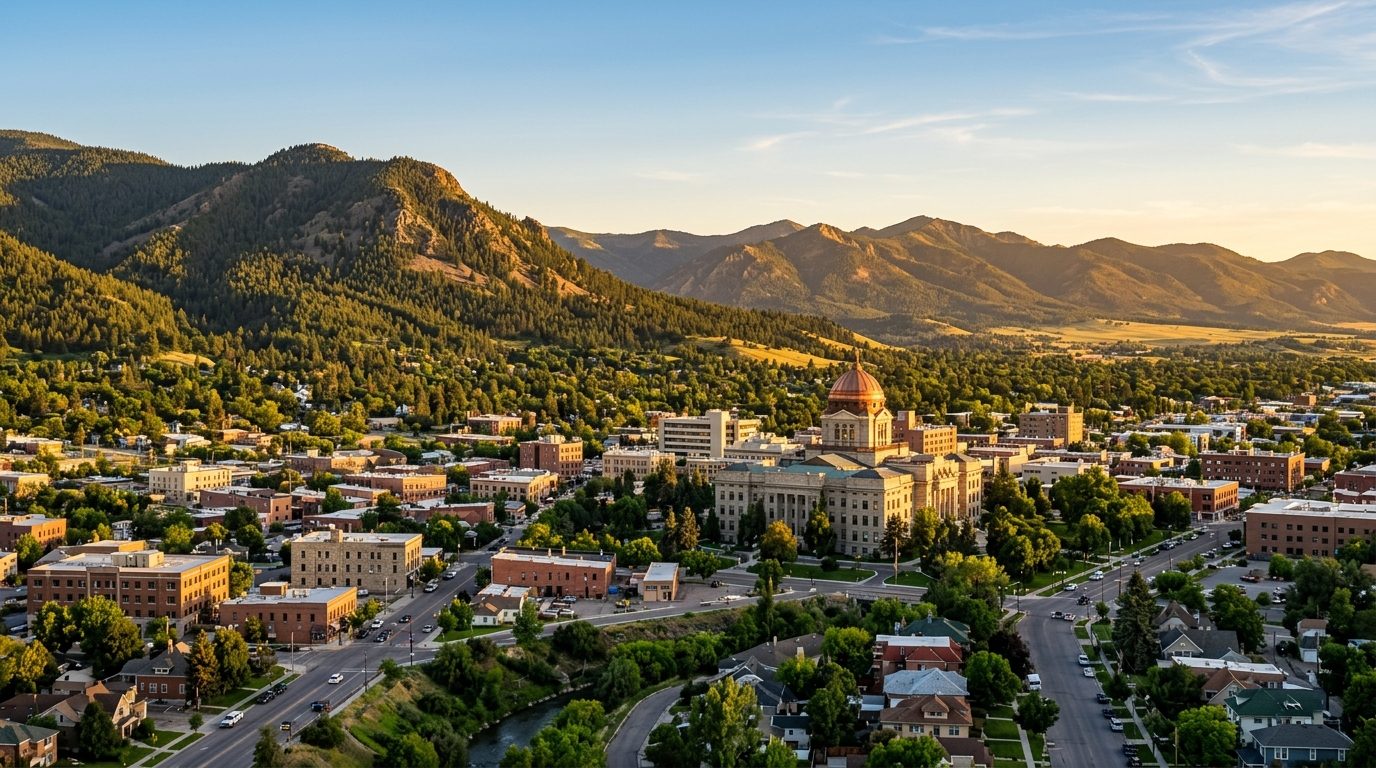
The Helena metro area sits where the Rocky Mountain Front’s foothills meet the broad Helena Valley, near the headwaters reach of the Missouri River. Helena occupies a bench at the base of Mount Helena, its historic core wrapped around Last Chance Gulch, the winding former mining ravine that still shapes downtown’s street pattern. West of downtown, residential streets climb toward forested draws; east and north, the valley floor opens into subdivisions and rural acreage stretching toward the Scratch Gravel Hills. The wider metro also takes in Jefferson County’s towns of Boulder and Whitehall, Broadwater County’s Townsend near Canyon Ferry Lake, and East Helena just outside the capital. Housing stock reflects this layered history: brick and stone commercial buildings and Victorian-era homes downtown and on the west side, early twentieth-century bungalows in the older residential grid, mid-century ranch homes in established neighborhoods, and newer subdivisions and rural acreage across the valley and smaller outlying towns.
Price tiers track this geography. The historic west side, often called the Mansion District, and the South-Central Historic District downtown carry premiums tied to architectural character, mature tree cover, and walkable proximity to the capitol complex and Mount Helena’s trails. Property near Canyon Ferry Lake commands a premium for water access and recreation, while land farther from the lakeshore trends more affordable. East Helena, long associated with its industrial past, has historically sat toward the lower end of the range, even as its former smelter grounds have been redeveloped into public greenway and park space. Rural Jefferson County, including Boulder and Whitehall, and outlying stretches of the Helena Valley tend toward lower price tiers, reflecting distance from the capital’s employment core and a housing stock weighted toward older, smaller homes and larger rural lots.
Montana state government is the metro’s dominant employer, a direct result of Helena’s role as the state capital, with agencies spanning administration, natural resources, and public safety. St. Peter’s Health anchors the regional healthcare sector, and Carroll College, a Catholic liberal arts college founded in 1909, is a fixture of the west side alongside Helena Public Schools. Federal presence is notable too, including the U.S. Forest Service, the Bureau of Land Management, and the Fort Harrison VA Medical Center. NorthWestern Energy is headquartered in Helena, and a Boeing manufacturing facility adds an aerospace component. Outside the capital, Jefferson County’s economy has historically rested on mining, including the Golden Sunlight gold mine near Whitehall, plus agriculture and wood products, while Broadwater County’s economy around Townsend leans on farming, ranching, and Canyon Ferry Lake recreation.
Several factors distinguish this market. Montana has no state sales tax, and property tax treatment distinguishes primary residences from second homes and short-term rentals. Wildfire season is a genuine seasonal concern, particularly in the wildland-urban interface along the forested foothills west of Helena and across the Helena Valley; buyers should check defensible-space conditions, fire history, and insurance availability before purchasing. Properties near the former East Helena smelter site warrant a look at environmental disclosures and remediation status. Rural parcels in the Helena Valley and Jefferson County fall under county zoning with minimum lot sizes, and buyers should confirm zoning, water rights, and whether a property relies on well and septic versus municipal service. Public transit is limited, so commuting is largely car-dependent, especially from Boulder, Whitehall, and Townsend.
Cities and Towns in the Helena Metro Area
Notable Communities and Neighborhoods
Helena Real Estate Market FAQ
How is the Helena, Montana metro area organized geographically?
The metro centers on Helena itself, tucked at the base of Mount Helena where the Rocky Mountain foothills meet the Helena Valley near the Missouri River headwaters country. It extends outward to East Helena just beyond the capital, into the Helena Valley’s suburban and rural stretches, south into Jefferson County’s towns of Boulder and Whitehall, and east into Broadwater County’s Townsend near Canyon Ferry Lake.
Which parts of the Helena metro tend to be pricier, and why?
The historic west side, known as the Mansion District, and the South-Central Historic District near downtown tend toward the higher end because of architectural character, mature landscaping, and walkable access to the capitol area and Mount Helena’s trails. Property near Canyon Ferry Lake also carries a premium for water access, while outlying rural areas of Jefferson County and parts of East Helena’s older industrial-adjacent neighborhoods tend to be more affordable.
What should buyers verify before purchasing property in the Helena area?
Buyers should confirm the applicable county zoning district and any minimum lot size requirements, whether a property uses well and septic systems or connects to municipal water and sewer, and water rights for rural or agricultural parcels. Near the former East Helena smelter site, it is worth reviewing environmental disclosures and remediation history. In historic districts, buyers should also check for any design or preservation guidelines that apply to exterior changes.
What is a distinctive regional risk to understand when buying here?
Wildfire is a real seasonal risk in this part of Montana, particularly in the wildland-urban interface along the forested foothills and draws west of Helena and across parts of the Helena Valley. Buyers should look into a property’s defensible-space conditions, local fire history, and insurance availability, since coverage and cost can vary significantly by location relative to forested terrain.
Nearby Markets