
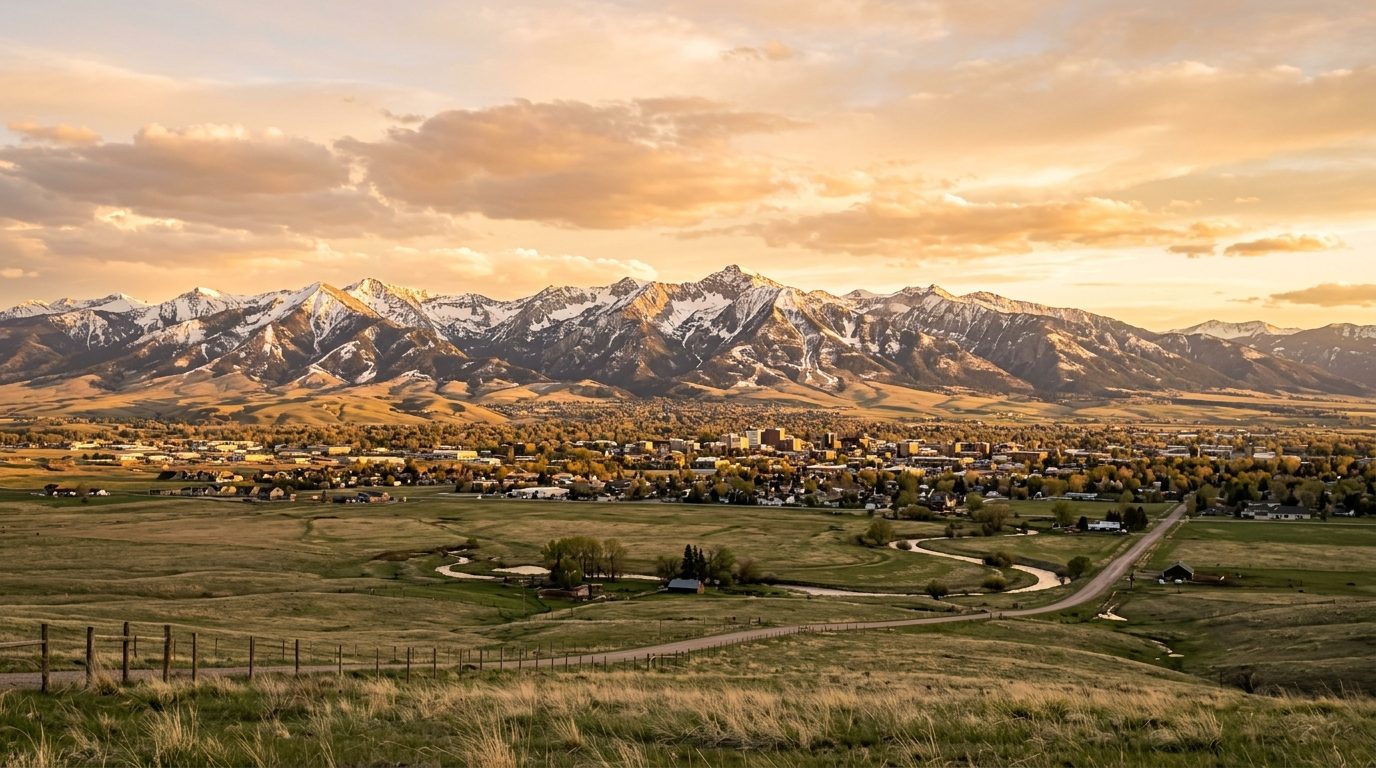
Current real estate market data, news and analysis for the Bozeman, MT metropolitan area — 128,740 residents across Gallatin county.
Data as of May 2026. Sources: Redfin Data Center, U.S. Census Bureau.
Latest Bozeman Real Estate News
Coverage of this market is coming soon. Browse all housing market news.
Bozeman Real Estate Market Overview
Bozeman sits in the Gallatin Valley of southwestern Montana, a broad agricultural basin ringed by the Bridger, Gallatin, Tobacco Root, and Spanish Peaks ranges, roughly midway between Yellowstone National Park’s northern approaches and the open plains to the north. Gallatin County stretches from the valley floor up into national forest land, and its housing stock reflects that range: a compact, walkable core of early-1900s bungalows and brick storefronts in downtown Bozeman, mid-century ranch homes in older in-town neighborhoods, a wide band of newer subdivisions and townhome developments on the city’s edges built during the past two decades of rapid growth, and scattered ranch and mountain-view acreage properties in the unincorporated county and the smaller towns of Belgrade, Manhattan, Three Forks, and West Yellowstone. Montana State University anchors both the city’s identity and its housing demand, drawing a steady stream of students, faculty, and staff into the rental and starter-home markets, while the valley’s proximity to Yellowstone and the Big Sky and Bridger Bowl ski areas has made it an increasingly national draw for relocation and second-home buyers.
Within the metro, price tiers track topography, views, and distance from the mountains more than any single factor. Neighborhoods and canyon-adjacent subdivisions closest to the Bridger Range foothills and the Sourdough and Cottonwood drainages south of town tend to command a premium tied to mountain access, trail proximity, and open-space buffers. Downtown Bozeman and its surrounding historic districts carry value from walkability, architectural character, and limited buildable lots within city limits. Newer master-planned subdivisions on the valley floor to the north and west of Bozeman, and in Belgrade and along the Four Corners corridor, generally offer more attainable pricing tied to flatter terrain and greater lot supply. The smaller outlying towns of Manhattan, Three Forks, and West Yellowstone sit at the lower end of the valley’s price spectrum, reflecting their distance from Bozeman’s job center.
The Gallatin Valley economy has diversified well beyond its ranching and railroad origins. Montana State University is the region’s largest single employer and a major research driver, while Bozeman Health operates the area’s principal hospital system. A cluster of technology and photonics firms, including Oracle, Workiva, and Bridger Photonics, has grown alongside established manufacturers and outdoor-industry brands such as Simms Fishing Products, Barnard Construction, and Murdoch’s Ranch & Home Supply. Tourism and outdoor recreation remain foundational, with Bozeman Yellowstone International Airport serving as the primary air gateway to Yellowstone National Park and the Big Sky and Bridger Bowl resort areas, supporting hospitality and retail employment throughout the valley.
Buyers should weigh several Montana-specific factors before purchasing. Montana levies no state sales tax, but property tax assessments vary by jurisdiction and can shift with reappraisal cycles, so confirming current tax obligations locally is essential. Wildfire risk is a real consideration across much of the county’s wildland-urban interface, particularly in canyon and forest-edge subdivisions, and insurers increasingly factor defensible space and mitigation work into coverage. Winters are long and snow-dependent, which affects road access, heating costs, and construction timelines in outlying areas. Public transit is limited outside the city core, making commute distance important for outlying properties. Bozeman and Gallatin County have active but evolving growth policies, and buyers in newer master-planned communities should review homeowners’ association covenants, water and sewer infrastructure, and any special improvement district assessments.
Cities and Towns in the Bozeman Metro Area
Notable Communities and Neighborhoods
Bozeman Real Estate Market FAQ
How is the Bozeman-area housing market organized geographically?
The market centers on the city of Bozeman and radiates outward across the Gallatin Valley to Belgrade, Manhattan, Three Forks, and West Yellowstone, plus unincorporated areas like Four Corners and Gallatin Gateway. Housing types shift from a dense, historic urban core downtown to newer planned subdivisions on the valley’s edges and larger acreage parcels toward the surrounding mountains and smaller towns.
Which parts of the Bozeman area tend to be pricier, and why?
Areas closest to the Bridger Mountains foothills, canyon and creek corridors with trail and open-space access, and Bozeman’s walkable downtown and historic districts tend to carry the highest values due to limited land supply, views, and proximity to amenities. Properties farther out on the flatter valley floor, in Belgrade, or in the smaller outlying towns are generally more attainable, reflecting greater lot availability and longer commutes to Bozeman’s core.
What should buyers verify locally before purchasing in Gallatin County?
Buyers should confirm water source and rights (many outlying properties rely on wells and septic systems rather than municipal service), review any homeowners’ association covenants and special improvement district assessments in newer subdivisions, check floodplain and wildfire-mitigation requirements, and verify current property tax assessments with the county, since these vary by jurisdiction and can change with reappraisal.
Is wildfire a meaningful risk factor in the Bozeman area?
Yes. Much of Gallatin County includes wildland-urban interface terrain, particularly in canyon, forest-edge, and foothill subdivisions, and county and state agencies maintain active wildfire mitigation and community protection planning. Buyers in these areas should ask about defensible-space work, fire district coverage, and how these factors affect insurance availability and cost.
Nearby Markets