
Current real estate market data, news and analysis for the Burlington-South Burlington, VT metropolitan area — 227,803 residents across Chittenden, Franklin and Grand Isle counties.
Data as of May 2026. Sources: Redfin Data Center, U.S. Census Bureau.
Latest Burlington Real Estate News
Coverage of this market is coming soon. Browse all housing market news.
Burlington Real Estate Market Overview
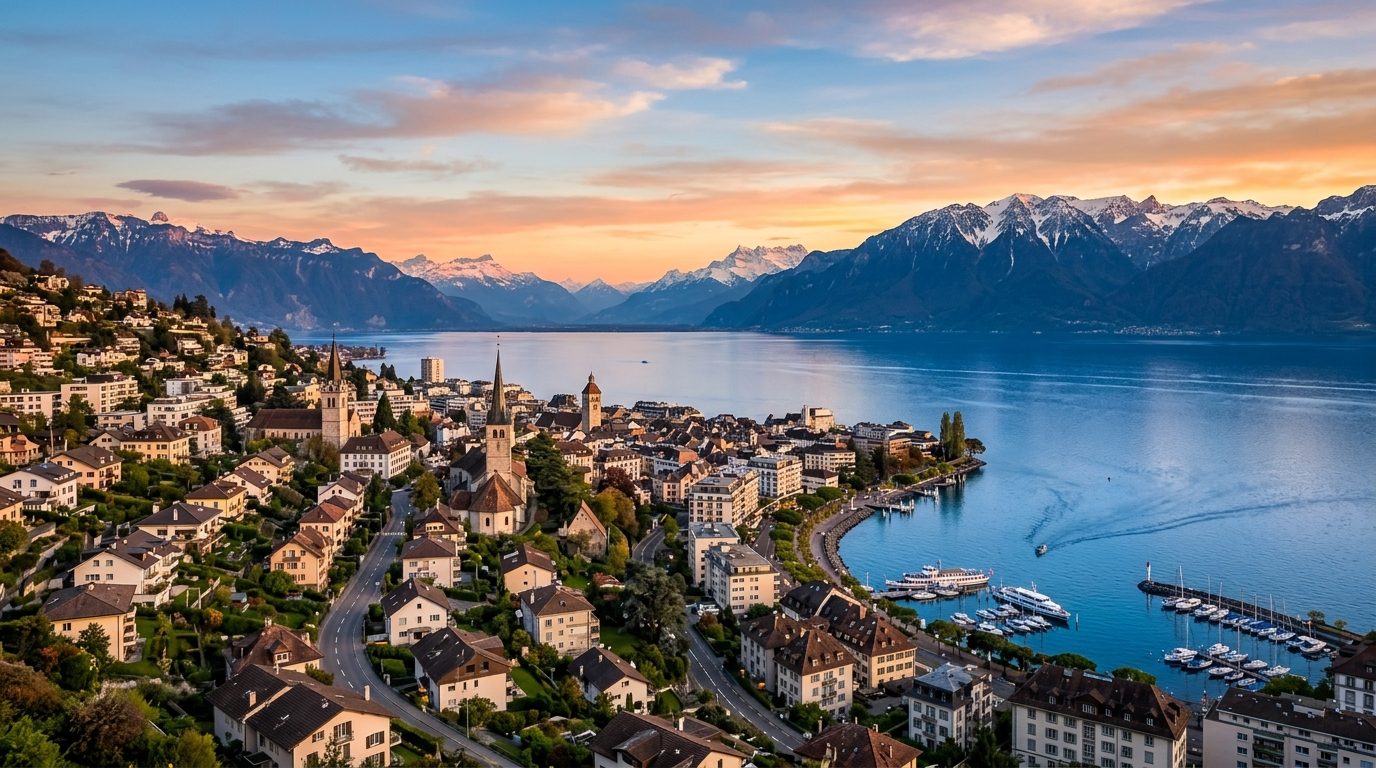
The metro sits in the Champlain Valley between the shoreline of Lake Champlain and the foothills of the Green Mountains, spanning a core county of hillier terrain around Burlington, a more agricultural county to the north, and a chain of low, flat islands and peninsulas out in the lake. Burlington’s older neighborhoods carry genuine nineteenth- and early-twentieth-century urban character, a former mill town anchors the metro’s smaller cities with brick industrial buildings now converted to housing, and the surrounding suburban towns hold mostly newer single-family subdivisions, while the rural north and the lake islands mix farmhouses with seasonal camps.
Homes on a hill above the lake near the University of Vermont, along with lakefront property in the suburban towns south and north of Burlington, sit toward the top of the market for their views, water access, and historic character. The city’s older, denser interior neighborhoods and its former mill town are comparatively more affordable, reflecting smaller, older housing stock and, in the mill town’s case, a longer path from industrial use to residential redevelopment. Newer suburban construction farther from the lakeshore trades in between, while the more rural county to the north and the outlying lake islands price lower on average, largely a function of longer commutes to the metro’s job center.
The University of Vermont and its affiliated medical center make up the region’s largest employer by a wide margin, and the broader presence of the university and a second private college support a steady base of education and healthcare jobs. A semiconductor manufacturing plant east of Burlington remains one of the state’s largest private industrial employers and has continued to draw new investment. Several well-known consumer brands got their start or keep headquarters in the metro, spanning ice cream, outdoor gear, and personal care products, and a regional hospital in the northern county serves that area’s more rural population.
The lake and its connecting river have flooded seriously in the past, so property near the shoreline or along the river through Burlington and the mill town should be checked against current flood maps rather than assumed safe. Winters bring heavy snow and ice, which matters for roof design and insurance in older housing stock. Vermont layers a statewide education property tax on top of local municipal taxes, so a buyer comparing cost across towns needs to look at both pieces rather than the municipal rate alone. The state’s long-standing land-use review law adds a permitting step for larger developments that doesn’t exist in most other states, which has shaped slower, more constrained growth patterns here than in fast-growing Sun Belt metros. A regional bus system connects most of the core county’s towns, but outside Burlington itself the area remains largely car-dependent, and rural parcels in the northern county and on the islands commonly rely on private wells and septic systems.
Cities and Towns in the Burlington Metro Area
Notable Communities and Neighborhoods
Burlington Real Estate Market FAQ
How is the Burlington-area housing market organized?
The metro centers on a core county along Lake Champlain’s shoreline and foothills, with a more agricultural county to the north and a string of lake islands, so location relative to the lake and to Burlington itself does a lot of the work in describing any given neighborhood.
Which parts of the metro tend to be pricier?
Lakefront and hillside neighborhoods with water views or direct access, along with newer construction close to the metro’s job center, generally price above the older, denser in-town neighborhoods and the more rural areas farther from the core county.
What should buyers verify locally before purchasing?
Check whether a property is on municipal water and sewer or depends on a private well and septic system, especially outside the core cities, and separately review both the municipal and statewide education tax components that make up a Vermont property tax bill.
What’s a region-specific risk buyers should know about?
Flooding along Lake Champlain’s shoreline and the rivers running through the metro has caused serious damage in the past, so anyone buying near the water should check current flood-zone maps rather than rely on a property’s history of staying dry.
Nearby Markets