
Current real estate market data, news and analysis for the Decatur, AL metropolitan area — 160,326 residents across Lawrence and Morgan counties.
Data as of May 2026. Sources: Redfin Data Center, U.S. Census Bureau.
Latest Decatur Real Estate News
Coverage of this market is coming soon. Browse all housing market news.
Decatur Real Estate Market Overview
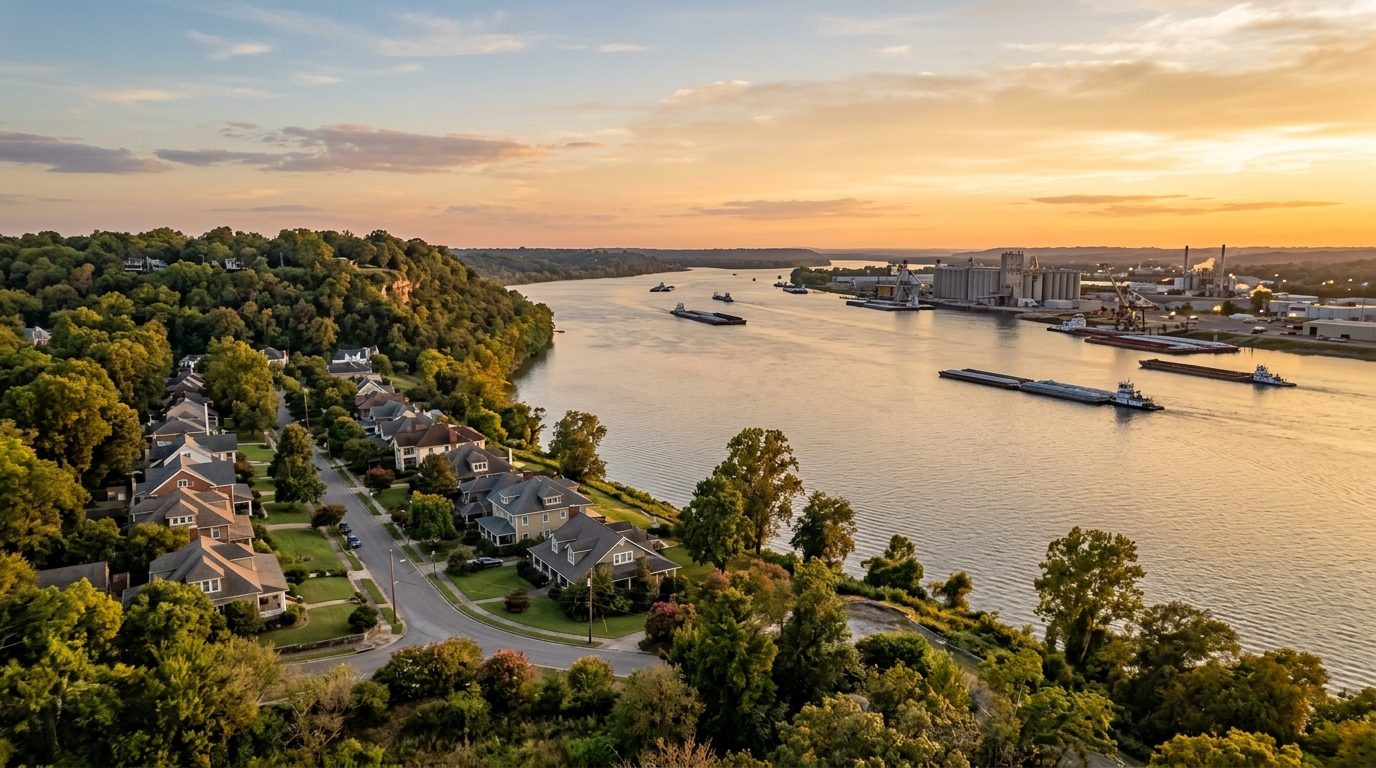
Decatur sits along a wide bend of the Tennessee River where the waterway widens into Wheeler Lake, a reservoir created by a TVA dam. The city occupies high ground on the river’s south bank, with a bluff in the older northern part of town dropping toward the water and Rhodes Ferry Park, while newer sections to the south and east flatten into gently rolling terrain typical of the valley. Housing stock reflects this layered history: turn-of-the-century Victorian, Queen Anne, and craftsman-bungalow homes cluster in the city’s oldest districts near downtown, mid-century brick ranch houses fill the neighborhoods built as the city industrialized after World War II, and newer subdivisions extend along the corridors toward Hartselle and Priceville. Outside the city, Lawrence County towns retain a more rural character, with farmhouses, manufactured housing, and acreage lots interspersed among row-crop and pasture land.
Within Decatur, homes closer to the river, Wheeler Lake, and Point Mallard Park tend to draw a premium, valued for water access, mature tree cover, and recreational amenities. The historic districts near downtown carry value for their architectural character and walkability to Bank Street and the riverfront, though lot sizes there are smaller than in newer suburban development. Priceville and Hartselle, both served by their own municipal school systems along the Interstate 65 and U.S. 31 corridors, have attracted newer subdivision construction and generally command higher prices than comparable homes in older sections of Decatur. Farther out, the smaller Lawrence County towns of Moulton, Town Creek, Courtland, North Courtland, and Hillsboro, along with Morgan County’s Somerville and Eva, offer more land per dollar but sit farther from the metro’s employment centers and shopping, which keeps values lower.
The Decatur metro’s economy rests on a heavy manufacturing and chemical-industry base built up along the Tennessee River’s port and rail infrastructure. GE Appliances operates a large manufacturing plant in Decatur, and the area is home to Nucor Steel, 3M, Daikin America, and United Launch Alliance, which builds rocket vehicles for national security and space missions. Food processing is a major employer through Wayne-Sanderson Farms’ Decatur operations, and the Tennessee Valley Authority, which manages the river’s lock-and-dam system, also maintains a local workforce. Decatur Morgan Hospital anchors the healthcare sector, while Decatur City Schools, Morgan County Schools, and the City of Decatur are among the largest public-sector employers. The metro’s proximity to Huntsville’s aerospace and federal research economy, centered on Redstone Arsenal, also supports commuting workers who live in Decatur, Hartselle, and Priceville while working in Huntsville and Madison County.
The metro lies within a part of the Southeast prone to spring severe weather, and both Morgan and Lawrence counties have experienced damaging tornadoes, including a widely remembered outbreak in April 2011 that caused destruction in Lawrence County communities. Buyers should check flood maps for property near the Tennessee River, Wheeler Lake, and area creeks, since backwater and low-lying areas can carry flood-insurance requirements. Alabama’s property taxes are comparatively low, but rates and homestead exemptions vary by county and municipality. Zoning and building-code enforcement differ between incorporated cities and unincorporated county areas, and rural parcels may rely on well water and septic systems rather than municipal utilities. Newer subdivisions in Priceville and Hartselle often carry homeowners’ association rules that buyers should review before purchase.
Cities and Towns in the Decatur Metro Area
Notable Communities and Neighborhoods
Decatur Real Estate Market FAQ
How is the Decatur, AL real estate market organized geographically?
The Decatur metro area covers Morgan and Lawrence counties in north Alabama, anchored by the city of Decatur on the Tennessee River. Morgan County also includes Hartselle, Priceville, Somerville, Trinity, Falkville, and Eva, while Lawrence County, to the west, is anchored by its county seat, Moulton, along with Town Creek, Courtland, North Courtland, and Hillsboro. Each municipality sets its own zoning, permitting, and, in some cases, school district boundaries, so conditions can vary from one small town to the next.
Which parts of the Decatur metro tend to be pricier, and why?
Areas near the Tennessee River and Wheeler Lake in Decatur, along with newer subdivisions in Priceville and Hartselle, tend to command higher prices. Waterfront and near-water lots draw a premium for views and recreational access, while Priceville and Hartselle benefit from their own school systems, newer housing stock, and convenient interstate access. Older in-town neighborhoods and the smaller, more rural towns of Lawrence County are generally more affordable, reflecting greater distance from employment centers and, in some cases, older housing stock.
What should buyers verify locally before purchasing in the Decatur metro?
Buyers should confirm whether a property sits inside city limits or in unincorporated county territory, since zoning, building codes, and services can differ significantly. It is worth checking flood zone status for any property near the Tennessee River, Wheeler Lake, or area creeks, verifying whether water and sewer service is municipal or well-and-septic, and confirming current school zoning with the relevant city or county school system. Any HOA covenants in newer subdivisions, along with actual property tax rates and available exemptions, should also be confirmed with the county revenue office.
Is severe weather a significant risk in the Decatur, AL area?
Yes. The metro sits within a part of the Southeast that experiences seasonal severe thunderstorms and tornadoes, particularly in spring, and both Morgan and Lawrence counties have been affected by destructive tornado outbreaks in the past. Buyers should ask about a property’s storm history, confirm homeowners’ insurance availability and cost, and check for safe-room or storm-shelter options, which are common additions in this region.
Nearby Markets