
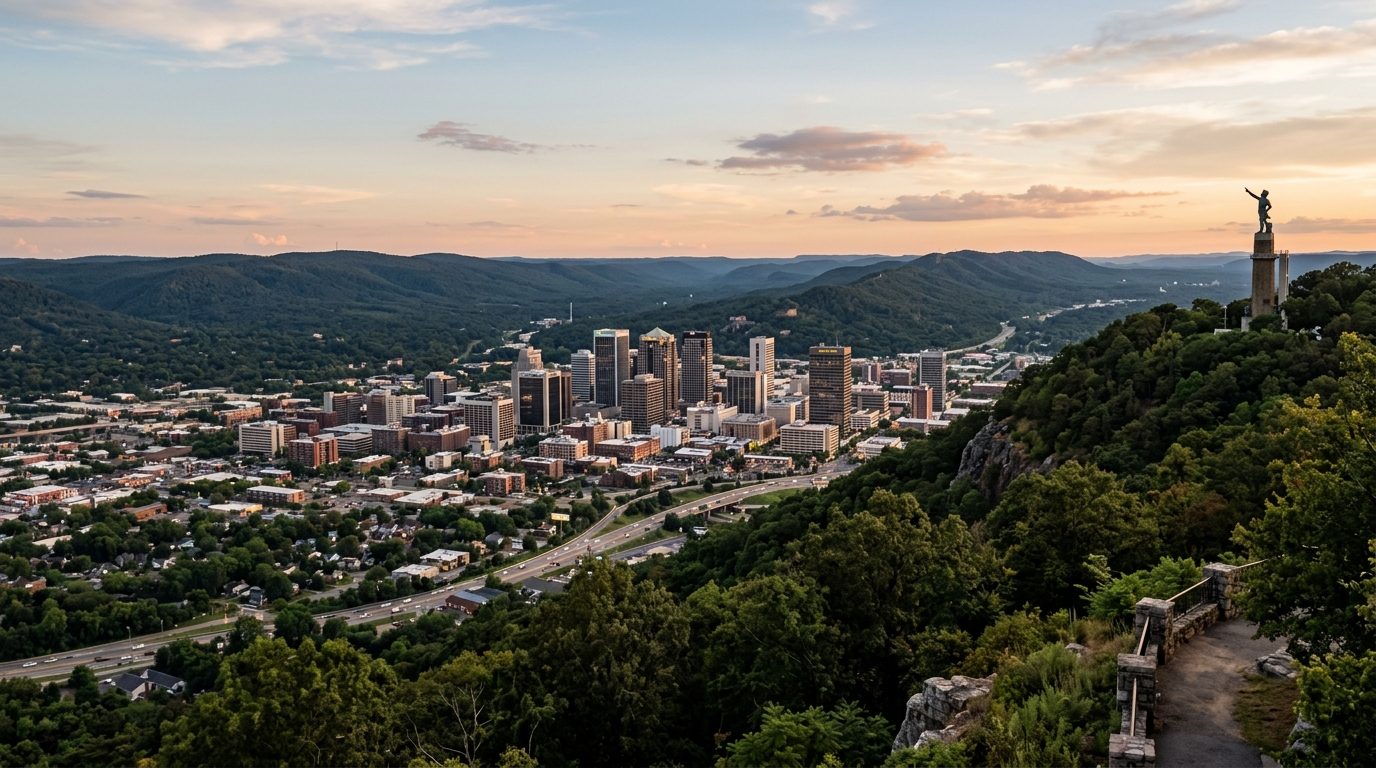
Current real estate market data, news and analysis for the Birmingham, AL metropolitan area — 1.2M residents across 7 counties in Alabama.
Data as of May 2026. Sources: Redfin Data Center, U.S. Census Bureau.
Latest Birmingham Real Estate News
Birmingham Real Estate Market Overview
The Birmingham metropolitan area extends across central Alabama from Birmingham and its inner suburbs into the southern growth corridors of Shelby County, the eastern communities of St. Clair County and smaller cities and rural areas in Bibb, Blount, Chilton, Walker and surrounding counties. Birmingham contains early industrial neighborhoods, brick cottages, bungalows, apartments, condominiums and converted commercial buildings. Homewood, Mountain Brook and Vestavia Hills include established housing on wooded and hilly terrain. Hoover, Helena, Pelham, Alabaster and Chelsea contain extensive suburban subdivisions and newer planned communities. The outer counties add small towns, farms, wooded acreage and former mining or manufacturing communities.
Higher price tiers are generally associated with Mountain Brook, Vestavia Hills, Homewood, selected Hoover neighborhoods, Greystone, Liberty Park and newer developments in northern Shelby County. These areas often combine established schools, larger lots, mature landscaping, private amenities or convenient access to major employment centers. More attainable choices are commonly found in portions of Birmingham, Bessemer, Fairfield, Center Point, Hueytown, Jasper and smaller outlying towns. Lower acquisition costs may be accompanied by greater renovation needs, longer commutes, aging infrastructure or limited access to municipal water and sewer service.
The regional economy is supported by health care, higher education, finance, manufacturing, logistics, government and professional services. The University of Alabama at Birmingham and UAB Medicine anchor a major medical, research and education district. Regions Financial is headquartered in Birmingham, while other banks, insurers, law firms and corporate-service employers maintain regional operations. Automotive suppliers, steel and metal businesses, distribution facilities and construction companies remain important across Jefferson, Shelby and St. Clair counties. Downtown Birmingham, the UAB medical district, Highway 280, Hoover and suburban industrial corridors form separate employment centers.
Topography and severe weather create property-specific concerns. Birmingham’s ridges and valleys can produce steep lots, retaining walls, drainage problems and localized flash flooding. Tornadoes, severe thunderstorms, hail, heavy rain, heat and humidity affect roofs, trees, crawl spaces and insurance. Some former mining areas may require review of subsidence or historical land use. Public transportation is concentrated in Birmingham, leaving most suburban and rural households automobile-dependent. Buyers should verify the precise municipality, school district, sewer or septic service, flood exposure, foundation condition and responsibility for private roads or drainage systems. New-development buyers should also examine association rules, stormwater facilities and future road and school plans.
Cities and Towns in the Birmingham Metro Area
Show all 77
Notable Communities and Neighborhoods
Birmingham Real Estate Market FAQ
How is the Birmingham housing market geographically organized?
The market extends from Birmingham and its inner suburbs through southern Jefferson and Shelby County growth corridors, eastern communities in St. Clair County and smaller towns in the surrounding counties. Ridges, valleys, interstate access, school systems and municipal boundaries create distinct submarkets.
Which Birmingham-area locations generally sit in higher price tiers?
Mountain Brook, Vestavia Hills, Homewood, selected Hoover communities, Greystone, Liberty Park and newer developments in northern Shelby County generally occupy higher tiers. School access, larger lots, established neighborhoods, private amenities and proximity to major employment centers contribute.
What should buyers inspect in an older Birmingham-area home?
Buyers should review foundations, crawl spaces, roofs, drainage, retaining walls, electrical systems, plumbing and evidence of termite or moisture damage. Homes on sloped lots may also require specialized examination of grading, hillside stability and prior structural repairs.
What property risks should central Alabama buyers investigate?
Buyers should examine tornado and wind exposure, drainage, flash-flood risk, expansive soils, mature trees and insurance terms. Former mining areas, steep terrain and rural properties may require additional review of subsidence, septic systems, wells and road access.
Nearby Markets