
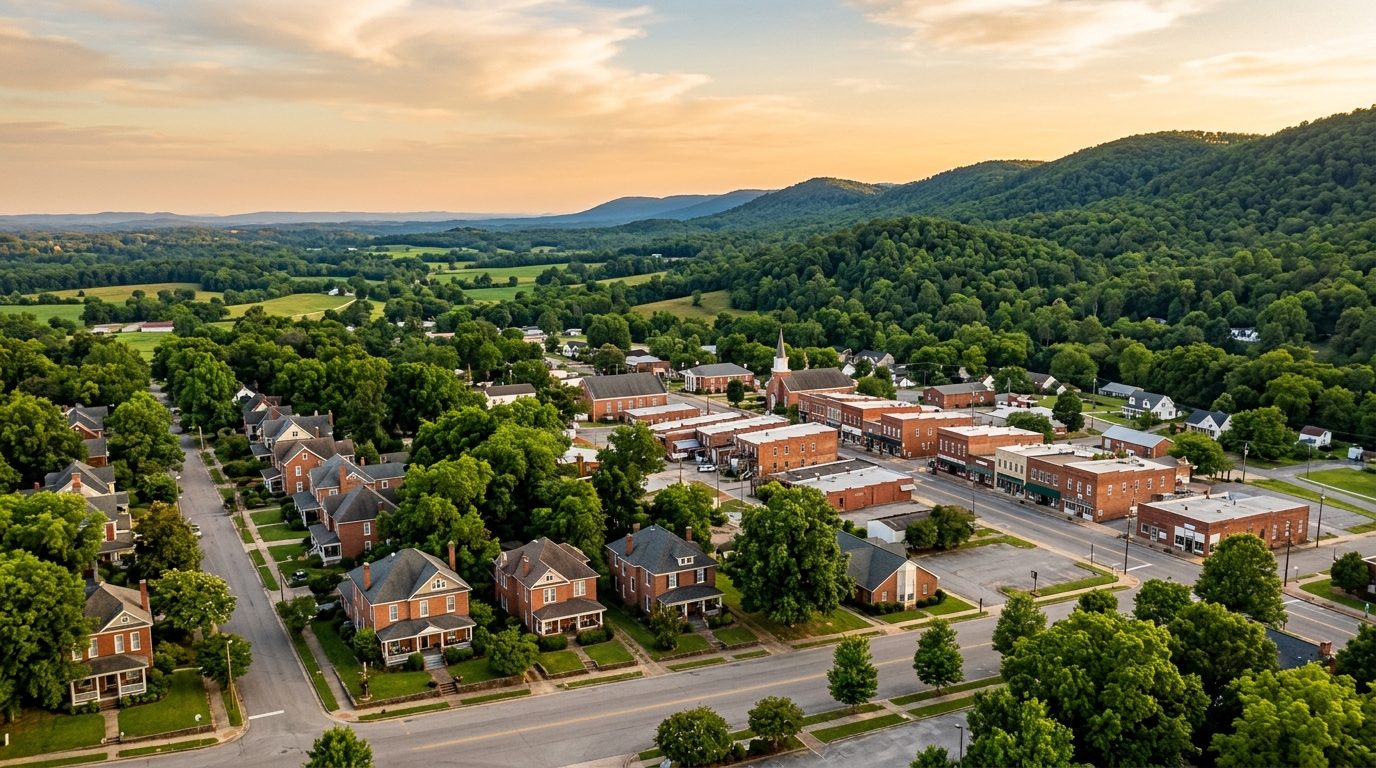
Current real estate market data, news and analysis for the Anniston-Oxford, AL metropolitan area — 115,834 residents across Calhoun county.
Data as of May 2026. Sources: Redfin Data Center, U.S. Census Bureau.
Latest Anniston Real Estate News
Coverage of this market is coming soon. Browse all housing market news.
Anniston Real Estate Market Overview
The Anniston-Oxford metro sits where the Appalachian foothills taper into the Alabama piedmont, a landscape of forested ridges, small lakes, and narrow valleys anchored by Blue Mountain and the Choccolocco Creek watershed. Anniston, the county seat, grew up around the railroad and an early iron industry, and its core neighborhoods still carry the architectural stamp of that era, with Victorian and Craftsman-style homes lining streets laid out more than a century ago. Away from the city center, the metro turns rural and small-town quickly, with farmland, wooded acreage, and modest ranch-style subdivisions built through the mid-twentieth century filling the gaps between Anniston, Oxford, and Jacksonville. Newer construction is concentrated along the highway corridor east of Anniston and on the edges of the faster-growing towns, where larger lots and contemporary floor plans have replaced the older starter homes that once defined suburban growth here.
Within the metro, price levels generally track distance from downtown Anniston and proximity to newer schools and retail. Oxford and Jacksonville, both east and northeast of Anniston, have drawn steady homebuilding for decades and sit toward the metro’s higher end, helped by newer subdivisions, retail growth, and, in Jacksonville’s case, the presence of the university. The historic residential districts closest to downtown Anniston, though architecturally distinguished, tend to sit at the lower end of the market, a reflection of an older and more variable housing stock and a shrinking urban core. Smaller towns such as Piedmont, Weaver, and Ohatchee occupy a middle ground, offering small-town settings at accessible prices, while unincorporated communities scattered through Calhoun County provide acreage and privacy outside any municipal boundary.
The metro’s economy centers on a handful of large, stable institutions rather than one dominant industry. Jacksonville State University anchors Jacksonville with steady employment in higher education and the demand for housing and services that a college town generates. Healthcare is concentrated around Regional Medical Center in Anniston, which draws patients and staff from across the surrounding foothills. The Anniston Army Depot, which overhauls and maintains Army combat vehicles, is the county’s largest single employer and a major force in local manufacturing and logistics. The redeveloped McClellan property, once part of the Army post, now hosts a mix of federal agencies, including a federal emergency-response training center, alongside private businesses and warehouses, giving the metro an unusual blend of government, industrial, and open land within a few miles of downtown.
The metro’s most distinctive feature is its military legacy. Fort McClellan trained soldiers for most of the twentieth century, including at a chemical warfare school, and its closure required extensive environmental remediation before the land could be returned to civilian use; buyers and longtime residents alike still pay attention to which parcels were cleared for reuse and which remain under continued oversight. Property taxes across Calhoun County are notably low by national standards, a point often cited by residents weighing the cost of ownership. The foothills setting also puts residents close to hiking and outdoor recreation on the surrounding ridges, and the metro’s position along interstate and rail routes keeps it within reach of Birmingham and other regional centers, even as Anniston-Oxford has kept a small-city, unhurried character of its own.
Cities and Towns in the Anniston Metro Area
Notable Communities and Neighborhoods
Anniston Real Estate Market FAQ
What is the Anniston-Oxford, AL metro area known for?
It is a small metro in the foothills of the Appalachians in northeast Alabama, built around the city of Anniston, Jacksonville State University, and the Anniston Army Depot. It combines historic in-town neighborhoods with rural and small-town surroundings, and it sits within reach of both the Talladega Superspeedway and the outdoor recreation of the surrounding ridges.
Is it safe to buy property near the former Fort McClellan?
The Army post closed decades ago and underwent extensive environmental review and cleanup before large portions were transferred for civilian, commercial, and recreational use as the McClellan development. Many buyers still research the history of specific parcels, since different sections of the former base carried different training uses and were cleared and released on different timelines.
What is the general cost of homeownership in the area?
The metro is known regionally for modest home prices relative to larger Alabama metros and for property taxes that are low by national standards. Costs vary by community, with newer subdivisions in towns like Oxford and Jacksonville generally commanding more than older neighborhoods closer to downtown Anniston.
What drives the local economy and job market?
Employment centers on a mix of higher education, healthcare, and government and military-related work, anchored by Jacksonville State University, Regional Medical Center, the Anniston Army Depot, and federal agencies and contractors based at the redeveloped McClellan property. Manufacturing and logistics tied to these anchors also support the broader county economy.
Nearby Markets