
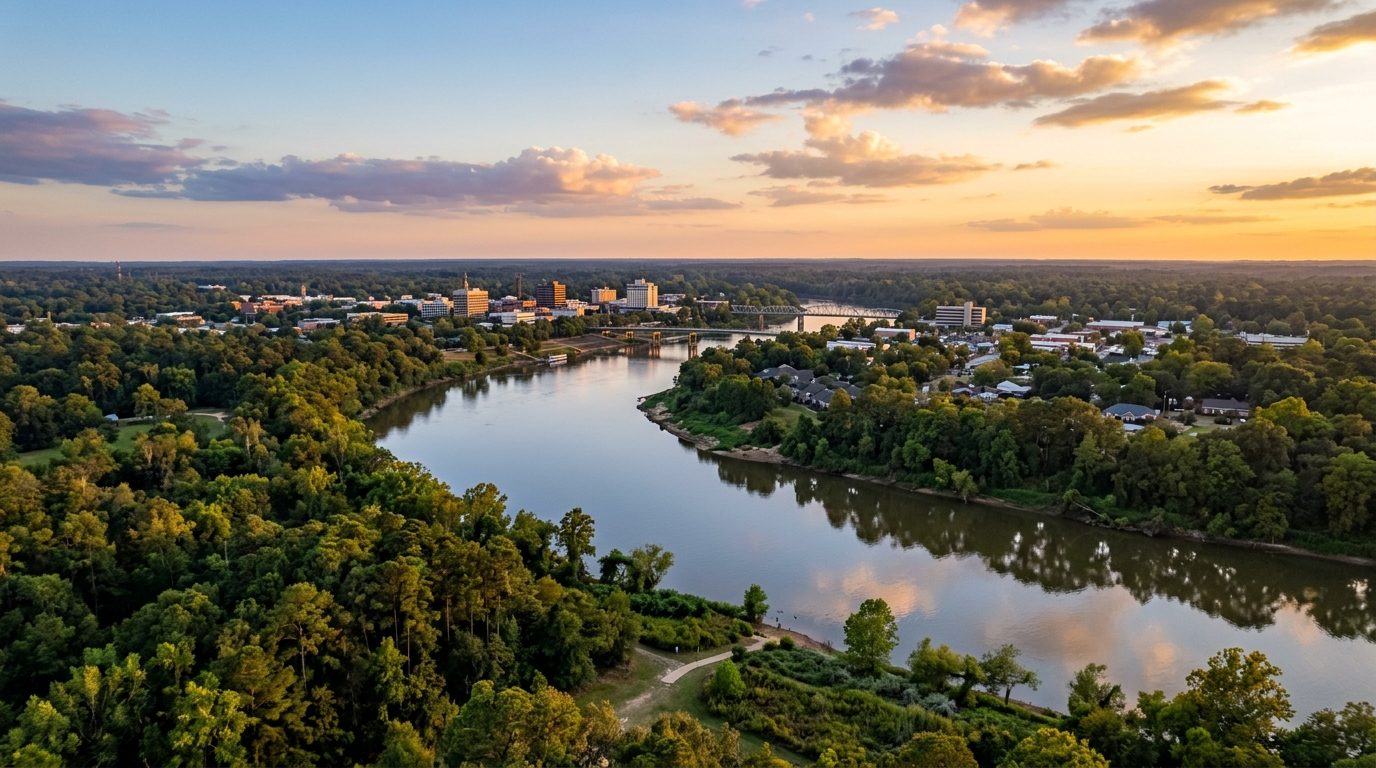
Current real estate market data, news and analysis for the Alexandria, LA metropolitan area — 147,952 residents across Grant Parish and Rapides Parish counties.
Data as of May 2026. Sources: Redfin Data Center, U.S. Census Bureau.
Latest Alexandria Real Estate News
Alexandria Real Estate Market Overview
Alexandria and its twin city, Pineville, sit astride the Red River near the geographic center of Louisiana, an area residents call Cenla. The river splits the metro into two halves joined by bridges, with Rapides Parish anchoring the urban core and Grant Parish extending north into quieter, wooded country toward the Kisatchie National Forest. Terrain is flat to gently rolling, shaped by pine and hardwood timberland, bayous, and low-lying drainage along the river corridor. Housing stock reflects a long settlement history: early bungalows and Craftsman cottages cluster near the old downtown cores, ranch-style brick homes fill the postwar suburbs along the main traffic loops, and newer subdivisions with larger lots continue to appear on the outskirts toward the smaller parish towns.
Within Alexandria, the historic core near downtown carries the most character and generally the higher price tier, with mature oak canopies and restored early homes on walkable blocks. The western and southwestern edges of the city, where subdivisions have grown up around newer amenities and golf-course frontage, also skew higher because the housing is younger and lots are larger. Older neighborhoods closer to the center tend to be more affordable. Across the river, Pineville is generally quieter and more affordable than Alexandria, with established streets near its colleges and newer construction on its northern edges. The smaller towns ringing the metro, especially in Grant Parish, offer the most affordable and most rural options, trading services for space, while the southern edge of Rapides Parish has drawn newer subdivisions from commuters seeking newer construction close to the core cities.
The metro’s economy centers on healthcare, education, manufacturing, and timber. Regional hospital systems, including a major Catholic health system and a large regional medical center, rank among the area’s biggest employers, alongside a federal veterans hospital. Higher education adds steady employment through a state university campus and a private Christian university, both based in Alexandria-Pineville. Manufacturing has deep roots: a large consumer-products plant operates in Pineville, and the timber and wood-products industry, tied to the region’s pine forests, remains an important employer through long-standing regional companies. A regional electric utility is headquartered in Alexandria, and the former Air Force base on the city’s north side has been redeveloped into an industrial park that continues to draw employers. As the largest urban center between Shreveport and Baton Rouge, Alexandria also serves as a regional hub for retail, government, and medical services.
Buyers should weigh a few local factors before purchasing. Portions of the metro along the Red River and its bayous carry meaningful flood risk, and flood coverage is typically separate from standard homeowners insurance, so checking a property’s flood zone and elevation is essential. The area lies well inland from the Gulf, which moderates direct hurricane risk compared with coastal Louisiana, though the remnants of tropical systems can still bring heavy rain and wind that stress local drainage. Property taxes and homestead exemptions are administered separately by each parish, so rates can differ between Rapides and Grant even within the same metro. Public transit is limited and most residents rely on personal vehicles. Zoning and school-district lines can split unexpectedly along city and parish boundaries, so buyers should verify school assignment, utility provider, and whether a property sits inside city limits or unincorporated parish territory before making an offer.
Cities and Towns in the Alexandria Metro Area
Notable Communities and Neighborhoods
Alexandria Real Estate Market FAQ
How is the Alexandria, LA metro area organized?
The market is really two connected halves: Alexandria on the west bank of the Red River and Pineville on the east bank, joined by bridges and functioning as one urban core. Around them, Rapides Parish holds most of the suburban and small-town growth, while Grant Parish to the north is more rural and wooded with fewer subdivisions. Smaller towns throughout both parishes offer a more rural, lower-density alternative to the urban core.
Which areas tend to be more expensive, and why?
The historic core near downtown Alexandria commands a premium for its mature tree canopy, walkable streets, and restored early homes. Newer subdivisions on the western and southwestern edges of the city, built around larger lots and newer amenities, also trend higher because the housing stock is younger. Older, centrally located neighborhoods and much of Pineville tend to be more affordable, and the smallest outlying towns are generally the least expensive, trading services and density for space.
What should buyers verify locally before purchasing?
Confirm a property’s flood zone designation and elevation, since flood coverage is a separate policy from standard homeowners insurance and matters most near the river and its bayous. Check which parish and municipality the property falls in, since tax rates, homestead exemption processing, and utility providers can differ across city and parish lines. In more rural areas, also verify whether the home relies on a private well or septic system rather than municipal water and sewer, and confirm school district zoning directly with the parish school board.
What is the flood and storm risk in this area?
Alexandria-Pineville sits well inland, which reduces the risk of a direct hurricane strike compared with coastal Louisiana, but the remnants of tropical systems can still bring heavy rainfall that stresses drainage along the Red River and its tributaries. Riverside and low-lying bayou-adjacent properties carry the most meaningful flood exposure. Because flood damage is generally excluded from standard homeowners policies, buyers in or near mapped flood zones should budget for separate flood insurance and ask about a property’s flood history before closing.
Nearby Markets