
Current real estate market data, news and analysis for the Lafayette, LA metropolitan area — 423,758 residents across Acadia Parish, Lafayette Parish, St. Martin Parish and Vermilion Parish counties.
Data as of May 2026. Sources: Redfin Data Center, U.S. Census Bureau.
Latest Lafayette Real Estate News
Coverage of this market is coming soon. Browse all housing market news.
Lafayette Real Estate Market Overview
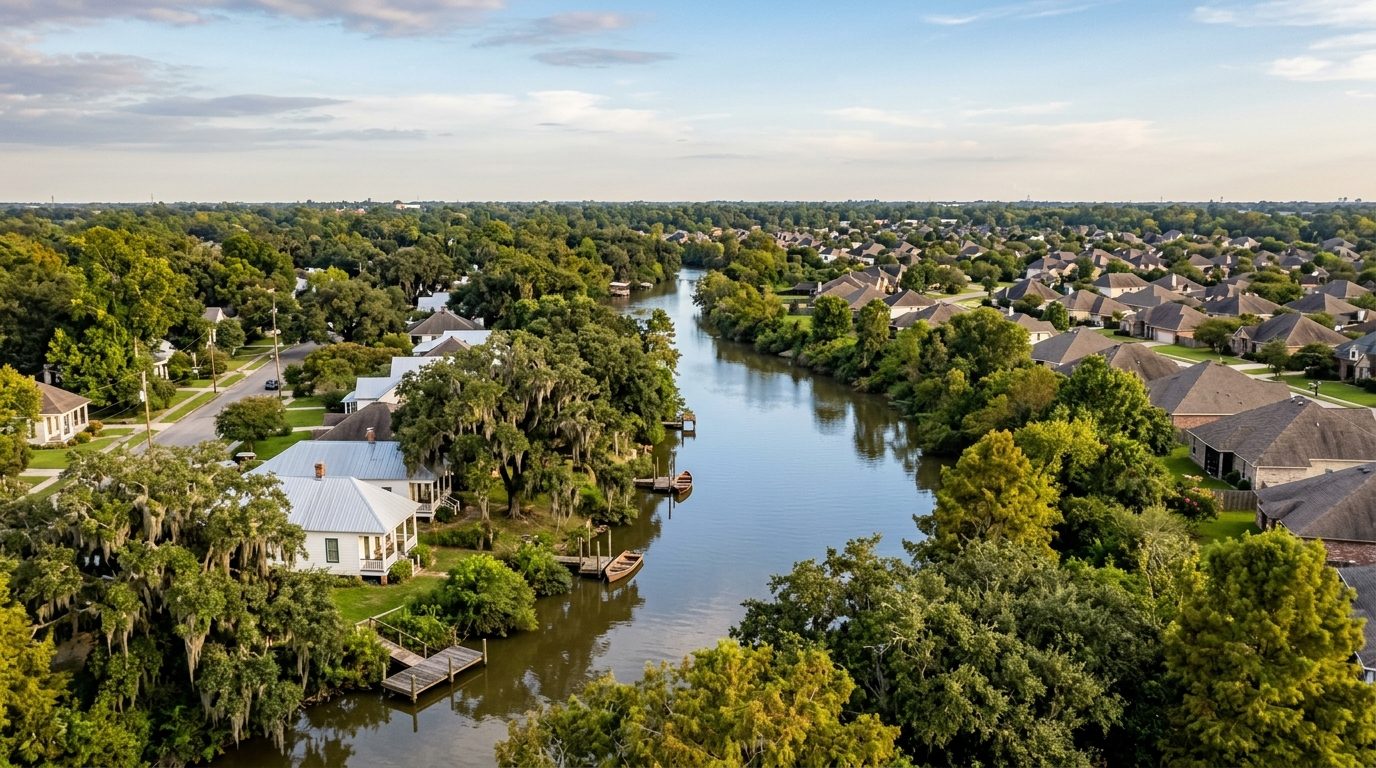
Lafayette sits on the West Gulf Coastal Plain in south-central Louisiana, on a slightly elevated prairie terrace above the surrounding wetlands. The Vermilion River winds through the city on its way to Vermilion Bay, and the metro spans Acadia, Lafayette, St. Martin, and Vermilion parishes, a landscape that shifts from Cajun prairie farmland in the west to cypress swamp and coastal marsh toward the Atchafalaya Basin and Gulf. Housing stock reflects this layered history: raised Creole cottages and Acadian-style homes in Lafayette’s older core, brick ranch houses in mid-century subdivisions, and newer traditional-style construction spreading into Broussard, Youngsville, Carencro, and Scott. Outlying towns like Abbeville, Crowley, Rayne, Kaplan, and St. Martinville keep small historic downtowns tied to their rice, sugarcane, and rail-town origins.
Demand and prices run highest on Lafayette’s south side and in the newer suburbs of Youngsville and Broussard, where master-planned, walkable communities pair new construction with amenities and schools that draw young families. Close-in neighborhoods near downtown and the medical district also carry a premium for walkability and mature oak canopy, even where the housing itself is older. Established riverside and university-adjacent neighborhoods hold value for architectural character and lot size rather than newness. More affordable housing sits in north Lafayette, in older rail-era towns such as Rayne, Crowley, and Church Point, and in rural stretches of the parishes, where land costs less but commutes lengthen. Elevation, drainage history, and school-district lines shape value block by block.
Acadiana’s economy has long centered on oil and gas, and Lafayette still serves as a regional hub for companies working the Gulf of Mexico, a legacy visible in the Oil Center district built to house petroleum offices. That base has diversified into healthcare, education, and homegrown corporate headquarters. The University of Louisiana at Lafayette and the Lafayette Parish School System rank among the area’s largest employers, alongside hospital systems Ochsner Lafayette General and Our Lady of Lourdes Regional Medical Center. Lafayette also hosts headquarters for Stuller, a major national jewelry manufacturer; LHC Group, a home health and hospice provider; and Acadian Ambulance, a regional emergency medical services company. Lafayette Consolidated Government and the Diocese of Lafayette are further large employers.
Buyers should treat flood risk as a parish-by-parish, even block-by-block, question rather than a regional given: the metro sits inland from the coast but still experiences hurricane remnants and slow-moving tropical rainfall, and some areas have flooded outside mapped high-risk zones, so checking current flood maps and a property’s flood history with the parish government, and comparing flood and wind insurance before making an offer, are standard steps here. Louisiana’s homestead exemption lowers the taxable value of an owner-occupied home and keeps parish tax bills comparatively modest, though rates vary by taxing district, so confirm applicable millages with the assessor. Public transit is limited and growth follows highway corridors such as Interstate 10 and Interstate 49 outward into the suburbs. Zoning, permitting, and drainage rules differ between Lafayette city limits, smaller towns, and unincorporated parish areas, so confirm local requirements and any subdivision or HOA rules before purchasing.
Cities and Towns in the Lafayette Metro Area
Notable Communities and Neighborhoods
Lafayette Real Estate Market FAQ
How is the Lafayette metro area organized geographically?
The metro covers Acadia, Lafayette, St. Martin, and Vermilion parishes, anchored by the city of Lafayette with the Vermilion River running through its center. Smaller cities and towns such as Broussard, Youngsville, Carencro, Scott, Abbeville, Crowley, Rayne, Kaplan, and St. Martinville ring the urban core, each with its own historic downtown and surrounding residential growth, so the market functions less as one uniform city and more as a cluster of distinct town and parish submarkets.
Which parts of the Lafayette area tend to be pricier, and why?
The south side of Lafayette and the suburban towns of Youngsville and Broussard tend to command higher prices, largely because of newer master-planned communities with walkable town centers, sought-after schools, and modern construction. Close-in neighborhoods near downtown and the medical district also draw a premium for walkability and mature tree canopy despite older housing stock. More affordable areas tend to be farther from these amenity clusters, in north Lafayette or in the smaller outlying parish towns.
What should buyers verify with local government before purchasing in the Lafayette area?
Because zoning, permitting, and drainage requirements differ between Lafayette city limits, incorporated suburbs, and unincorporated parish land, buyers should confirm a property’s zoning and any subdivision or homeowners’ association rules with the relevant city or parish office. It is also worth checking current flood maps, drainage history, and property tax millage rates through the parish assessor and government, since these vary by taxing district and location.
What flood and hurricane risks affect the Lafayette metro?
Lafayette sits inland from the Gulf coast on relatively higher prairie terrace, but the metro is still exposed to hurricane remnants and slow-moving tropical rainfall events, and portions of the area have flooded historically outside officially mapped high-risk zones. Buyers should review current FEMA flood maps, ask about a specific property’s flood history, and compare flood and wind insurance costs before making an offer, since risk and coverage requirements can vary significantly from one street to the next.
Nearby Markets