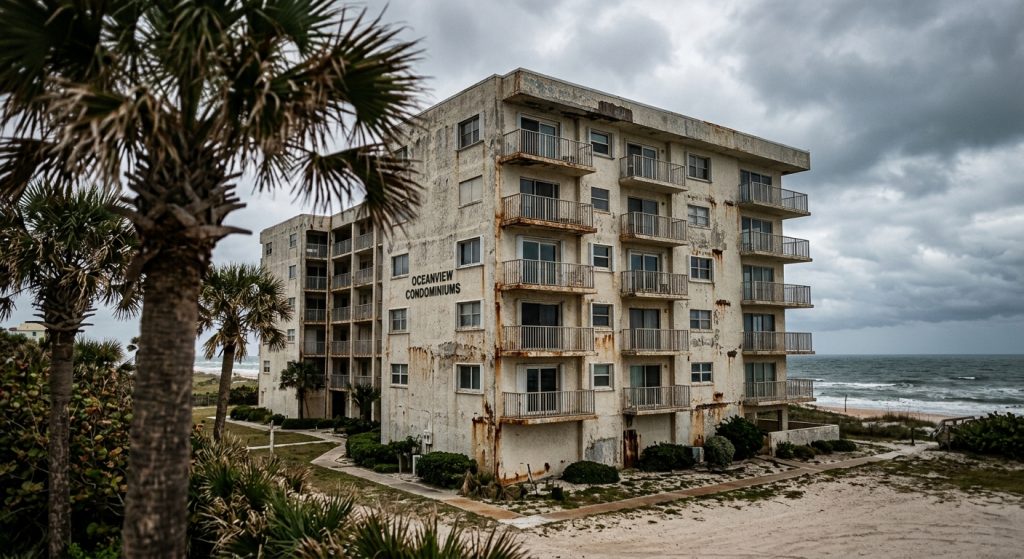
Florida building officials identified 54 condominium and cooperative buildings as “unsafe or uninhabitable” following state-mandated structural inspections in 2024 and 2025, but confirmed that only five of them were actually vacated, according to a report released this week by the Office of Program Policy Analysis and Government Accountability, the research arm of the Florida Legislature.
The report, “Milestone Inspection Reporting Data 2024 and 2025,” reviewed statewide data collected under the milestone inspection law the Legislature passed after the 2021 Champlain Towers South collapse in Surfside, which killed 98 people. The law requires condominium and cooperative buildings three stories or taller to undergo a structural “phase one” visual inspection once they reach 30 years of age — or 25 years in coastal areas at a local building official’s discretion — and every 10 years after that. If a phase one inspection finds substantial structural deterioration, a more invasive phase two inspection, which can include destructive testing, must follow.
Statewide, building officials reported 8,736 completed phase one inspections and 1,575 phase two inspections in the two-year period, along with 903 permit applications for repairs identified during the process. Estimated repair costs ranged from under $1,000 to as much as $30 million per building, with concrete, electrical and structural work the most common repair categories.
Of the buildings flagged as unsafe or uninhabitable, 30 were identified in 2024 across six counties — Osceola (10), Pinellas (8), Bay (4), Brevard (4), St. Lucie (3) and Monroe (1) — and 24 were identified in 2025, concentrated almost entirely in Miami-Dade County (23), with one in Orange County. OPPAGA contacted local officials to ask whether the flagged 2024 buildings had been vacated; of nine who responded, they confirmed 5 of the 30 buildings were vacated, including all three flagged buildings in St. Lucie County and one each in Pinellas and Monroe counties. For 2025, three responding officials indicated none of five buildings they were asked about had been vacated. The report noted Florida law does not define the terms “unsafe” or “uninhabitable,” leaving building officials to apply their own standards — sometimes the Florida Building Code’s definition of “unsafe,” sometimes local ordinances, sometimes the inspecting engineer’s own judgment.
OPPAGA also found significant gaps in the underlying data. The state Department of Business and Professional Regulation received inspection submissions from only 71% of local jurisdictions in 2024 and 64% in 2025, meaning the statewide totals likely understate the true scope of required inspections. The report cited unclear reporting instructions, a lack of verification that submissions came from authorized building officials, and cases where non-condominium buildings were mistakenly included in the data. OPPAGA recommended DBPR provide clearer guidance and training, including a webinar or guided tutorial, for the next reporting cycle; DBPR said it is developing written guidance and virtual training materials.
What it means: The report is likely to renew scrutiny of how consistently Florida’s post-Surfside inspection regime is being enforced and reported, four years after the law took effect. The gap between buildings flagged as structurally unsafe and the small number actually vacated raises questions for condo buyers, owners and lenders about what “unsafe or uninhabitable” status actually means in practice at the local level — an issue RealtyWire has covered in the context of Florida’s broader condo and insurance rule changes for 2026 and continued stabilization in the state’s property insurance market. With DBPR’s next annual data collection due by the end of 2026, the reporting gaps OPPAGA identified will need to close before the state can offer a reliable statewide accounting of its aging condominium stock.