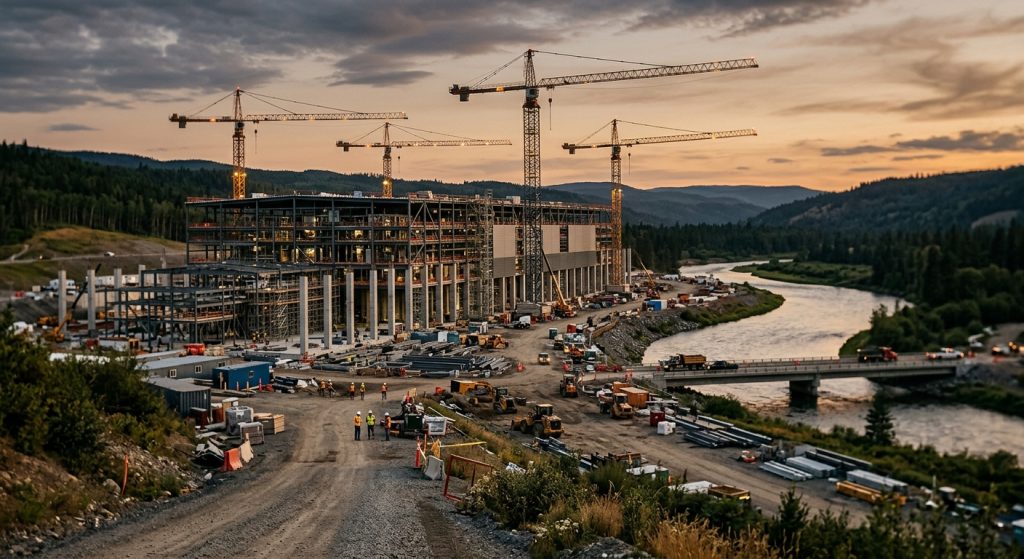
The Clarksville, Ark., City Council voted Thursday, July 30, 2026, to approve up to $55 billion in industrial revenue bonds backing a $6.6 billion data center campus that California-based Serverfarm is building in the Arkansas River Valley, clearing the last major financing hurdle for one of the largest private investments in state history.
The council approved two resolutions: one authorizing up to $5 billion in taxable industrial development revenue bonds for an entity called SF ARK1, and a second authorizing up to $50 billion in taxable bonds for an affiliated entity, Hatchbo. City officials have said the bond authorizations do not create financial obligations for Clarksville or its taxpayers. Under Arkansas’s Act 9 industrial development program, the city holds title to the project while the bonds are outstanding and leases the facility back to the project company, with lease payments structured to equal the bonds’ debt service.
The vote follows a delay: the council tabled four related resolutions on July 13 after aldermen said they needed more information, holding a work session on July 20 before returning to approve the financing package on July 30.
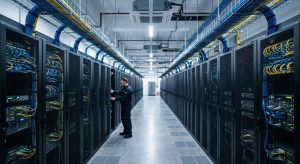
According to Serverfarm’s own project materials, the Clarksville campus will span roughly 135 acres and include multiple 300,000-square-foot buildings across two floors each, with 72 megawatts of power capacity per building. The company says the facilities will use an air-cooled chiller system with a power usage effectiveness rating of 1.3 or lower, and a closed-loop water system it says consumes about 70% less water than traditional data center cooling. The first two buildings are targeted for completion in January 2028.
Serverfarm projects the project will generate approximately $558 million in public local benefits through 2060, including $548 million in payments in lieu of taxes, $3 million in upfront city and county agreement fees, and $840,000 in construction permit fees. The company has also proposed funding a $6 million community development center. Serverfarm says the campus will pay for electrical upgrades across the Clarksville Connected Utilities service area without raising rates for existing residential customers, addressing capacity constraints the company says have limited regional economic development.
On employment, Serverfarm says the construction phase will draw thousands of workers from regional contractors and skilled trades, while permanent operations are expected to support 150 to 400 indirect regional jobs in maintenance, electrical work, HVAC and specialty contracting. The company says it plans workforce partnerships with Arkansas Tech University and the University of the Ozarks to build career pathways in data center operations, cybersecurity and industrial controls.
The project has drawn a mixed reaction locally. According to Route Fifty, roughly 100 residents attended a town hall on the project, submitting more than 80 questions in advance, with some residents citing frustration over limited advance notice and unclear details on the benefits package before tree-clearing work began in January. Resident Bryan Connerly was quoted saying, “I don’t think I’m the only one that believes big corporations don’t always keep their promises.” Serverfarm responded that “we understand a project of this size generates questions, and we welcome these conversations.”
The Clarksville campus is one of six data center projects that have been announced across Arkansas, part of a broader wave of hyperscale and colocation data center investment reshaping construction pipelines nationally. RealtyWire has separately covered other major data center financings and developments, including Equinix’s $3 billion bond sale to fund data center growth and Meta and BlackRock’s $14 billion joint venture for an El Paso, Texas, campus.
What it means: The bond structure is a financing mechanism, not a direct city expenditure — the debt is backed by lease payments from the project company, not general tax revenue, and Clarksville officials say the city bears no liability if the project were to default. The scale of the authorization, at up to $55 billion, reflects the capital intensity of hyperscale data center construction rather than the ultimate project cost, which Serverfarm has pegged at $6.6 billion. What remains to be seen is how the promised $558 million in local benefits materializes over the project’s multi-decade timeline, and whether the permanent job counts match the company’s projections once the facility is operational in 2028.