Virginia Gov. Abigail Spanberger wants the state to put its own surplus land to work for housing, push more homes near transit stations and help localities buy affordable buildings before their rent restrictions expire. She and Democratic legislators presented the package on Nov. 18, 2026, as the housing portion of their “Moving Virginia Forward” agenda for the 2027 General Assembly session.
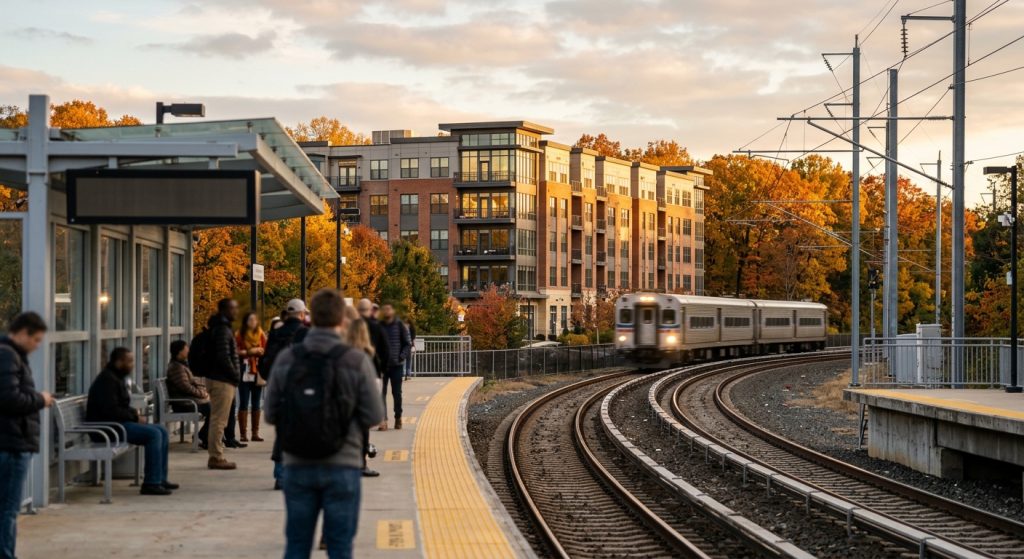
The announcement came at Joyfield Flats at Woodbridge Apartments in Prince William County, which the governor’s office described as a 15-minute walk from the Woodbridge station on the Virginia Railway Express commuter line. The setting fit the plan’s main idea: build more housing where public transit already runs.
The eight proposals
According to the governor’s office, the 2027 package would:
- Expand transit-oriented development to encourage more housing near existing public transit.
- Use surplus state-owned land for housing, identifying parcels that can be made available for transit-oriented and affordable housing.
- Preserve existing affordable housing through a fund to help localities and nonprofits buy affordable properties when their affordability protections are expiring, which the office said would prevent large rent increases.
- Streamline state home repair programs behind a single access point.
- Drop the permanent chassis requirement for manufactured housing. The chassis is the steel frame that lets a home be transported.
- Improve property ownership assistance for heirs, to help keep Virginians in their homes.
- Connect renters to assistance beyond eviction prevention, including utility help, food pantries and job training.
- Identify best practices in local zoning regulations.
The release does not give bill numbers, cost estimates or unit targets for the proposals, and it does not describe how much state land might be available. Those details will matter once the bills are filed.
“Today, we are announcing a slate of housing bills to make sure more Virginians can find a home they can afford and keep the one they already have,” Spanberger said. “We are taking action to use state land to build more housing, encourage more housing near public transit, and help protect affordable housing in the long term.”
Transit housing and manufactured homes
Legislators who joined the governor focused on two of the proposals. “Here is the simple idea behind transit-oriented development: build homes where transit already runs,” said state Sen. Saddam Azlan Salim. “It means the people who keep our communities running, the teachers, the nurses, the transit workers themselves can afford to live in communities they serve.” Del. Adele McClure said she will carry part of the plan in the House of Delegates.
Del. Stacey Carroll made the case for manufactured homes, which she said “are often half the cost of a regular single-family home and a townhome.” The industry’s trade group welcomed the chassis change. Randy Grumbine, executive director of the Virginia Manufactured and Modular Housing Association, said removing the requirement would align state code “with recent federal reforms” and would let builders set homes lower to the ground, place them on basements and build energy-efficient multi-story single-family and multifamily manufactured homes. The federal side of that shift is a HUD proposal that would drop the chassis and extend its code to buildings of five units or more.
The builders’ lobby also backed the package. Andrew Clark of the Home Builders Association of Virginia said the state “cannot make housing more affordable without making it easier to build more homes,” and credited Spanberger with creating a Commission on Unlocking Housing Production. Brian Koziol, executive director of the Virginia Housing Alliance, said the package “preserves expiring affordable homes, puts surplus state land and transit corridors to work for housing” and connects families facing eviction to support. Jane Ferrara of LISC Virginia singled out the heirs’ property program, which she said would build on her group’s title-clearing work in the Richmond region.
Building on this year’s budget
The governor’s office said the proposals build on the biennial budget Spanberger signed earlier this year, which it said allocates upwards of $100 million for expanding housing development and includes record funding for the Virginia Housing Trust Fund. The broader Moving Virginia Forward agenda, unveiled the week before, also includes medical debt relief and proposals to ban nondisclosure agreements and closed-door approvals for data centers, a sector whose growth has already pushed the state to make data centers pay for dedicated transmission lines.
Virginia is one of several states using executive and legislative tools on housing supply. Neighboring Maryland ordered a modular housing push and created a permitting acceleration team this year. The release lists proposals, not enacted law, and their reach will depend on how the bills are written and what survives the session. On our reading, the surplus-land and transit pieces are the ones developers will watch most closely, because they are the proposals that could put new sites into play.