New York City is using a state fraud statute against a landlord for the first time, city officials say. On Nov. 18, 2026, Mayor Zohran Mamdani announced that the city’s Law Department has sued Barry Singer under the New York False Claims Act, seeking to force repairs across 11 Bronx and Brooklyn buildings and to recover more than $10 million in damages and penalties.
The False Claims Act is usually aimed at people who cheat the government on contracts or benefits. The city’s theory is that a landlord who lets public agencies pay for emergency repairs and pest control, and then avoids paying the bills and court judgments that follow, is doing something similar. According to the city’s announcement, this is the first time it has used the state law against a building owner to recover such payments.
What the city is asking for
The suit, filed in Bronx County Supreme Court, combines three legal tools. Under the False Claims Act, the city alleges that Singer “knowingly and improperly” avoided paying it more than $1.05 million, plus interest, in charges and judgments. Those include bills for emergency repairs and extermination that city crews performed after the owner did not, judgments from Department of Housing Preservation and Development (HPD) cases over uncorrected violations, and judgments from the Office of Administrative Trials and Hearings.
The city argues that the defendants are liable for treble damages, three times the amount owed, along with civil penalties of up to $28,619 per violation under that statute. Separately, it is asking the court to impose penalties of $1,000 a day for each violation of the city’s Nuisance Abatement Law and to order corrections of violations of the city’s construction codes.
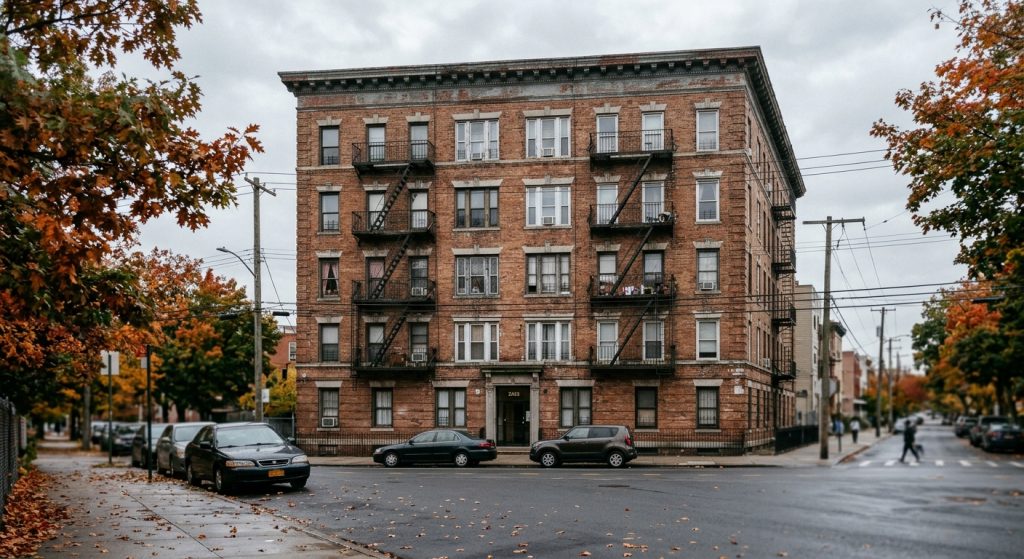
The conditions described in the filing include unauthorized construction, badly cracked and deteriorating facades, bulging and leaning walls, and rusting fire escapes that the city says are at risk of collapse. The announcement singles out two Bronx properties:
- 2500 Webb Avenue carries 456 violations, 183 of them classified as “immediately hazardous.” The lawsuit describes its facade as an “immediate hazard” with “potential to collapse,” and cites inadequate pedestrian protection and an obstructed fire escape.
- 3030 Heath Avenue has been under a full vacate order since a four-alarm fire on Jan. 15, 2025, and the city says the owner has not complied with orders to repair the damage. Conditions listed include missing sections of roof, missing windows, water damage, a partially collapsed loft area and problems with gas valves. The building has 261 violations, 105 of them immediately hazardous.
These are allegations in a civil complaint and have not been tested in court. The city’s announcement did not include a response from Singer.
Escalating enforcement against problem owners
City officials framed the case as part of “Fix the City,” an enforcement push described in the administration’s Block by Block housing plan and its Rental Ripoff Report. The stated aim is to make the most persistently noncompliant owners either fix their buildings or transfer them to owners who will. The strategy behind this suit was developed with the Housing Rights Initiative, a legal advocacy group.
“When the same old tools fail to deliver results, we will use new strategies to hold noncompliant landlords accountable and win justice for tenants,” Mamdani said in the announcement.
Corporation Counsel Steven Banks said that “ignoring housing code violations and hiding behind shell companies has put both tenants and the public at risk,” and called the False Claims Act “a powerful new tool.” HPD Commissioner Dina Levy said the Singer case “establishes new methods for the City to advocate for tenants, protect existing affordable housing and hold bad actors accountable.”
Buildings Commissioner Ahmed Tigani said the Department of Buildings had already pursued Singer with a criminal court summons and “hundreds of thousands of dollars in penalties.” Cea Weaver, director of the Mayor’s Office to Protect Tenants, said the city aims to “recoup payments for repairs that the City has been forced to make because Singer wouldn’t.”
The suit follows other steps by the administration aimed at distressed buildings. Mamdani earlier signed legislation giving nonprofits a first shot at buying distressed buildings, and the city’s housing plan sets goals of building 200,000 affordable homes and preserving another 200,000 over the next decade, backed by what the administration calls a $22 billion capital commitment over five years.
Why owners and lenders should pay attention
For most owners, the practical point is the money. Unpaid emergency-repair charges and code judgments often sit on the books as debts the city struggles to collect. If a court accepts the False Claims Act theory, those debts could carry treble damages and per-violation penalties, which would make them far more expensive to ignore. On our reading, that is relevant to lenders and prospective buyers of troubled rent-regulated buildings as well as to the owners themselves, since the size of a building’s unpaid city obligations could grow sharply.
The case also lands while the administration’s housing policies are already being fought over in court and in the market, including the debate over who rent stabilization helps. How the Bronx court handles the first False Claims Act case against a landlord will show whether the city has a new enforcement tool or only a test case.