
Current real estate market data, news and analysis for the Salisbury, MD metropolitan area — 131,872 residents across Somerset and Wicomico counties.
Sources: U.S. Census Bureau.
Latest Salisbury Real Estate News
Salisbury Real Estate Market Overview
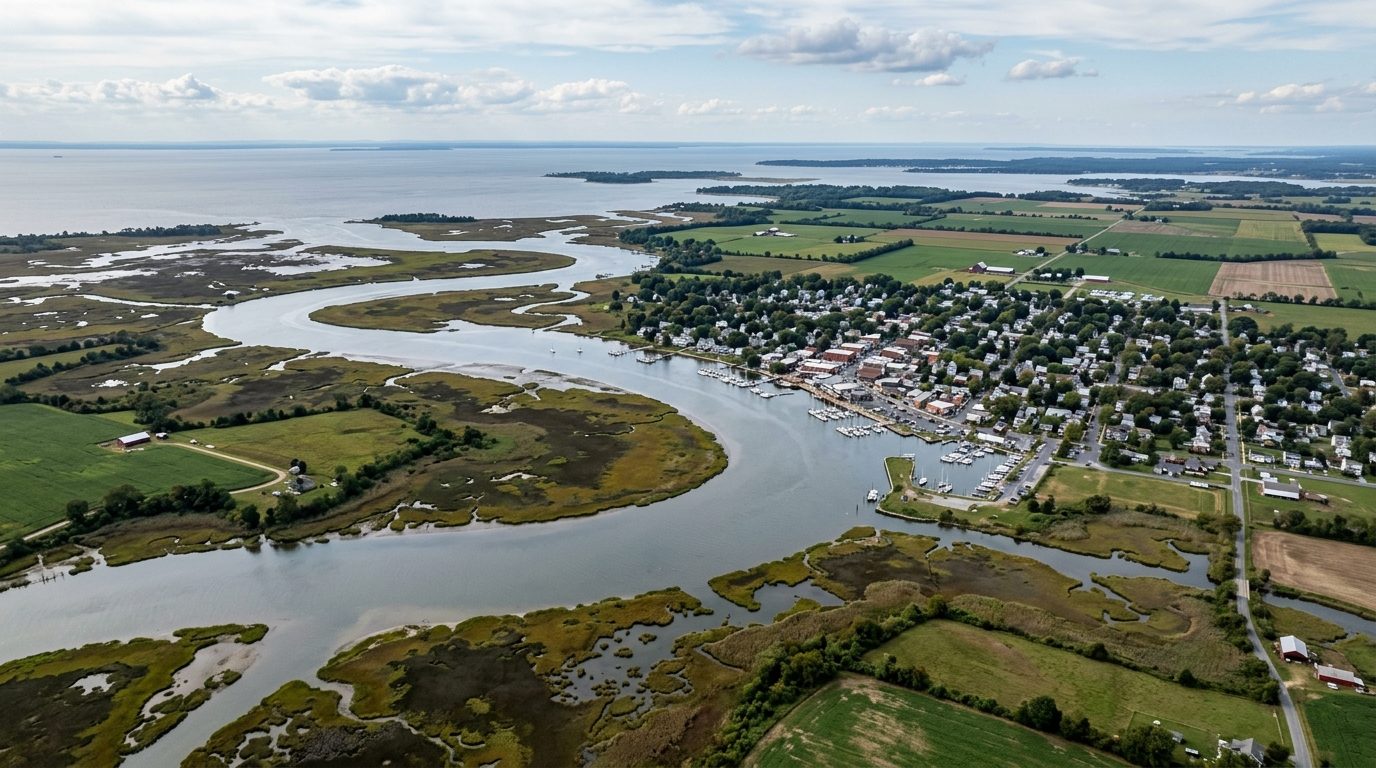
Salisbury sits at the center of the Delmarva Peninsula’s lower Eastern Shore, spanning Wicomico and Somerset counties, with the city of Salisbury on the Wicomico River serving as the region’s hub between the Chesapeake Bay and the Atlantic coast. The landscape is flat, low-lying farmland and pine woods threaded by tidal creeks and marsh, with the towns of Delmar, Fruitland, Hebron, Pittsville, Princess Anne, and the Chesapeake port town of Crisfield surrounding the core city. Housing stock reflects that history: downtown Salisbury retains blocks of early-twentieth-century bungalows and Victorian-era houses in its historic districts, while postwar brick ranches and split-levels fill older suburban rings along the river. Newer subdivisions have spread along the US-13 and US-50 corridors toward Fruitland, and rural stretches of both counties still carry farmhouses, manufactured homes, and waterfront cottages on generous acreage.
Waterfront and near-waterfront property along the Wicomico River, its creeks, and the Chesapeake shoreline commands a premium tier, prized for direct water access and views that are scarce given the region’s modest size. Established in-town neighborhoods near Salisbury University and the historic Camden, Newtown, and Downtown districts also draw sustained interest for walkable settings and architectural character. Newer subdivisions on the city’s edges and in Fruitland trade older-home upkeep for modern construction and larger lots. The more rural, agricultural expanses of Somerset County, including areas around Princess Anne and Crisfield, tend to be more attainable, reflecting distance from Salisbury’s employment core, fewer services, and, in Crisfield’s case, greater exposure to tidal water.
Salisbury’s economy is anchored by agribusiness, healthcare, and higher education. Perdue Farms, one of the nation’s largest poultry and protein companies, is headquartered in Salisbury and remains the region’s signature employer, supported by Mountaire Farms and a broader network of poultry and seafood processing tied to the Eastern Shore’s farm and Bay economy, including Crisfield’s historic crab-packing trade. TidalHealth Peninsula Regional, the area’s principal hospital system, is a major source of healthcare employment. Salisbury University and the University of Maryland Eastern Shore in Princess Anne, a historically Black land-grant university with marine science research programs, both anchor the local economy alongside county and municipal government and public schools. With no interstate highway through the metro, the economy leans on these regional institutions and agriculture more than on relocating corporate offices.
The Eastern Shore’s low, flat topography and proximity to the Bay and tidal rivers expose parts of the metro, especially waterfront lots and low-lying towns like Crisfield, to nuisance tidal flooding and storm-surge risk from nor’easters and tropical systems; buyers near water should check FEMA flood zone status and whether flood insurance is required, since standard homeowners policies typically exclude rising water. Wicomico and Somerset counties are governed separately, so tax rates and school districts differ across the county line, and land in agricultural preservation districts carries restrictions on future development worth confirming before purchasing rural acreage. US-13 and US-50 are the primary arteries, and the local airport offers limited commercial service, so most residents rely on personal vehicles. Salisbury’s downtown historic districts require design review for exterior changes, and many rural parcels rely on private well and septic systems rather than municipal service. Buyers should also check a property’s proximity to poultry operations, which can affect odor and future land use.
Cities and Towns in the Salisbury Metro Area
Notable Communities and Neighborhoods
Salisbury Real Estate Market FAQ
How is the Salisbury, MD real estate market organized geographically?
The metro centers on the city of Salisbury on the Wicomico River, with Wicomico County towns like Fruitland, Hebron, and Pittsville forming a suburban and small-town ring, and Somerset County to the south, anchored by Princess Anne and the Chesapeake port town of Crisfield, offering a more rural and agricultural character. Waterfront access along the Wicomico River and Chesapeake tributaries is a defining feature that cuts across both counties, while inland areas are shaped more by farmland and highway access along US-13 and US-50.
Which parts of the Salisbury metro tend to carry higher prices, and why?
Waterfront and near-waterfront property along the Wicomico River and Chesapeake shoreline generally carries a premium because buildable water-access parcels are limited in supply. Established in-town neighborhoods near Salisbury University and the city’s historic districts also draw steady demand for their walkability and architectural character. Newer subdivisions on the edges of Salisbury and in Fruitland appeal to buyers seeking modern construction. More rural, agricultural sections of Somerset County tend to be more attainable, reflecting their distance from the region’s main employment centers and more limited services.
What should buyers verify locally before purchasing in this metro?
Because Wicomico and Somerset counties are governed separately, buyers should confirm which county and municipality a property sits in, since tax rates, permitting rules, and school districts differ across the line. Rural parcels often rely on private well and septic systems rather than public utilities, which warrants inspection, and land within agricultural preservation districts carries restrictions on future development. Properties near poultry operations or farmland should also be checked for potential odor, noise, and land-use factors, and any exterior work on homes in Salisbury’s historic districts is subject to design review.
What is the main region-specific risk buyers should understand here?
The Eastern Shore’s flat, low-lying terrain and proximity to the Chesapeake Bay and its tidal rivers create exposure to nuisance tidal flooding and storm-surge risk from nor’easters and tropical systems, particularly for waterfront property and low-lying towns such as Crisfield. Buyers should check a property’s FEMA flood zone designation and understand that standard homeowners insurance policies typically exclude rising water, meaning separate flood insurance may be required or advisable depending on location and mortgage requirements.
Nearby Markets