
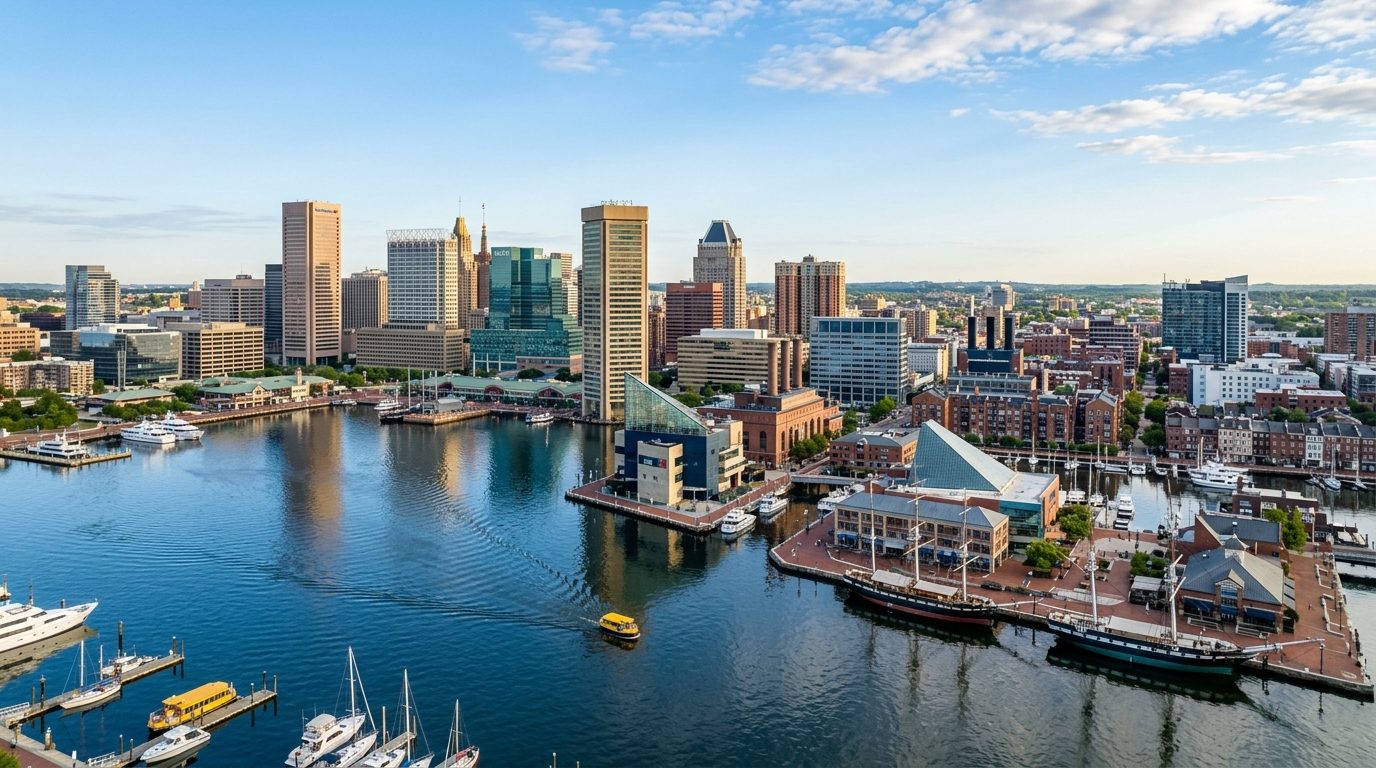
Current real estate market data, news and analysis for the Baltimore-Columbia-Towson, MD metropolitan area — 2.9M residents across 7 counties in Maryland.
Data as of May 2026. Sources: Redfin Data Center, U.S. Census Bureau.
Latest Baltimore Real Estate News
Baltimore Real Estate Market Overview
Baltimore-Columbia-Towson includes Baltimore City, the suburban counties surrounding it, Annapolis and western Chesapeake Bay communities, northern growth corridors and portions of Maryland’s Eastern Shore. Baltimore contains brick rowhouses, detached houses, apartment buildings, converted industrial properties and waterfront condominiums. Baltimore County ranges from dense inner suburbs to established neighborhoods, horse-country areas and northern rural communities. Howard County includes Columbia’s planned villages, older towns and newer subdivisions. Anne Arundel County combines suburban development with waterfront neighborhoods, while Carroll, Harford and Queen Anne’s counties include small towns, farms, commuter subdivisions and lower-density properties.
Higher price tiers are generally associated with Guilford, Roland Park, Harbor East, waterfront Baltimore neighborhoods, Annapolis, Severna Park, parts of Howard County and selected northern Baltimore County communities. These areas often combine historic architecture, water access, established schools, larger lots or proximity to employment centers. More attainable choices are commonly found in many Baltimore rowhouse neighborhoods, portions of Dundalk and Essex, older suburban corridors and towns farther from central employment districts. Property condition varies considerably, and a lower acquisition cost may involve substantial work to roofs, masonry, mechanical systems, sewer lines or interiors altered without permits.
The regional economy is supported by health care, higher education, government, defense, logistics, finance and professional services. Johns Hopkins University and Johns Hopkins Medicine are major institutional anchors, while the University of Maryland Medical System, state government and other hospital systems support additional employment. Fort George G. Meade and the National Security Agency influence housing demand in Anne Arundel and Howard counties. The Port of Baltimore supports maritime, logistics and industrial activity, while Baltimore/Washington International Thurgood Marshall Airport contributes aviation and transportation employment. Annapolis adds state-government and naval activity.
Housing decisions are influenced by county and city boundaries, water access and transportation corridors. MARC, Amtrak, local rail and bus services connect selected communities, but many suburban households depend on highways. Baltimore’s older housing stock can require review of lead-paint compliance, ground-rent status, masonry, roofs and sewer systems. Chesapeake Bay and riverfront properties may face flooding, storm surge, shoreline erosion and critical-area restrictions. Heavy rain, severe storms and freeze-thaw cycles affect drainage and building exteriors. Buyers should verify jurisdiction-specific transfer and property taxes, school assignments, historic-district requirements, well and septic systems, homeowners association obligations and whether waterfront structures have valid permits.
Cities and Towns in the Baltimore Metro Area
Notable Communities and Neighborhoods
Baltimore Real Estate Market FAQ
How is the Baltimore metro housing market geographically organized?
The market includes Baltimore’s rowhouse neighborhoods, inner suburbs, planned Columbia communities, Annapolis and Chesapeake Bay areas, northern suburban counties and portions of the Eastern Shore. Employment centers, county boundaries, water access and commuting routes create distinct submarkets.
Which Baltimore-area locations generally sit in higher price tiers?
Guilford, Roland Park, Harbor East, waterfront areas of Baltimore, Annapolis, Severna Park, parts of Howard County and selected northern Baltimore County communities generally occupy higher tiers. Historic architecture, water access, schools, larger lots and shorter access to employment centers contribute.
What should buyers inspect in an older Baltimore rowhouse?
Buyers should review masonry, roofs, foundations, sewer lines, electrical systems, plumbing and the history of additions or interior alterations. Shared walls, ground rent, permits and lead-paint requirements may also require property-specific review.
What should buyers verify near the Chesapeake Bay and regional waterways?
Buyers should examine flood zones, elevation, shoreline or seawall condition, stormwater drainage, insurance and permits for docks or waterfront improvements. Septic systems, wells and critical-area restrictions may also apply outside urban service areas.
Nearby Markets