
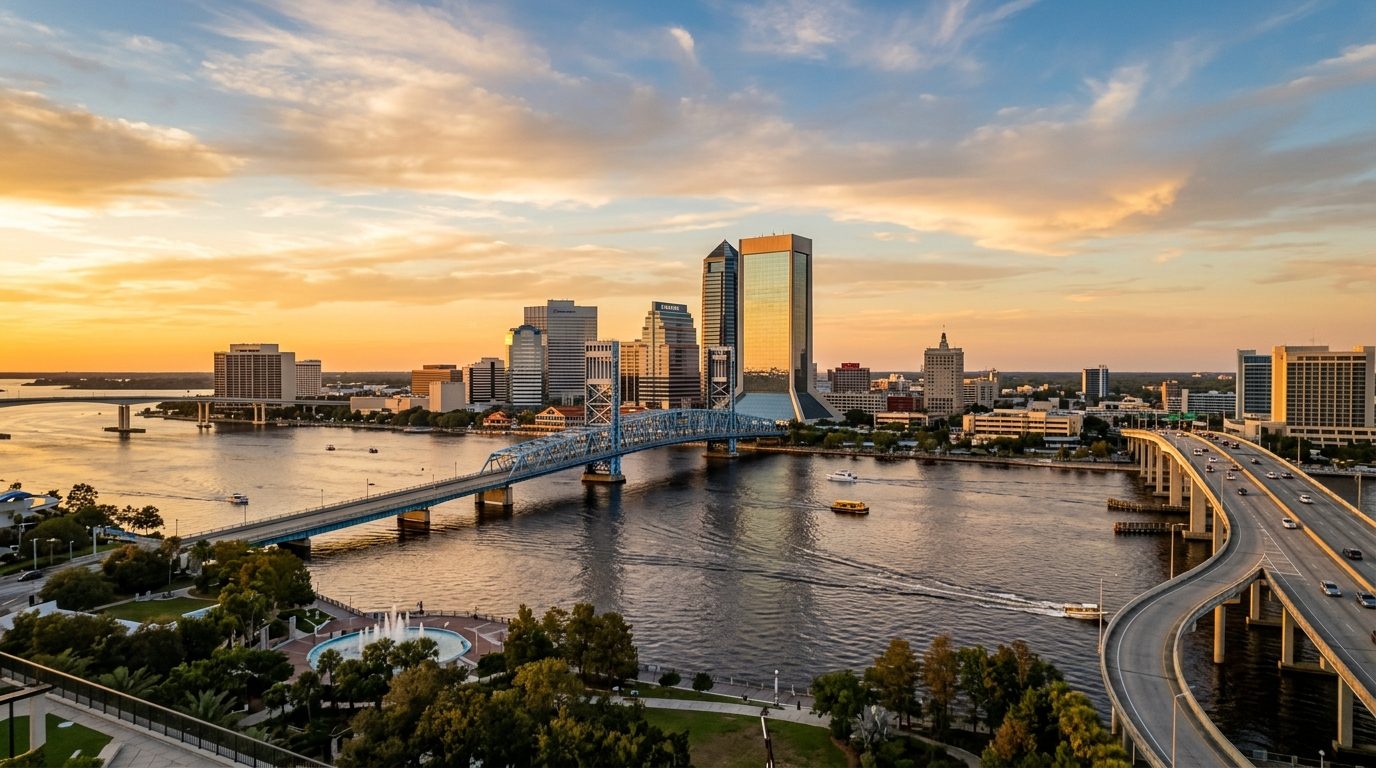
Current real estate market data, news and analysis for the Jacksonville, FL metropolitan area — 1.8M residents across 5 counties in Florida.
Data as of May 2026. Sources: Redfin Data Center, U.S. Census Bureau.
Latest Jacksonville Real Estate News
Jacksonville Real Estate Market Overview
The Jacksonville metropolitan area covers Baker, Clay, Duval, Nassau and St. Johns counties in Northeast Florida. Jacksonville occupies both sides of the St. Johns River and includes an urban core, established streetcar-era neighborhoods, broad postwar suburbs, coastal communities and large areas of lower-density development. Housing ranges from historic wood-frame and brick homes in Riverside, Avondale, Springfield and San Marco to ranch houses, townhouses, condominiums and newer subdivisions. Atlantic Beach, Neptune Beach and Jacksonville Beach form a separate coastal corridor, while Clay and St. Johns counties contain extensive master-planned development. Nassau County includes Fernandina Beach, Amelia Island and smaller inland communities, and Baker County remains more rural.
Higher price tiers are generally associated with Ponte Vedra Beach, Amelia Island, Ortega, San Marco, selected areas of Riverside and Avondale, and waterfront or golf communities along the river, Intracoastal Waterway and Atlantic coast. These locations often combine water access, larger lots, historic architecture, private amenities or shorter access to employment and recreation. More attainable choices are commonly found in portions of Jacksonville’s Westside, Northside and Arlington areas, older Clay County neighborhoods, Macclenny and inland Nassau County. Lower acquisition costs farther from the core may be offset by commuting distance, limited transit, well and septic systems or the timing of new roads, schools and retail development.
The regional economy is supported by health care, financial services, logistics, military activity, manufacturing, transportation and government. Naval Air Station Jacksonville, Naval Station Mayport and related contractors anchor defense employment. Mayo Clinic, Baptist Health, UF Health Jacksonville and other medical providers support health care. CSX is headquartered in Jacksonville, and the Port of Jacksonville, interstate network, rail facilities and Jacksonville International Airport support freight and distribution activity. Financial-services companies, public agencies, universities and industrial employers are distributed across downtown, the Southside, the airport corridor, the port area and suburban business districts.
Hurricanes, wind, flooding, storm surge, high groundwater and salt exposure are important property considerations. Risks vary among oceanfront, riverfront, marshfront and inland locations, so flood and evacuation zones should be reviewed separately. Older homes may require examination of roofs, plumbing, electrical systems, foundations and prior additions, while newer communities may involve homeowners associations and community-development districts. The region remains automobile-oriented, and river crossings can affect commute reliability. Buyers should verify insurance availability, drainage, septic or sewer service, termite history, association obligations and whether nearby undeveloped land is protected or approved for future construction.
Cities and Towns in the Jacksonville Metro Area
Notable Communities and Neighborhoods
Jacksonville Real Estate Market FAQ
How is the Jacksonville metro housing market geographically organized?
The market extends from Jacksonville’s urban neighborhoods and Atlantic beaches through suburban Clay and St. Johns counties, Nassau County communities near the Georgia line and rural Baker County. The St. Johns River, Intracoastal Waterway, bridges, military installations and highway corridors create distinct housing and commuting patterns.
Which Jacksonville-area locations generally sit in higher price tiers?
Ponte Vedra Beach, Amelia Island, Ortega, San Marco, parts of Riverside and Avondale, and selected waterfront or golf communities generally occupy higher tiers. Ocean or river access, larger lots, historic architecture, private amenities and proximity to major employment centers contribute.
What should buyers verify before purchasing waterfront property near Jacksonville?
Buyers should review flood zones, elevation, evacuation routes, prior claims, seawall or bulkhead condition, dock permits and wind and flood insurance options. Riverfront, marshfront, Intracoastal and oceanfront properties face different combinations of erosion, storm surge, tidal flooding and salt exposure.
What should buyers review in a new Jacksonville-area community?
Buyers should examine homeowners association rules, community-development district obligations, builder warranties, school plans, road capacity and nearby approved land uses. They should also confirm whether advertised amenities and commercial services are complete or remain part of future phases.
Nearby Markets