Home builders are reporting worse labor shortages than they did at the peak of the last housing boom, even though they are starting nearly 30% fewer homes.
Across the nine construction trades the National Association of Home Builders has tracked consistently since 1996, an average of 47% of builders reported a shortage in September 2026, up from 42% in April 2025. That is a higher reading than any recorded during the 2004-to-2006 boom, when housing starts ran above 1.8 million a year. August 2026 starts came in under 1.3 million at a seasonally adjusted annual rate.
The figures come from special questions on the NAHB/Wells Fargo Housing Market Index survey fielded in September, published Oct. 14, 2026 by NAHB’s Paul Emrath in an analysis on the association’s Eye on Housing blog. The survey asked builders about 16 trades; the previous comparable survey was in April 2025.
Where the squeeze is worst
Shortages of directly employed workers ranged from 33% of builders — for excavators and for building maintenance managers — to 58% for finished carpentry.
Fourteen of the 16 trades got at least slightly tighter since April 2025. The three largest moves:
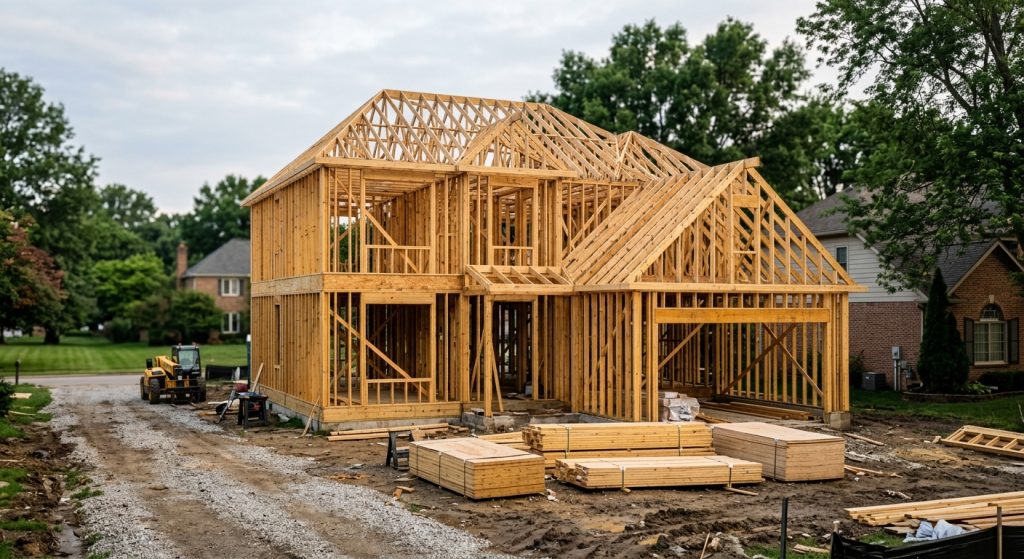
- Framing crews, up 9 percentage points to 57%
- Landscaping workers, up 7 points to 39%
- Roofers, up 6 points to 36%
Only two trades were unchanged: plumbers, at 45%, and HVAC workers, at 43%.
Builders also reported a median increase of 4.2% in the labor cost of building the same home over the previous 12 months — a figure that lands differently now than it would have two years ago, because RealtyWire has previously covered how residential construction wage growth had been cooling to the point that real pay was falling.
The subcontractor gap has closed
The more structural finding concerns subcontractors, who do most of the actual work. NAHB cited its own 2020 study showing that builders use about two dozen subcontractors on average and subcontract 84% of total single-family construction costs.
From 2012 through 2020, subcontractor shortages were consistently more widespread than shortages of builders’ own employees. That gap has disappeared; the two measures now move together. In five trades — framers, rough carpenters, finished carpenters, bricklayers and concrete workers — more than half of builders report shortages of both subcontractors and direct employees.
For a builder, that combination removes the usual workaround. A shortage of in-house framers can be solved by hiring a framing sub; a simultaneous shortage of both means the schedule slips or the price goes up.
Two causes, one of them a competitor
NAHB pointed to two forces behind the reversal. The first is falling employment in residential construction as home building competes for workers with other construction segments — data centers in particular. The second is immigration enforcement, which the association said is heightening workers’ fears and adding to the shortage.
Both are visible in other data. Construction job openings fell to 251,000 in August while staying above year-earlier levels, a pattern consistent with crews being pulled toward large non-residential projects, and construction added 11,000 jobs in September even as overall U.S. payroll growth nearly stalled.
The data center channel is the part worth watching for anyone pricing a residential project. Associated Builders and Contractors said on Oct. 13 that commercial contractors’ backlog rose for a second straight month in September, and its chief economist attributed the gain to data center work; the 15% of its members holding data center contracts reported about three months more backlog than members without it. Those projects draw electricians, concrete crews and pipefitters from the same regional labor pools that subdivisions rely on.
What it means for 2027 construction
The sequence in NAHB’s history of this series is worth stating plainly: shortages peaked during the pandemic, declined steadily from 2022 through 2025, and have now turned back up. The decline during those three years coincided with a slowdown in home building. The increase has arrived without a recovery in volume.
On our reading, that is the significant point. Labor tightness in 2021 could be explained by a building surge; tightness in 2026 at under 1.3 million starts suggests the supply of residential construction labor has shrunk, not that demand for it has spiked. If that holds, the cost relief builders have been counting on to improve affordability does not arrive when rates eventually fall — it goes the other way, because a volume recovery would run straight into the constraint the September survey just measured.
Builders have been working on the supply side for years with mixed results; NAHB’s own research found that only two of 47 construction occupations rate high for exposure to artificial intelligence, which limits how much of the gap technology can close. More construction and housing coverage is on RealtyWire’s housing market page.