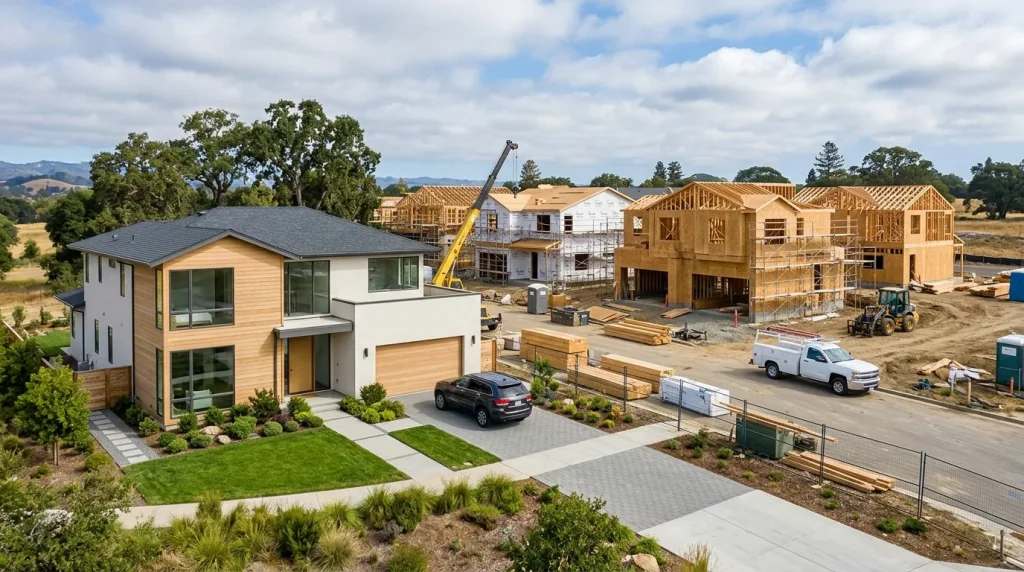
New construction is becoming one of the most important pressure points in the 2026 housing market.
Housing starts fell sharply in May, new-home sales weakened, builder confidence remained low, and incentives continued to spread across the market. For buyers, that creates a complicated opportunity: new homes may offer more negotiating room than resale homes in some markets, but builder incentives are not always as simple as they look.
For sellers of existing homes, the message is just as important. Nearby new construction can become direct competition, especially when builders offer rate buydowns, closing-cost help, design upgrades or price reductions.
Key takeaways
- May 2026 housing starts fell 15.4% from April to a seasonally adjusted annual rate of 1.177 million.
- Single-family housing starts were 882,000 in May.
- Building permits totaled 1.413 million, while completions totaled 1.313 million.
- New-home sales fell to a 580,000 seasonally adjusted annual rate in May.
- New homes for sale totaled 496,000, equal to 10.3 months of supply.
- NAHB’s June 2026 Housing Market Index fell to 35.
- NAHB said 35% of builders cut prices in June and 62% used sales incentives.
- Buyers should compare builder incentives against total cost, not just the advertised deal.
What the latest construction data shows
The May construction data showed a clear pullback in building activity.
Census/HUD reported that privately owned housing starts fell to a seasonally adjusted annual rate of 1.177 million in May 2026, down 15.4% from the revised April estimate. Single-family starts were 882,000, while building permits were 1.413 million and completions were 1.313 million.
That matters because housing starts are a forward-looking signal. A drop in starts can reflect weaker builder expectations, higher financing costs, slower buyer traffic, inventory concerns, or caution about future demand.
New-home sales also weakened. Census/HUD reported that new single-family home sales fell to a 580,000 seasonally adjusted annual rate in May, down 7.3% from April and 6.8% from a year earlier. The number of new homes for sale reached 496,000, equal to 10.3 months of supply at the current sales pace.
The result is a new-construction market that is not collapsing, but is clearly under pressure.
Builder confidence remains weak
The National Association of Home Builders/Wells Fargo Housing Market Index fell to 35 in June 2026. NAHB said current sales conditions fell to 38, sales expectations for the next six months held at 45, and traffic of prospective buyers stayed at 25.
An HMI reading below 50 means more builders view conditions as poor than good. The June number points to a builder market still dealing with affordability, financing costs and cautious buyer demand.
The same NAHB report showed how builders are responding. NAHB said 35% of builders cut prices in June, with an average price reduction of 6%. It also said 62% of builders used sales incentives, marking the 15th consecutive month that the incentive share reached 60% or higher.
That is one of the most important takeaways for buyers: builders are not just adjusting price. They are also using incentives to make deals work.
Builder incentives: what buyers should compare
Builder incentives can be valuable, but buyers should understand what they are actually getting.
Common new-construction incentives may include temporary mortgage-rate buydowns, permanent rate buydowns, closing-cost assistance, design-center credits, appliance or upgrade packages, lot-premium discounts, price reductions on completed inventory, or financing incentives tied to a preferred lender.
The key is to compare incentives on a total-cost basis. A rate buydown may lower the monthly payment, but it may come with conditions. A closing-cost credit may reduce the cash needed at closing, but the home price could still be higher than competing resale homes. An upgrade package may be attractive, but buyers should ask whether the same money would be better used to reduce the purchase price or monthly payment.
Resale home vs. new construction
Buyers often compare new construction with existing homes based on price, but that is only the first layer.
| Buyer question | New construction issue to review |
|---|---|
| What is the real monthly payment? | Include loan terms, rate buydowns, taxes, insurance and HOA dues |
| Is the incentive tied to a lender? | Ask whether using the preferred lender is required |
| Is the home complete or still under construction? | Completion timing can affect rate locks, moving plans and costs |
| Are there lot premiums? | A base price may not include the desired lot |
| What does the warranty cover? | Compare builder warranty terms with inspection risk on resale homes |
| What are the HOA costs? | New communities can have dues, rules and future cost changes |
| What nearby homes are still planned? | Future phases can affect competition and resale value |
A new home may offer modern systems, energy features, warranties and fewer immediate repairs. A resale home may offer an established neighborhood, mature landscaping, a better location or lower ongoing community costs.
The better deal depends on the buyer’s needs, financing and market.
What this means for buyers and sellers
For buyers, new construction in 2026 may offer more flexibility than the resale market in some areas, especially where builders have completed inventory or slower buyer traffic. But buyers should avoid assuming every builder incentive is automatically a discount.
For sellers, new construction can affect pricing even when the homes are not identical. If a buyer can purchase a new home with a rate buydown, closing-cost help and a warranty, an existing-home seller may need to compete on price, condition, location, or concessions.
For agents and investors, builder competition should be part of market analysis. A resale listing near several new-home communities may need a different pricing and marketing strategy than a similar home in a built-out neighborhood with little new supply.
FAQ
Are builders cutting prices in 2026?
Yes. NAHB reported that 35% of builders cut prices in June 2026, with an average price reduction of 6%.
Is it cheaper to buy new construction right now?
Not always. New construction may offer incentives, but buyers need to compare the full cost, including purchase price, mortgage terms, taxes, insurance, HOA dues, upgrades, lot premiums and closing costs.
What builder incentives are common in 2026?
Common incentives can include closing-cost credits, mortgage-rate buydowns, design upgrades, appliance packages, lot-premium discounts and price reductions on completed inventory.
Are housing starts falling because demand is weak?
Weaker demand is one factor, but not the only one. Builders may also respond to financing costs, construction costs, labor availability, regulatory costs, inventory levels and uncertainty about future buyer activity.
Should sellers worry about competing with new homes?
Sellers should pay attention if their home competes with nearby new construction. Builders may offer incentives that affect buyer expectations, especially for move-in-ready homes in similar price ranges.
Sources
- Census/HUD New Residential Construction
- Census/HUD New Residential Sales
- NAHB/Wells Fargo Housing Market Index
- NAHB Builder Sentiment Release
- MBA Builder Application Survey