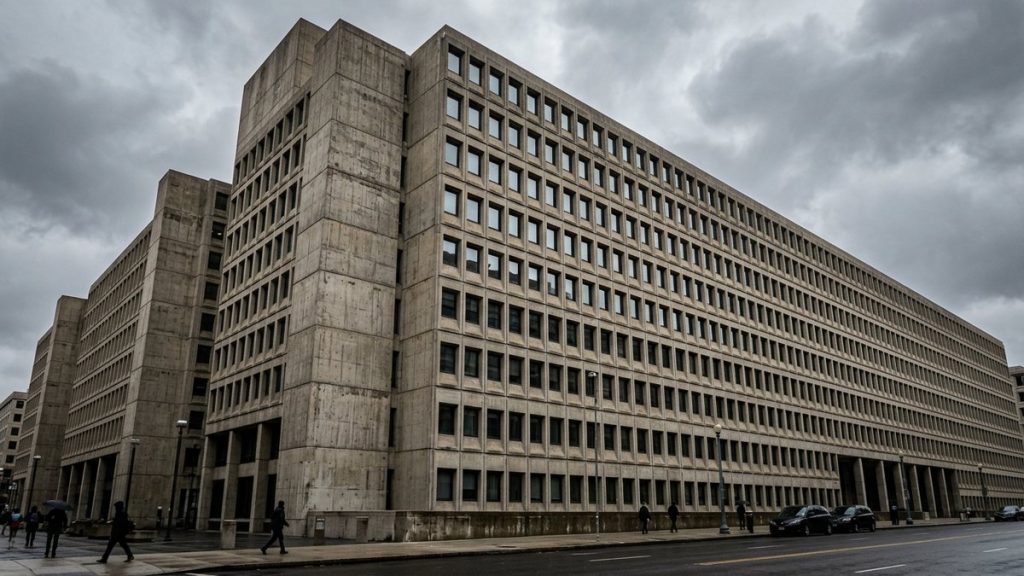
Members of the Department of Government Efficiency working at the Department of Housing and Urban Development used artificial intelligence to help identify agency regulations for potential rescission — and HUD is now withholding more than 100 documents about how those tools were built and used, according to reporting by WIRED based on Freedom of Information Act litigation records obtained by the nonprofit Democracy Forward.
Because the underlying records remain withheld, the AI system’s instructions, outputs and error rates cannot be independently verified — which is precisely the transparency question the episode raises: when software helps decide which housing rules live or die, what documentation does the public get?
What the reporting describes
- The tool: AI used to classify HUD regulations for retention, deletion or partial deletion, per WIRED’s reporting; agency employees were reportedly looped in to review flagged rules — though some described the exercise as redundant.
- The people: the effort was led at HUD by a then-university student working with DOGE alongside a proptech-industry veteran who has since become executive director of deregulation AI at the Office of Management and Budget, according to the reporting.
- The records fight: more than 100 responsive documents were withheld from Democracy Forward’s FOIA request, with HUD reportedly citing, among other grounds, an ‘AI privilege’ that does not exist in FOIA law and a presidential-communications privilege generally held to apply narrowly.
Why housing professionals should care about a records dispute
HUD regulations are not abstractions: they govern FHA lending terms, fair-housing enforcement, manufactured-housing standards and rental assistance touching millions of households. Which rules get flagged for deletion — and whether a model or a human made the call — determines compliance obligations across the industry. The recent 14-change FHA streamlining package shows deregulation done through normal channels, with documentation; the AI review, as reported, is notable precisely because its reasoning is not public.
The episode also lands in a industry already wrestling with algorithmic accountability — from AI fair-housing exposure to rent-setting software litigation. Governments now face the same question courts are putting to landlords and platforms: when software shapes consequential decisions, the process documentation is the accountability.
What it means
For now, this is a transparency story rather than a policy-change story: no specific rule deletions have been attributed to the AI review in public records, and the litigation will determine what gets disclosed. The practical watch item for lenders, landlords and housing advocates is whether future HUD rule rescissions arrive with conventional administrative records — or with gaps where the analysis should be.
Earlier reporting sketched the tool’s ambitions: FedScoop described DOGE pitching HUD on what was internally billed as an AI-fueled regulation-review system capable of processing the agency’s rulebook at machine speed. The personnel arc since then is its own story — the student who led the HUD effort has graduated, while his proptech-industry counterpart now directs deregulation AI government-wide from the Office of Management and Budget, suggesting the approach is scaling, not sunsetting.
The irony the records fight highlights: HUD’s own open-data plan, updated in March 2026, commits the agency to transparency about its data and analytical tools. Whether AI-assisted rulemaking analysis falls inside that commitment — or hides behind privileges FOIA does not recognize — is precisely what Democracy Forward’s litigation will force a court to decide. Transparency advocates note that withholding on novel grounds tends to fare poorly once judges engage.
The stakes generalize beyond housing: every federal agency faces pressure to review regulations faster, and AI is the obvious tool. The HUD dispute is likely the template case for what documentation the public gets when algorithms enter the administrative state — which is why lawyers well outside real estate are watching a housing FOIA fight.
FAQ
Did AI actually delete HUD regulations?
Not that public records show. The reporting describes AI identifying candidates for rescission, with employees reviewing flags; formal rule changes still require administrative process.
What is an ‘AI privilege’?
Nothing — no such FOIA exemption exists, which is why HUD reportedly citing one drew attention. Agencies must ground withholdings in the statute’s actual exemptions, a question the litigation will test.
Who is Democracy Forward?
A nonprofit legal organization that litigates for government transparency; it filed the FOIA requests and obtained the documents underlying WIRED’s reporting.
Sources
- WIRED — reporting on AI use in HUD policy review
- FedScoop — earlier reporting on the AI regulation tool at HUD