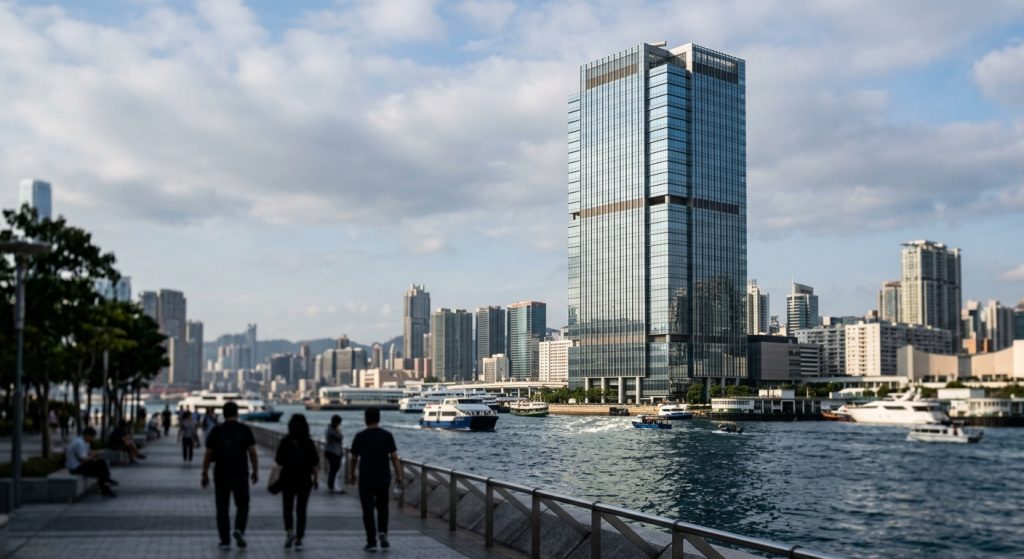
WS Development and PSP Investments have landed a $660 million refinancing loan for One Boston Wharf, a 708,590-square-foot office tower in Boston, Mass., that is fully leased to Amazon. The loan, disclosed in a Morningstar DBRS presale report and first reported by CommercialSearch, replaces the construction debt the joint venture used to build the 17-story tower in the Seaport District.
Wells Fargo Bank and Goldman Sachs Bank USA originated the fixed-rate loan, which carries a 7.06 percent interest rate, according to the presale report. The debt has a 10-year anticipated repayment date and a final maturity of September 2039. Payments are interest-only until the anticipated repayment date; after that, the rate steps up 3 percentage points and any excess cash flow is swept toward paying down principal. Trimont will service the loan, with Situs Holdings as special servicer.
Proceeds will retire $617.2 million still outstanding on the $735 million construction loan Wells Fargo originated for the project in 2021. The refinancing also returns $29.3 million in equity to the sponsors, funds a $19.5 million free-rent reserve and covers $8.3 million in closing costs, per the report.
Inside One Boston Wharf
One Boston Wharf, designed by Copenhagen-based architecture firm Henning Larsen, opened in February 2024. The tower includes 21,769 square feet of ground-floor retail and a 491-space underground garage connected to the neighboring 111 Harbor Way building, also part of WS Development’s Seaport District holdings. The property has earned LEED Platinum certification and is described in the presale report as the largest net-zero-carbon office building in the Boston metro area.
Amazon holds the entire office portion of the tower under a lease signed in September 2024 that runs through September 2039 — the same month the new loan reaches final maturity. The retailer has not yet completed its interior build-out of the space, according to the presale report.
A mixed office market, but a fully leased asset
The refinancing arrives as Boston’s office market sends mixed signals. The metro’s construction pipeline ranked first nationally as of May, with 3.9 million square feet underway, equal to about 1.5 percent of total inventory. Average asking office rents rose 2.7 percent year over year to $47.85 per square foot in June, even as vacancy climbed to 17.6 percent, up 110 basis points over the trailing 12 months, per the presale report.
Stress in commercial mortgage-backed securities tied to office buildings has also been climbing nationally this year — CMBS distress hit a 2026 high of 10.91 percent in July, driven largely by office loans. One Boston Wharf’s single-tenant, fully leased profile sets it apart from that trend, which may help explain why lenders were willing to underwrite a large loan against an office property even as the broader sector struggles. The 7.06 percent rate is still notably higher than what the joint venture likely paid on its 2021 construction loan, reflecting a lending environment that has not returned to pre-2022 levels.
What it means
Confirmed: Wells Fargo and Goldman Sachs originated a $660 million fixed-rate loan against One Boston Wharf, with terms, use of proceeds and property details as laid out in the Morningstar DBRS presale report cited by CommercialSearch. Those figures — the loan amount, interest rate, maturity schedule and allocation of proceeds — come directly from the rating agency’s own report on the transaction.
RealtyWire’s assessment that the building’s full Amazon lease insulated it from broader Boston office softness, and that current rates remain elevated versus 2021 construction financing, is analysis based on the market data in the same report rather than a claim made by the source itself.
What to watch
Watch for the CMBS deal backing this loan to price and close, and for confirmation of when Amazon finishes its build-out and begins occupying the space it has held under lease since 2024. WS Development continues to build out its broader Boston Seaport portfolio; elsewhere in the city, projects such as the Wentworth Institute’s $200 million residence tower point to continued institutional confidence in Boston development even as office fundamentals stay uneven. More on regional and national commercial financing activity is available on RealtyWire’s commercial real estate page.