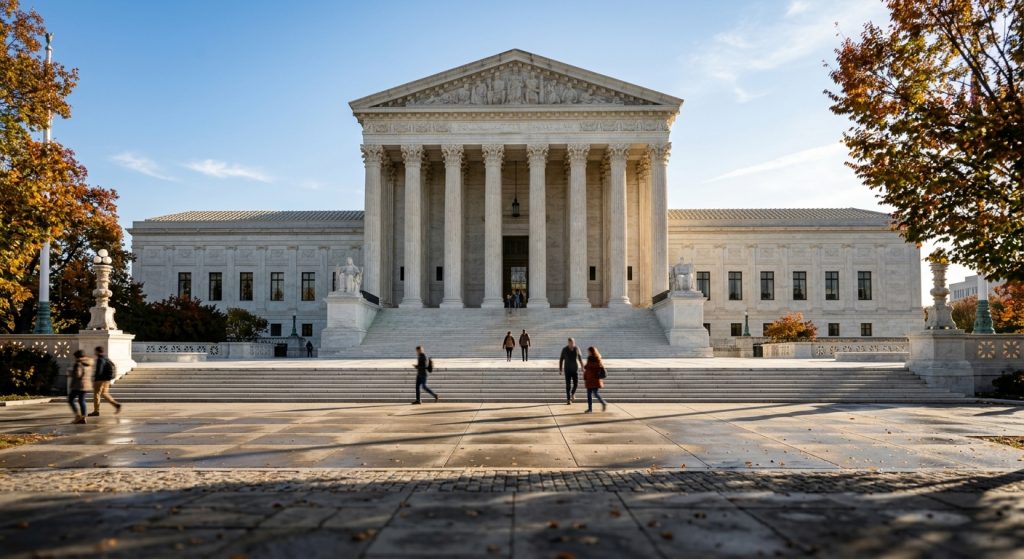
The U.S. Supreme Court declined on Oct. 5 to hear Zillow Group’s challenge to a certified class of investors suing over the collapse of Zillow Offers, the company’s home-flipping business. The denial in Zillow Group, Inc., et al. v. Jaeger, No. 25-1365, is recorded without comment among the certiorari denials in the order list the Court issued that day, the first day of its new term.
The effect is procedural but consequential. The securities class action now proceeds in the Western District of Washington with a class already certified, and Zillow has exhausted its appeals of that certification. As is customary, the Court gave no reasons, and the denial sets no precedent of its own.
What the certified class covers
U.S. District Judge Thomas S. Zilly certified the class on Aug. 23, 2024. As his order defines it, the class takes in all persons and entities that purchased or otherwise acquired Zillow Class A common stock or Class C capital stock between Aug. 5, 2021, and Nov. 2, 2021, inclusive, and were damaged as a result. The named plaintiff is Jeremy Jaeger. The individual defendants alongside the company are Richard Barton, Allen Parker and Jeremy Wacksman.
The underlying allegations
Zillow launched Zillow Offers in April 2018, buying homes directly from sellers, renovating them and reselling them at thin margins. In its certiorari petition, the company says it deliberately prioritized scale over per-home profit in order to act as a market maker, and that home-price appreciation slowed sharply in the summer of 2021, leaving purchase prices above later resale prices.
Jaeger alleges that in August and September 2021 Zillow told investors it had “made progress this quarter in improving our pricing models” while not disclosing that it was also manually adjusting its pricing algorithms to keep pace with home-price appreciation. He further alleges the company attributed falling home-renovation costs to “durable operational improvements” without disclosing that the declines came from cutting back renovation work and what it paid contractors.
The disclosures Jaeger says corrected those statements came in quick succession that fall. In mid-October 2021, Bloomberg reported that Zillow Offers was pausing home acquisitions, which Zillow confirmed in a press release. KeyBanc Capital Markets then reiterated earlier reports that 66% of Zillow’s homes were for sale below their purchase price. On its Nov. 2, 2021, earnings call, Zillow said it was writing down home inventory and shutting Zillow Offers down. The stock declined.
The legal question Zillow wanted answered
The dispute was narrower than those facts suggest. Under Basic Inc. v. Levinson, securities plaintiffs get a presumption that misstatements affected the market price of a stock; under Goldman Sachs Group, Inc. v. Arkansas Teacher Retirement System, decided in 2021, defendants must get a meaningful chance to rebut it. Jaeger’s case rests on an “inflation maintenance” theory — that the November price drop would have arrived in August or September had Zillow spoken fully then.
Zillow argued that the theory only holds when the later disclosures actually correct the earlier statements, and that its November disclosures said nothing about manual algorithm overlays or renovation spending. It told the justices the Second Circuit requires that closer fit while the Third and Ninth Circuits let plaintiffs proceed whenever the earlier and later statements address the same general subject matter, describing a 1-2 split among the circuits and arguing the Ninth Circuit’s decision “warrants review, if not summary reversal.”
A Ninth Circuit panel of Judges Graber, Owens and R. Nelson rejected that argument in an unpublished memorandum on Sept. 26, 2025, affirming certification under an abuse-of-discretion standard after argument in Anchorage, Alaska. Looking to loss-causation case law for guidance was not error, the panel wrote, and the later disclosures “revealed new information showing the extent of Zillow’s home-pricing struggles.” The panel pointed to Zillow’s own account of why it closed the home-buying side of the business: it had been “unable to accurately forecast future home prices,” and its pricing algorithm’s “observed error rate” proved “far more volatile than . . . expected.” Rehearing en banc was denied on Jan. 6, 2026.
Zillow was represented by Shay Dvoretzky of Skadden, Arps, Slate, Meagher & Flom; Jaeger by Steve W. Berman of Hagens Berman Sobol Shapiro, who also brought an earlier RESPA and RICO class action against the company that a federal judge dismissed without prejudice in July. The U.S. Chamber of Commerce, the Manhattan Institute and a group of former SEC officials filed amicus briefs at the petition stage. The case was distributed for the justices’ Sept. 28 conference.
Where this sits in Zillow’s docket
Jaeger is one of several legal fronts facing the company. In late September a federal judge in Seattle let an agents’ antitrust suit against Zillow proceed on all five counts, and in August Zillow and Redfin settled the Federal Trade Commission’s antitrust case on the morning their trial was set to begin.
Class certification is not a finding of liability, and the Ninth Circuit’s memorandum is explicit that the only question before it was whether Judge Zilly abused his discretion. What the Oct. 5 denial settles is the shape of the case: a class of 2021 Zillow shareholders will litigate the merits of the Zillow Offers disclosures in district court, with the Ninth Circuit’s reading of Goldman left standing.