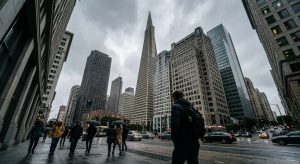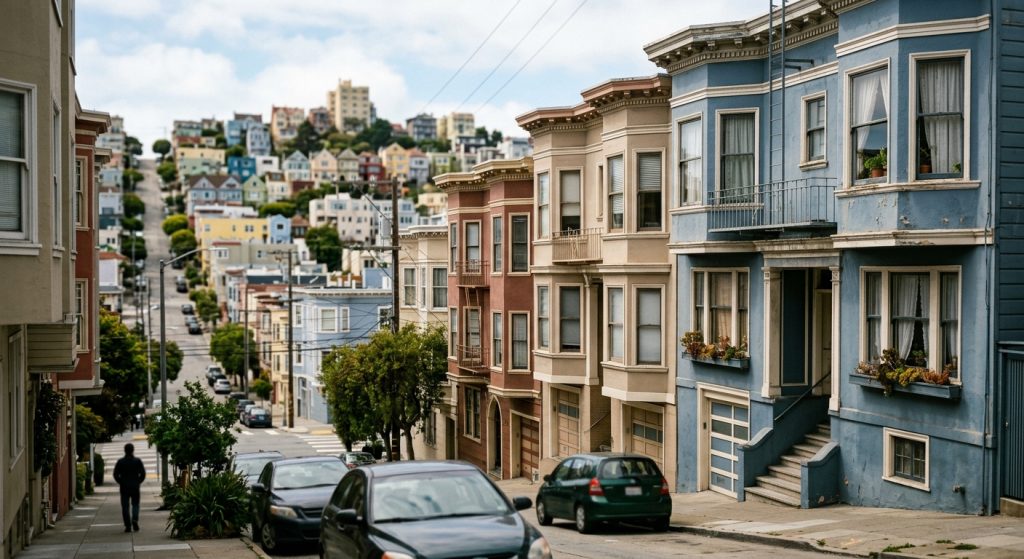
San Francisco’s apartment vacancy rate has fallen to about 2.9%, its lowest level in roughly 25 years, according to first-quarter 2026 data from CBRE. The tightening matters because it marks a sharp reversal for a city where office towers and apartments alike emptied out for years after the pandemic.
San Francisco’s real estate market spent much of the early 2020s working through a well-documented slump: remote work hollowed out downtown offices, apartment vacancies spiked as renters left the city, and landlords cut rents to fill units. That trend has now flipped. CBRE’s research team titled its first-quarter report “AI-Driven Tech Resurgence Fuels Bay Area Recovery,” and other firms that track the local rental market are describing similarly tight conditions heading into the back half of 2026.
CBRE’s data show San Francisco’s vacancy rate compressed 80 basis points from the prior quarter to reach 2.9% in the first quarter of 2026, the tightest reading the firm has recorded in about a quarter century. Bay Area-wide rent growth accelerated over the same period, rising from 4.3% in the fourth quarter of 2025 to 5.4% in the first quarter of 2026, as the region absorbed more than 6,450 units, per CBRE’s report.
Separate research from Kidder Mathews’ second-quarter 2026 Bay Area Multifamily Market Report, produced by the firm’s research team, put the metro’s vacancy rate at 4.0% for the second quarter, down from 5.1% a year earlier and from 4.4% in the first quarter of 2026. Kidder Mathews attributed the decline to strong tenant demand and a steep pullback in new construction, with deliveries down more than 70% year over year to about 2,400 units so far this year, even as landlords absorbed roughly 8,094 units. The firm’s average asking rent across the Bay Area stood at $2,843 a month, up 5.8% from a year earlier.
The vacancy figures differ across firms because each tracks a different basket of properties and applies its own methodology, a common feature of apartment data. Still, the direction is consistent. Marcus & Millichap’s Institutional Property Advisors research division describes San Francisco vacancy as sitting at historic lows and forecasts the metro rate will reach 3.5% by the end of 2026, down 30 basis points from a year earlier, with rents forecast to rise 5.2% for the year. In its report, the firm points to "the city’s growing role in AI and tech innovation, fueled by downtown startups that capitalize on the urban setting," as a force continuing to create high-paying jobs and reinforce renter demand. The firm’s data show Class A rents in submarkets such as SoMa, Mission Bay and the Richmond-Western Addition corridor climbing more than 13% year over year.
The demand side of the story lines up with broader coverage of San Francisco’s labor market this year, which has pointed to a wave of hiring by artificial intelligence companies as a driver of housing costs, alongside a housing shortage that predates the current boom, according to Axios, which has reported the city remains roughly 140,000 homes short of demand after decades of slow construction.
What it means: Multiple research firms agree that San Francisco apartment vacancy has tightened meaningfully over the past year, and that AI-related hiring is a factor landlords and analysts point to. The exact vacancy rate depends on which firm’s data set is used, and none of the reports cited here isolate how much of the drop is due to AI hiring specifically versus tech hiring broadly or the shortage of new construction. RealtyWire’s read is that the confluence of near-record-low new supply and a hiring rebound in a historically supply-constrained city is the more defensible explanation than any single driver.
What to watch: Investors and renters should watch whether construction starts pick up in response to rising rents, whether AI hiring continues at its current pace if the sector’s growth slows, and whether the next round of quarterly research reports from these firms confirms the trend or shows vacancy leveling off after such a steep drop.
Related coverage: Phoenix Industrial Vacancy Falls to 8.7% in Second Quarter, Colliers Reports · Las Vegas Apartment Construction Pipeline Falls to 4-Year Low · Manhattan Apartment Rents Hit All-Time High in June 2026