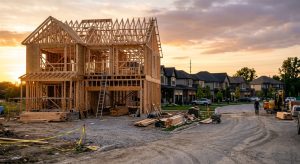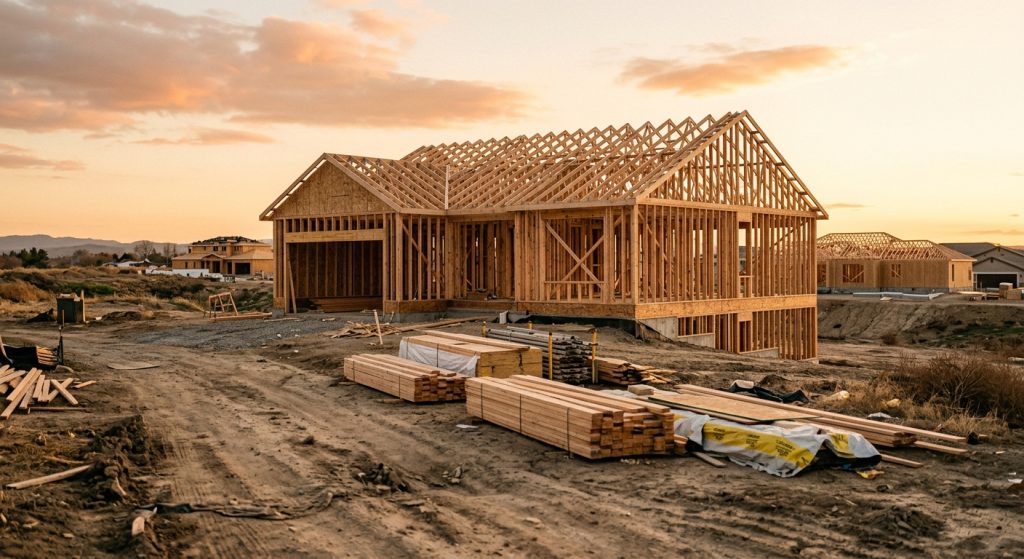
Builders issued more than 1.42 million residential building permits in the 12 months through July 2026, down 1.7% from the same period a year earlier and the 44th consecutive month of year-over-year declines, according to an analysis Zillow published Sept. 14, 2026. Measured against the 2016-through-2020 trajectory, permitting is running 19.4% below where it would have been had the pre-pandemic trend held — the furthest below that line it has been this decade, the company said.
Completions tell the same story with a lag. Roughly 817,000 detached single-family homes were finished in 2025, down 2.5% from 2024 and the third straight annual decline, leaving the total at its lowest since 2020. It is still 4.4% above the 2019 count, a reminder of how far the pandemic-era building surge lifted the baseline before it reversed.
The construction pipeline is what turns a soft year for builders into a supply problem for everyone else, and that is Zillow’s argument here. The company estimates the national housing deficit at 4.7 million units.
“Builders are responding to a softer market by pulling back, especially in the places they’d been building the most,” said Kara Ng, a senior economist at Zillow. “That’s an understandable reaction to today’s conditions, but the housing shortage that drove the building boom is still very much intact. The concern is that when conditions improve and buyers return, the thinner pipeline could mean a tighter market that drives up prices.”
The pullback is a Sun Belt story
The declines are concentrated in the metros that built the most during the boom. Austin permitting fell 25.3% over the past year, the largest drop among major markets in Zillow’s data, with San Antonio next at 24.1%. Both markets have accumulated enough standing inventory to make new starts hard for builders to justify — a dynamic visible in resale listings too, where sellers now outnumber buyers in every major Texas metro.
Where permits are rising, they are rising off a low base. San Jose permitting more than doubled, up 122%, followed by Seattle at 35.8%, Birmingham at 32.9%, Los Angeles at 30.6% and San Francisco at 29.0%. Zillow cautioned that years of depressed construction in those markets mean a modest uptick produces an outsized percentage swing. The scale gap makes the point: Los Angeles issued 34,696 permits over the past year, barely half of Dallas’s 61,275 or Houston’s 59,214.
Smaller houses on smaller lots
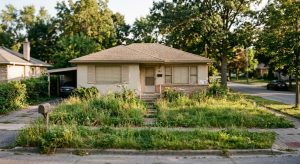
The other adjustment is in the product itself. The median newly completed detached home measured 2,300 square feet in 2025, down from 2,400 square feet in 2019. Lots shrank proportionally more, to a median of 8,700 square feet from 9,000.
Zillow attributes the shrinkage to builders favoring smaller homes that are more affordable for financially stretched buyers. That strategy runs into a margin problem at the bottom of the market: one homebuilder has said publicly that it is “incredibly difficult” to earn a profit on a traditional starter home. Zillow’s framing points toward density as the release valve, noting that more than 300,000 empty lots were listed on its site in June.
Build times, at least, have improved. The median detached home completed in 2025 took six months to build, a month faster than at the peak of the supply-chain disruption in 2022 and 2023 — an improvement Zillow attributes to the pandemic-era backlog clearing.
What it means for sellers of existing homes
Zillow also folded in a condition-premium finding that cuts against owners of older stock: homes marketed as turnkey sell for 2.9% more than expected, while fixer-uppers sell for 14% less. In a market where buyers are stretched, the discount for deferred maintenance is doing real work on price.
The figures are Zillow’s own analysis rather than a government release, and the company has a commercial interest in new-construction listings. But the permitting direction is consistent with the federal data: Census figures have shown single-family permitting sliding through the first half of the year while multifamily held up better.
The next hard read arrives shortly. The Census Bureau and the Department of Housing and Urban Development release New Residential Construction for August — permits, starts and completions — at 8:30 a.m. on Sept. 17, 2026, per the Census economic indicator calendar. That report will show whether the 44-month streak reaches 45.