
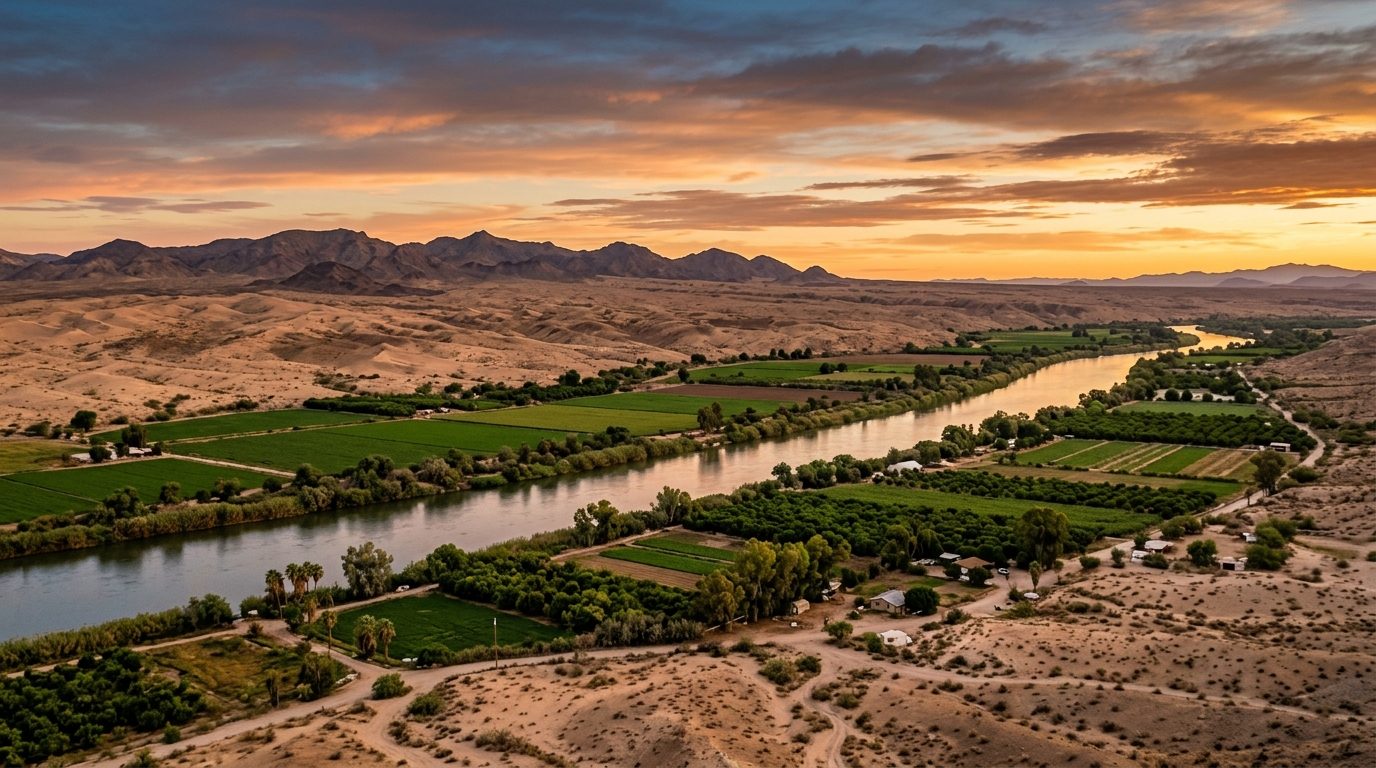
Current real estate market data, news and analysis for the Yuma, AZ metropolitan area — 224,449 residents across Yuma county.
Data as of May 2026. Sources: Redfin Data Center, U.S. Census Bureau.
Latest Yuma Real Estate News
Coverage of this market is coming soon. Browse all housing market news.
Yuma Real Estate Market Overview
Yuma County sits in Arizona’s southwestern corner, where the Colorado River narrows near the California and Mexico borders, surrounded by open Sonoran Desert and low mountain ranges. The metro is one of the driest and sunniest in the country, and its housing stock ranges from a compact historic core near downtown Yuma with some of the oldest surviving buildings in the state, to large amounts of newer single-story suburban development built for military families and retirees, plus a significant amount of seasonal housing including RV resorts and manufactured-home communities that fill up only part of the year.
Newer subdivisions east of the city, toward the base of a nearby mountain range, trade at a premium for larger lots and desert or mountain views, and much of that area functions as a retirement and military-family community removed from downtown and the agricultural belt. A newer growth corridor midway between downtown and that eastern area offers more recent construction at a more moderate price point. The historic districts around downtown Yuma carry their own premium tied to architectural character rather than size or newness. The border-adjacent towns south and southwest of the city are generally the most affordable, tied closely to the agricultural labor economy, and the small rural communities along the interstate east of Yuma are the least expensive and most limited in services.
Agriculture, the military, and tourism are the three pillars of this metro’s economy. The county grows a huge share of the nation’s winter leafy vegetables along with citrus, melons, dates, and wheat, all irrigated with Colorado River water delivered through a network of local irrigation districts. Marine Corps Air Station Yuma and the U.S. Army’s Yuma Proving Ground are both major employers and among the largest single sources of jobs in the area, and a regional medical center rounds out the list of top employers. A community college hosts partnership programs from the state’s public universities rather than a standalone branch campus, and cross-border shopping from Mexico supports a meaningful share of local retail and hospitality jobs.
Extended stretches of extreme heat are the defining climate risk here, with routine heat warnings through the summer months, while flood risk is mostly confined to mapped floodplains along the river and seasonal washes rather than a broad concern. Arizona has comparatively low property taxes by national standards, though actual bills also include special local district charges that vary by exact location. Because nearly all farmland in the county is irrigated through one of several Colorado River-fed districts, anyone buying rural or agriculture-adjacent land should confirm water delivery rights and district membership as part of due diligence. The area sees a large seasonal population of winter visitors, which affects traffic and housing occupancy for part of the year, and public transit is limited, so the metro is largely car-dependent outside the urban core. Buyers of rural or unincorporated property should also check well and septic status and confirm floodplain designation directly with the county.
Cities and Towns in the Yuma Metro Area
Notable Communities and Neighborhoods
Yuma Real Estate Market FAQ
How is the Yuma-area housing market organized?
The metro is built around a historic downtown near the Colorado River, a newer retirement and military-family community on higher ground to the east, and a ring of smaller agricultural towns and rural communities extending across the rest of the county.
Which parts of the metro tend to be pricier?
Newer subdivisions on higher ground east of downtown, with desert or mountain views, generally price above the historic core and well above the border-adjacent towns and rural communities tied to the area’s agricultural economy.
What should buyers verify locally before purchasing?
Confirm floodplain status directly with the county for anything near the river or a wash, check well and septic status for rural or unincorporated property, and verify irrigation-district membership and water rights for any agriculture-adjacent parcel.
What’s a region-specific risk buyers should know about?
Extended, extreme summer heat is the defining local risk, and buyers should think through cooling costs and building orientation as carefully as they would flood or fire risk in another part of the country.
Nearby Markets