
Current real estate market data, news and analysis for the Yakima, WA metropolitan area — 259,185 residents across Yakima county.
Data as of May 2026. Sources: Redfin Data Center, U.S. Census Bureau.
Latest Yakima Real Estate News
Coverage of this market is coming soon. Browse all housing market news.
Yakima Real Estate Market Overview
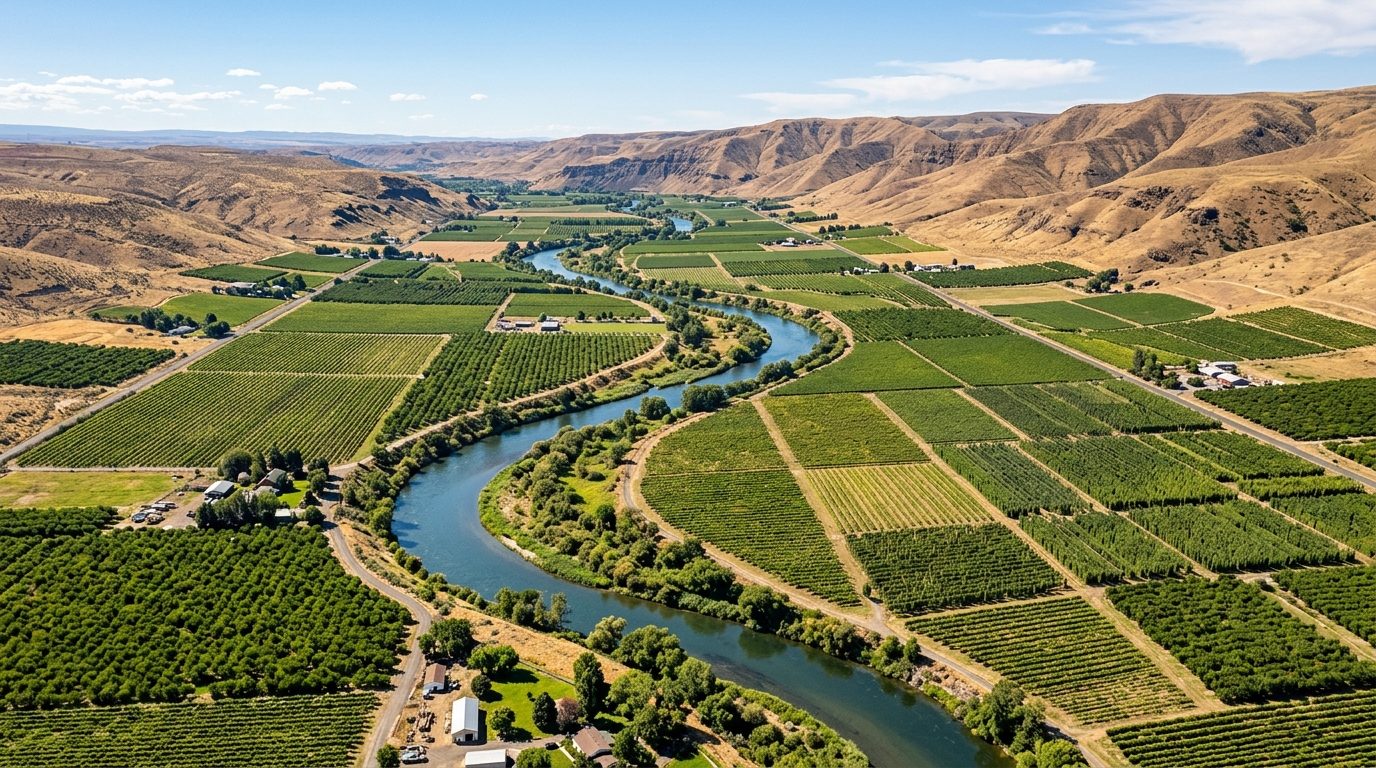
The Yakima metro lies entirely within Yakima County in south-central Washington, along the Yakima River valley on the dry side of the Cascade Range. The mountains’ rain shadow produces a high-desert, semi-arid climate with cold winters, hot summers, and wide day-to-night temperature swings, which is also why the valley floor is covered in irrigated orchard rows, hop trellises, and vineyard blocks rather than native forest. The city of Yakima anchors the metro with a compact downtown, older grid neighborhoods of early twentieth-century homes, and later subdivisions toward the valley’s edges. Outside the city, the metro is a chain of small incorporated towns and farm hamlets linked by two-lane highways, ranging from suburban subdivisions to working agricultural land with farmhouses and packing sheds. Housing stock runs from historic in-city homes to newer construction on the valley’s benches and older housing in the farm towns downriver.
Within the city, the West Valley area and the Nob Hill corridor hold a mix of larger newer homes and established construction, while Terrace Heights, across the Yakima River to the east, functions almost as its own community, with more acreage, valley views, and a quieter, semi-rural setting close to downtown. The Barge-Chestnut and Scenic Drive areas near the city center hold the oldest, most architecturally distinct homes, valued for mature landscaping and walkable downtown access. Toward Zillah and the Rattlesnake Hills, hillside properties in wine country carry a premium tied to views and vineyard proximity. Prices run lower in lower-valley farm towns such as Toppenish, Wapato, Granger, Mabton, and Grandview, farther from the jobs and services concentrated around Yakima.
Agriculture is the foundation of the metro’s economy. The Yakima Valley is a leading national producer of hops, tree fruit, and wine grapes, supported by growers, packers, and processors headquartered locally, including Washington Fruit & Produce, Borton Fruit, Zirkle Fruit, Monson Fruit, Allan Brothers, and Yakima Chief Hops. Downstream food processing adds employment through Tree Top and Seneca Foods, along with meat processing at Washington Beef. Healthcare is a major employer as well, led by MultiCare Yakima Memorial Hospital and the Yakima Valley Farm Workers Clinic, alongside public education, Yakima Valley College, and government employers including the City of Yakima and Yakima County. The Yakama Nation, whose reservation covers much of the lower valley around Toppenish and Wapato, is also a significant landowner and employer.
Wildfire is a genuine seasonal risk on the grass- and brush-covered hillsides ringing the valley, and buyers should ask about defensible space and insurance availability near open range or timbered slopes. Because the farm economy depends on irrigation from the Yakima River system, drought years bring water curtailments that fall hardest on junior water-right holders, worth understanding for property tied to an irrigation district. Land near the Yakima River can carry floodplain designations affecting insurance. Washington has no state income tax, so property and sales tax carry more of the local funding load, with assessed values set by the county assessor. Much of the lower valley around Toppenish, Wapato, and Harrah lies within the Yakama Reservation, where land can be held in federal trust status, so buyers should confirm fee-versus-trust status before purchasing there. Growth outside city limits is shaped by agricultural land-use protections limiting subdivision, and most residents rely on personal vehicles given limited transit and no passenger rail.
Cities and Towns in the Yakima Metro Area
Notable Communities and Neighborhoods
Yakima Real Estate Market FAQ
How is the Yakima market area organized?
The metro is defined as all of Yakima County. The city of Yakima is the population and employment center, surrounded by a ring of smaller incorporated towns, including Selah, Union Gap, Moxee, and Naches near the city, and Zillah, Sunnyside, Granger, Grandview, Mabton, Toppenish, Wapato, Harrah, and Tieton spread through the lower valley and foothills. Much of the land between these towns remains in active agricultural use.
Which parts of the Yakima area tend to be pricier, and why?
Established in-city neighborhoods such as Barge-Chestnut and the Scenic Drive corridor command a premium for mature landscaping and walkable access to downtown, while Terrace Heights and West Valley offer larger lots, valley views, and a quieter setting within a short drive of the city core. Hillside properties around Zillah in the wine country carry a similar premium for views and vineyard proximity. Towns farther down the valley, more oriented toward agricultural operations, tend to be less expensive.
What should buyers verify before purchasing in the Yakima metro?
Buyers should confirm whether a property relies on an irrigation district for water and understand that district’s rules and assessments, check floodplain status for land near the Yakima River or its tributaries, and verify whether a parcel in the lower valley falls within Yakama Reservation trust land, which can involve different title and transfer procedures than fee-simple property. In unincorporated areas, confirming well and septic systems versus municipal service, along with agricultural zoning designations, is also important.
What is the primary regional risk to be aware of in Yakima?
The metro’s grass- and brush-covered hillsides carry seasonal wildfire risk, and the valley’s agricultural economy depends heavily on irrigation water from the Yakima River system, which is subject to periodic drought-driven curtailment. Both factors can affect insurance costs and availability as well as the value of land tied to agricultural production.
Nearby Markets