
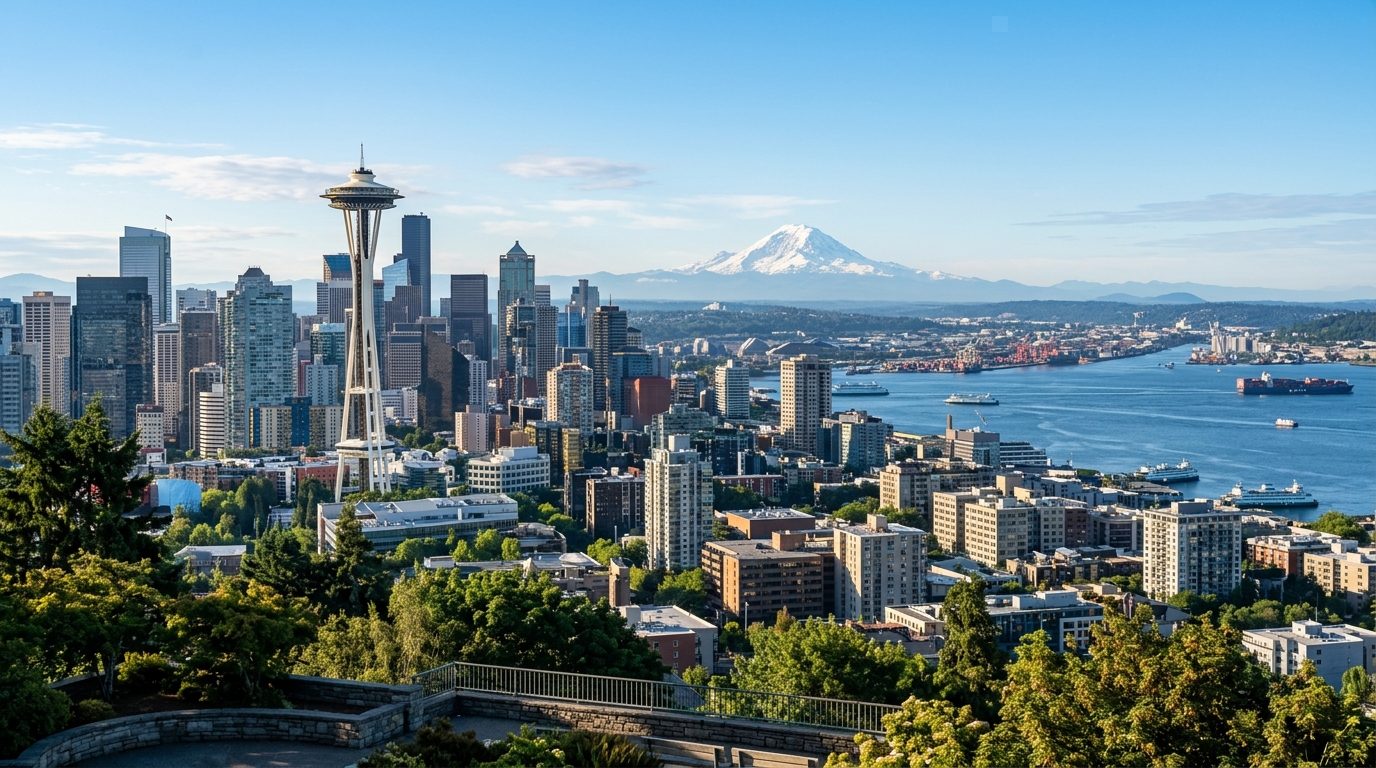
Current real estate market data, news and analysis for the Seattle-Tacoma-Bellevue, WA metropolitan area — 4.2M residents across King, Pierce and Snohomish counties.
Data as of May 2026. Sources: Redfin Data Center, U.S. Census Bureau.
Latest Seattle Real Estate News
Seattle Real Estate Market Overview
Seattle-Tacoma-Bellevue spans King, Pierce and Snohomish counties around Puget Sound, Lake Washington and the foothills of the Cascade Range. Water, bridges and steep terrain divide the metro into distinct residential areas. Seattle contains Craftsman houses, bungalows, mid-century homes, apartment buildings, condominiums and extensive townhouse infill. Bellevue, Redmond and Kirkland combine established subdivisions with downtown towers and redevelopment near major employment centers. South King County and Pierce County include postwar neighborhoods, newer subdivisions and industrial corridors, while Tacoma has historic houses, hillside neighborhoods and a growing supply of multifamily housing. Snohomish County ranges from suburban communities near Seattle to smaller towns and rural-edge properties.
Higher price tiers are generally found in Medina, Hunts Point, Clyde Hill, Mercer Island, West Bellevue, waterfront Kirkland, Sammamish, Madison Park, Laurelhurst, Magnolia and selected parts of Queen Anne. Their position reflects water or mountain views, limited land, larger lots, school districts and proximity to major technology and professional-services employers. More attainable options are often found in Tacoma, Lakewood, Federal Way, Kent, Auburn, Everett, Marysville and communities farther from central Seattle and the Eastside. Lower acquisition costs may come with longer commutes, fewer transit choices, industrial proximity, older housing systems or greater dependence on highways and bridge crossings.
Technology is a major economic driver, with Amazon headquartered in Seattle and Microsoft based in Redmond. Boeing maintains extensive regional operations, while the University of Washington, major hospital systems, public agencies and port-related employers provide additional employment. The ports of Seattle and Tacoma support maritime trade, logistics and industrial activity. Bellevue, Redmond and Kirkland contain substantial office and technology employment, while aerospace and manufacturing are important in Everett and southern parts of the metro. Joint Base Lewis-McChord also influences housing demand in Pierce County.
Natural hazards and land-use rules require parcel-specific review. Earthquake and liquefaction exposure affect low-lying and filled areas, while steep slopes can create landslide, drainage and retaining-wall concerns. River valleys may face flooding, and wildland-edge communities can encounter wildfire and smoke. Link light rail, Sounder commuter rail, buses and ferries support selected corridors, but geographic barriers make travel times highly direction-dependent. Washington’s growth-management framework concentrates much development inside urban growth areas, encouraging infill, townhouses and transit-oriented construction while limiting outward expansion in some locations. Buyers should verify sewer or septic service, critical-area designations, shoreline restrictions, homeowners association obligations and the condition of roofs, siding and drainage systems in the region’s wet climate.
Cities and Towns in the Seattle Metro Area
Show all 78
Notable Communities and Neighborhoods
Seattle Real Estate Market FAQ
How is the Seattle metro housing market geographically organized?
The market is divided by Puget Sound, Lake Washington, mountain foothills and several major employment corridors. Seattle, the Eastside, south King County, Tacoma and Snohomish County function as related but distinct housing markets connected by bridges, highways, rail and ferries.
Which parts of the Seattle metro generally sit in higher price tiers?
Medina, Hunts Point, Clyde Hill, Mercer Island, West Bellevue, waterfront Kirkland, Sammamish, Madison Park, Laurelhurst, Magnolia and parts of Queen Anne generally occupy higher tiers. Water access, views, school districts, limited land and proximity to technology employment contribute.
What should buyers investigate about Seattle-area natural hazards?
Buyers should review earthquake, liquefaction, landslide, flood and wildfire exposure for the specific parcel. Hillside drainage, retaining walls, steep access roads and the availability of insurance deserve particular attention in affected locations.
How does transportation affect a Seattle-area home search?
Bridge crossings, ferry schedules, Link light rail, Sounder service and highway congestion can materially alter commute times. Buyers should test the actual trip to their destination and consider planned transit or road projects without assuming their completion date or effect.
Nearby Markets