
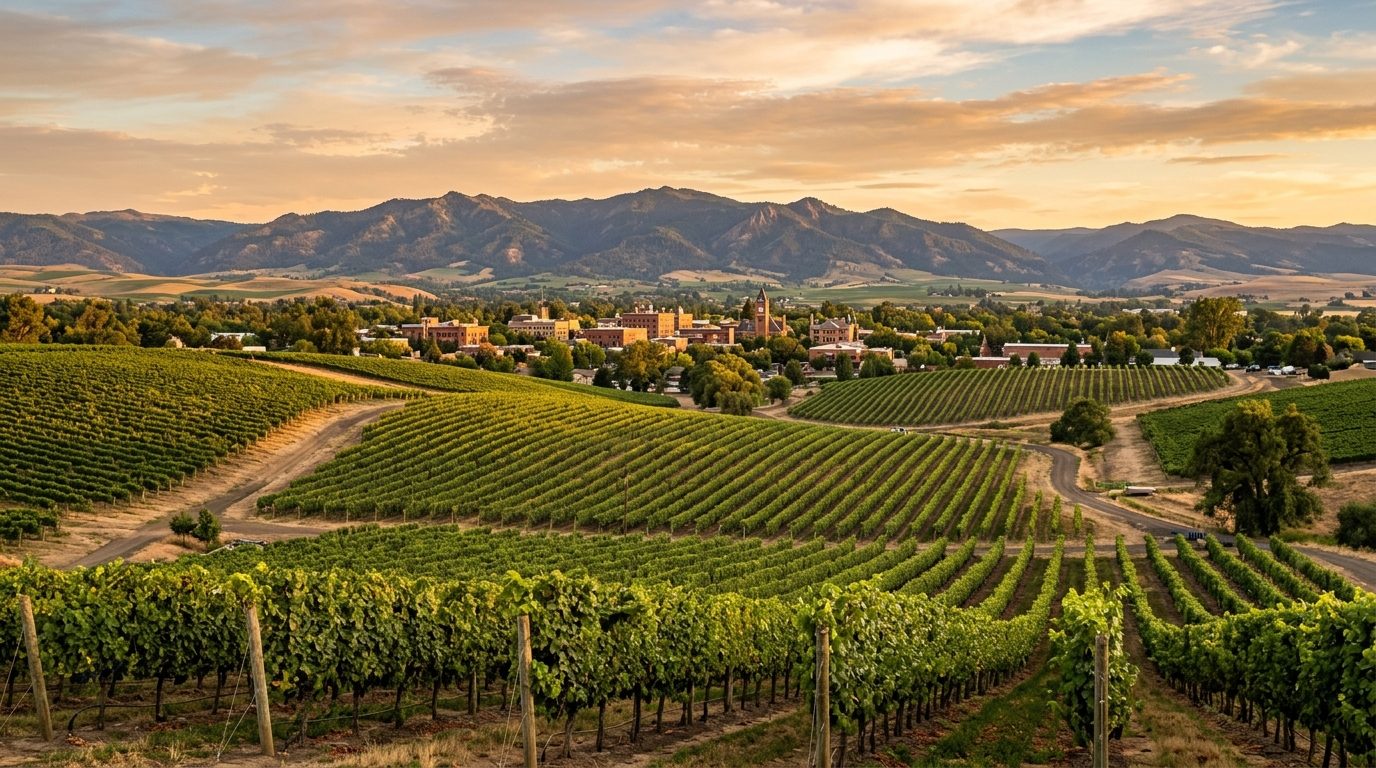
Current real estate market data, news and analysis for the Walla Walla, WA metropolitan area — 62,361 residents across Walla Walla county.
Data as of May 2026. Sources: Redfin Data Center, U.S. Census Bureau.
Latest Walla Walla Real Estate News
Coverage of this market is coming soon. Browse all housing market news.
Walla Walla Real Estate Market Overview
Walla Walla sits in the southeastern corner of Washington state, in the Walla Walla Valley at the foot of the Blue Mountains, near the Oregon border. The valley floor blends irrigated cropland, dryland wheat country, and vineyard rows planted across low hills and terraces, with the built-up city concentrated where several creeks converge to form the Walla Walla River. The city’s housing stock reflects more than a century of continuous settlement: a compact, tree-lined downtown core built up in the late nineteenth and early twentieth centuries anchors blocks of Craftsman bungalows, Victorian-era farmhouses, and brick storefronts converted to residential and mixed use, while newer subdivisions and manufactured-home communities ring the edges of town and blend into surrounding farmland and vineyard estates.
Within the city, the historic core and the streets nearest Whitman College’s campus carry a premium tied to walkability, mature landscaping, and architectural character, since much of this housing predates modern construction and sits within or adjacent to a nationally recognized historic district subject to design review. Properties farther from downtown, along the city’s western and northern edges and in newer platted subdivisions, tend to trade at a more moderate level, reflecting larger-format, more recently built housing with less architectural distinction. Outside city limits, valuation swings widely: small acreages and rural homesites on the valley floor vary with irrigation access and soil quality, while vineyard-zoned land and estate properties within the Walla Walla Valley wine region can carry values tied more to grape-growing potential than to the house itself.
The local economy is anchored by agriculture and the wine industry that has grown up around it: more than a hundred wineries operate in the Walla Walla Valley American Viticultural Area, supporting vineyard management, hospitality, and tourism jobs alongside the wheat, sweet onion, and orchard operations that have long defined the valley floor. FirstFruits Farms, a large tree-fruit operation based in the county, is among the area’s largest private employers. Institutional employers add further stability: Whitman College, a private liberal-arts college, and Walla Walla University in nearby College Place both employ significant numbers of faculty and staff, as does Walla Walla Community College. Healthcare is represented by Providence St. Mary Medical Center, and the Washington State Penitentiary, a state prison dating to the nineteenth century, remains one of the county’s largest single employers.
Buyers should weigh several factors specific to this part of the state. Summers bring a wildfire smoke season, when regional fires in Washington, Oregon, and British Columbia can degrade air quality for days or weeks at a time, a consideration for anyone with respiratory sensitivities or plans for extensive outdoor living space. Agricultural and rural parcels carry their own diligence burden: the Walla Walla groundwater basin has been overallocated for decades, and water rights, well capacity, and irrigation district membership should be confirmed independently for any property outside municipal water service. Washington has no state income tax, but property taxes and a real estate excise tax apply at sale. Valley Transit provides fare-free bus service within Walla Walla and College Place. The city has also been revising its development code to allow more middle-density housing types, which may affect infill parcels and older neighborhoods over time.
Cities and Towns in the Walla Walla Metro Area
Notable Communities and Neighborhoods
Walla Walla Real Estate Market FAQ
How is the Walla Walla real estate market organized geographically?
The market centers on the city of Walla Walla, with a historic downtown core, residential streets near Whitman College, and newer subdivisions toward the city’s edges. Beyond city limits, the market extends into the surrounding Walla Walla Valley, including the incorporated cities of College Place and Waitsburg, small unincorporated communities such as Prescott, Touchet, Lowden, and Wallula, and rural and vineyard-zoned acreage spread across the valley floor and foothills.
Which areas of the Walla Walla market tend to be pricier?
The downtown historic district and the residential blocks closest to Whitman College generally command more due to walkable streets, mature trees, and older architecturally distinct housing, much of it within a nationally recognized historic district. Areas farther from the core, newer subdivisions on the city’s edges, and land use dictated by agricultural rather than residential value tend to be more moderately priced.
What should buyers verify before purchasing property in the Walla Walla area?
For any property outside city water service, buyers should independently confirm water rights, well capacity, and irrigation district status, since the local groundwater basin has been overallocated for decades. For properties in or near the downtown historic district, buyers should check design review requirements before planning exterior changes. Rural buyers should also confirm septic system condition, road maintenance responsibility, and floodplain status near local creeks and the Walla Walla River.
What regional risk factor is specific to the Walla Walla area?
Summer wildfire smoke is the most consistent regional risk. Fires burning elsewhere in Washington, Oregon, and British Columbia can push smoke into the Walla Walla Valley for extended stretches, periodically degrading outdoor air quality; this is worth factoring in for buyers with respiratory sensitivities or those planning significant outdoor living space.
Nearby Markets