
Current real estate market data, news and analysis for the Traverse City, MI metropolitan area — 156,972 residents across Benzie, Grand Traverse, Kalkaska and Leelanau counties.
Data as of May 2026. Sources: Redfin Data Center, U.S. Census Bureau.
Latest Traverse City Real Estate News
Coverage of this market is coming soon. Browse all housing market news.
Traverse City Real Estate Market Overview
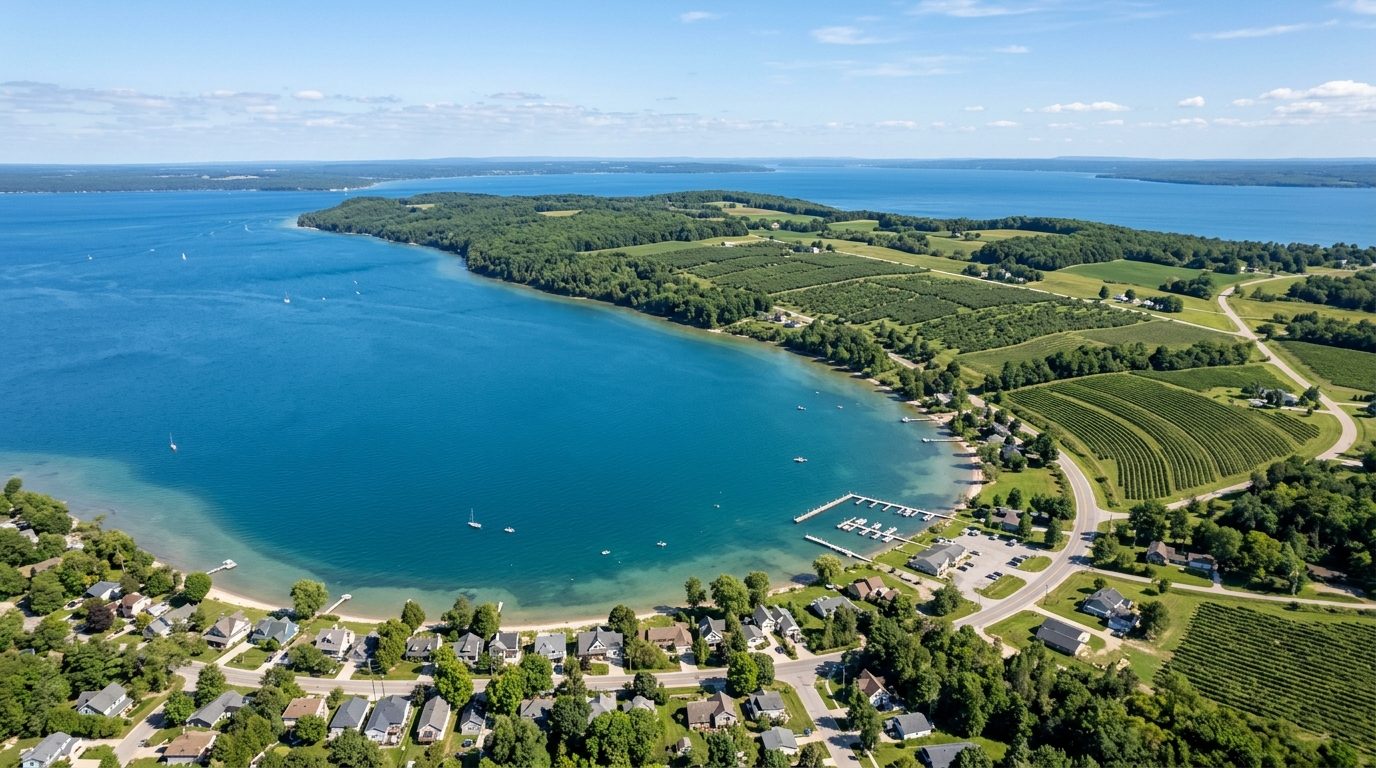
Traverse City sits at the base of Grand Traverse Bay, an inland extension of Lake Michigan split into east and west arms by the Old Mission Peninsula. The surrounding metro area, spanning Grand Traverse, Leelanau, Benzie, and Kalkaska counties, combines a compact, walkable downtown along the Boardman River with a rural, agricultural hinterland stretching toward the Lake Michigan shoreline and rolling hill country inland. Development follows the water and the old rail and highway corridors: denser, older housing near downtown gives way to postwar subdivisions on the city’s edges, then to larger acreage parcels, orchard land, and lakefront lots farther out. Homes range from early twentieth century farmhouses and lumber-era cottages to mid-century ranches and contemporary builds, alongside a substantial inventory of seasonal homes along the bay, inland lakes, and the Lake Michigan coast, reflecting a dual identity as both a year-round community and a long-established resort destination.
Waterfront proximity is the dominant driver of price variation across the metro. The Old Mission and Leelanau peninsulas, bordered by Grand Traverse Bay and open Lake Michigan respectively, carry the region’s most exclusive price tiers, reflecting limited buildable land, vineyard and orchard views, and restricted shoreline access. Neighborhoods close to downtown, including the historic districts near the Boardman River and Boardman Lake, command a premium for walkability to Front Street and the West Bay shoreline. Inland townships in Kalkaska and Benzie counties, along with rural stretches of Grand Traverse County away from the water, generally sit at more modest price points, reflecting greater distance from the bay, larger lot sizes, and longer commutes to the region’s employment centers.
The regional economy centers on healthcare, education, tourism, and agriculture. Munson Healthcare, headquartered in Traverse City, operates the area’s primary hospital system and is among the largest employers in northern Michigan. Traverse City Area Public Schools, Northwestern Michigan College, and Grand Traverse County government form a substantial public-sector base. Interlochen Center for the Arts, a residential arts academy and summer camp in Green Lake Township, and the Grand Traverse Resort & Spa in Acme anchor the region’s arts and hospitality sectors. Hagerty, the classic-car insurance company, is headquartered in Traverse City and ranks among the area’s larger private employers. Agriculture remains central to the local economy: the region is a major producer of tart cherries, apples, and wine grapes, with the Old Mission and Leelanau peninsulas supporting established wine-growing and related tourism.
Buyers should account for several factors specific to this region. Winters bring lake-effect snow off Grand Traverse Bay and Lake Michigan, producing heavy, localized accumulation that can affect road access on peninsula and rural routes; heating costs and snow removal are ongoing considerations for year-round and seasonal owners alike. Shoreline and bluff properties face erosion risk tied to fluctuating Great Lakes water levels, a documented issue along the Leelanau and Lake Michigan coast that can affect insurability and long-term stability of waterfront lots. Short-term and vacation-home rentals are a live regulatory topic: Traverse City and surrounding townships license and zone vacation rentals differently, and rules have been revisited in recent years, so buyers planning to rent a property should verify current licensing, zoning, and occupancy rules locally. Property tax assessments, well and septic systems in rural areas, and whether a road is publicly or privately maintained are also worth confirming before purchase.
Cities and Towns in the Traverse City Metro Area
Notable Communities and Neighborhoods
Traverse City Real Estate Market FAQ
How is the Traverse City housing market organized geographically?
The metro spans Grand Traverse, Leelanau, Benzie, and Kalkaska counties around Grand Traverse Bay. Traverse City itself forms the compact urban core, with the Old Mission and Leelanau peninsulas extending into the water to the north, and inland townships and smaller towns such as Kingsley, Kalkaska, Frankfort, and Suttons Bay spreading out from the bay across a mix of forest, farmland, and inland lakes.
Which parts of the Traverse City area tend to be more expensive, and why?
The Old Mission and Leelanau peninsulas, along with waterfront and near-downtown Traverse City neighborhoods, tend to carry the highest price tiers because of direct bay or Lake Michigan access, limited buildable land, vineyard and orchard views, and walkability to downtown. Inland townships farther from the water and away from Traverse City generally offer lower price points due to distance from the shoreline and longer commutes.
What should buyers verify locally before purchasing in this market?
Buyers should confirm zoning and short-term rental licensing rules with the specific city or township, check whether a property relies on well and septic systems, verify whether the access road is publicly or privately maintained, and review flood, erosion, or shoreline setback requirements for any waterfront or bluff parcel with the local building or zoning department.
What is the short-term rental situation in the Traverse City area?
Short-term and vacation-home rentals are actively regulated at the local level and rules vary by jurisdiction. Traverse City requires a city license and restricts whole-home vacation rentals to certain zoning districts, while surrounding townships set their own rules. Because these ordinances have been revisited in recent years, buyers planning to rent out a property should confirm current licensing, zoning, and occupancy requirements directly with the relevant city or township before purchase.
Nearby Markets