
Current real estate market data, news and analysis for the Staunton-Stuarts Draft, VA metropolitan area — 129,692 residents across Augusta, Staunton city and Waynesboro city counties.
Data as of May 2026. Sources: Redfin Data Center, U.S. Census Bureau.
Latest Staunton Real Estate News
Coverage of this market is coming soon. Browse all housing market news.
Staunton Real Estate Market Overview
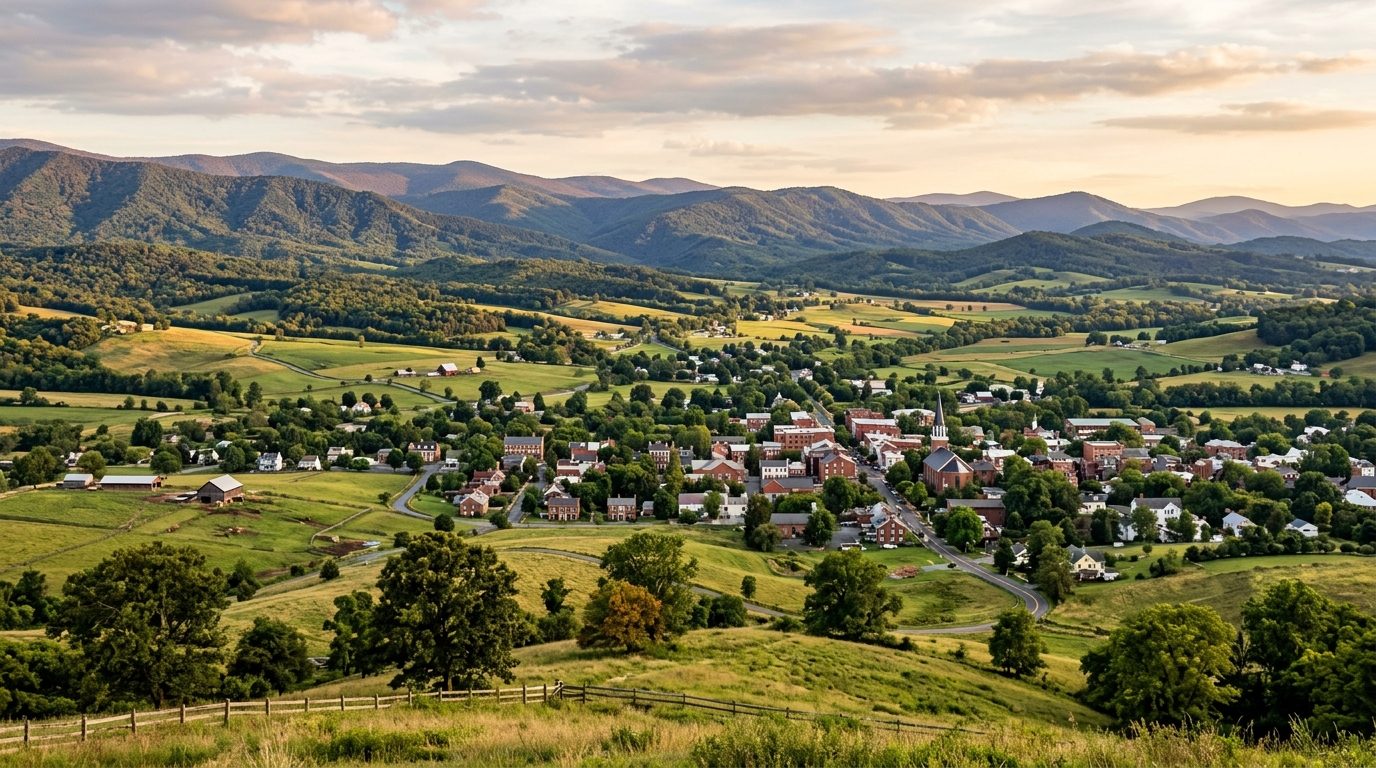
The Staunton-Stuarts Draft metro area sits in the Shenandoah Valley of western Virginia, framed by the Blue Ridge Mountains to the east and the Allegheny ridge-and-valley country to the west. It combines two independent cities, Staunton and Waynesboro, with surrounding Augusta County, which wraps around both but does not govern them, since Virginia’s independent cities are legally separate from any county. The valley floor is working farmland threaded by the South River and Middle River, with development concentrated along the Interstate 81 and Interstate 64 corridors. Housing stock reflects that layered history. Staunton’s core climbs a series of hills in dense nineteenth-century fashion, with brick rowhouses, Victorian frame houses, and Greek Revival architecture on narrow, sloped streets. Waynesboro mixes early twentieth-century mill-town housing, dating to when the former Basic City industrial boomtown merged with the original town, with mid-century ranch subdivisions. Augusta County offers a broader mix, from farmhouses on large acreage to newer subdivisions around Fishersville and Stuarts Draft and modest homes in small crossroads communities.
Within this metro, the areas commanding a premium tend to be the walkable, architecturally intact historic districts near downtown Staunton, where proximity to restaurants, shops, and Mary Baldwin University supports demand for restored homes. Waynesboro’s tree-lined historic streets carry a similar draw for buyers wanting an established neighborhood near a revitalized downtown. Newer subdivisions in Fishersville and along the main highway corridors appeal to buyers wanting modern floor plans and proximity to Augusta Health, trading at a premium for turnkey condition. Lower-cost areas are generally found farther from these centers, in older sections of Waynesboro near the former industrial rail corridor, in homes needing renovation, and in remote pockets of the county with longer commutes to job centers.
The regional economy blends agriculture, food manufacturing, healthcare, and education. Hershey Chocolate of Virginia operates a large peanut-butter and confectionery plant in Stuarts Draft, among the company’s largest plants nationally, and McKee Foods runs a nearby bakery producing Little Debbie snack products, making food processing a defining part of the manufacturing base. Other manufacturers with a significant local presence include Hollister, a medical device maker; NIBCO, a valve and fittings maker; Graphic Packaging; Daikin Applied’s AAF McQuay air-filtration operation; and Ply Gem building products. Augusta Health, based in Fishersville, is the region’s principal hospital system, while Mary Baldwin University anchors higher education alongside Blue Ridge Community College near Weyers Cave. Local government, schools, and retail and logistics round out the base.
Buyers should account for a few distinctive local factors. Flooding along the South River, Middle River, and smaller tributaries has affected low-lying parts of Staunton and Waynesboro historically, so flood zone status is worth verifying near these waterways. Because Staunton and Waynesboro are independent cities rather than towns within Augusta County, each maintains its own property tax rate, zoning code, school division, and historic-district design review process, so buyers should confirm which jurisdiction a property sits in, especially for exterior work in a historic district. Public transit is limited to a small local bus system, and commercial air service runs through a small regional airport with limited routes, so most residents rely on personal vehicles. Much of Augusta County outside the cities is zoned for agricultural and low-density rural use, shaping where new subdivisions can be built and preserving the farmland bordering both cities.
Cities and Towns in the Staunton Metro Area
Notable Communities and Neighborhoods
Staunton Real Estate Market FAQ
How is the Staunton-Stuarts Draft housing market organized geographically?
The metro splits into three distinct jurisdictions: the independent city of Staunton, built up a series of hills with dense historic neighborhoods; the independent city of Waynesboro, along the South River with a mix of mill-town and mid-century housing; and Augusta County, which surrounds both cities and ranges from unincorporated hubs like Fishersville and Stuarts Draft to rural farmland and small crossroads communities. Each jurisdiction has its own local government, so a home a few blocks apart can fall under different tax and zoning rules depending on which side of a city line it sits on.
Which parts of the metro tend to be pricier, and why?
Homes in Staunton’s walkable historic districts near downtown and Mary Baldwin University, and in Waynesboro’s tree-lined historic residential streets, generally command more due to architectural character, mature landscaping, and walking access to restaurants and shops. Newer subdivisions near Fishersville and the main highway corridors also trend higher for buyers who prioritize modern construction and proximity to Augusta Health. Areas farther from these centers, older sections needing renovation, and more remote rural pockets with longer commutes tend to be more affordable.
What should buyers verify locally before purchasing in this metro?
Buyers should confirm which jurisdiction a property sits in, since Staunton, Waynesboro, and Augusta County each set their own property tax rates, zoning ordinances, and school divisions. For homes in one of the historic districts, it is worth checking whether a local design review board must approve exterior renovations. Buyers should also check flood zone status for any property near the South River, Middle River, or smaller tributaries, and confirm well/septic versus public water and sewer service for homes in unincorporated parts of the county.
What is a key regional risk factor to understand before buying here?
Flooding is the primary risk to evaluate. The Shenandoah Valley’s rivers and smaller streams, including the South River and Middle River that run through Staunton and Waynesboro, have a history of flash flooding tied to heavy rain events, and low-lying sections of both cities have been affected in the past. Reviewing FEMA flood maps and asking about a property’s flood history and any past insurance claims is a reasonable step before purchasing in or near the river corridors.
Nearby Markets