
Current real estate market data, news and analysis for the Charlottesville, VA metropolitan area — 228,597 residents across 5 counties in Virginia.
Data as of May 2026. Sources: Redfin Data Center, U.S. Census Bureau.
Latest Charlottesville Real Estate News
Coverage of this market is coming soon. Browse all housing market news.
Charlottesville Real Estate Market Overview
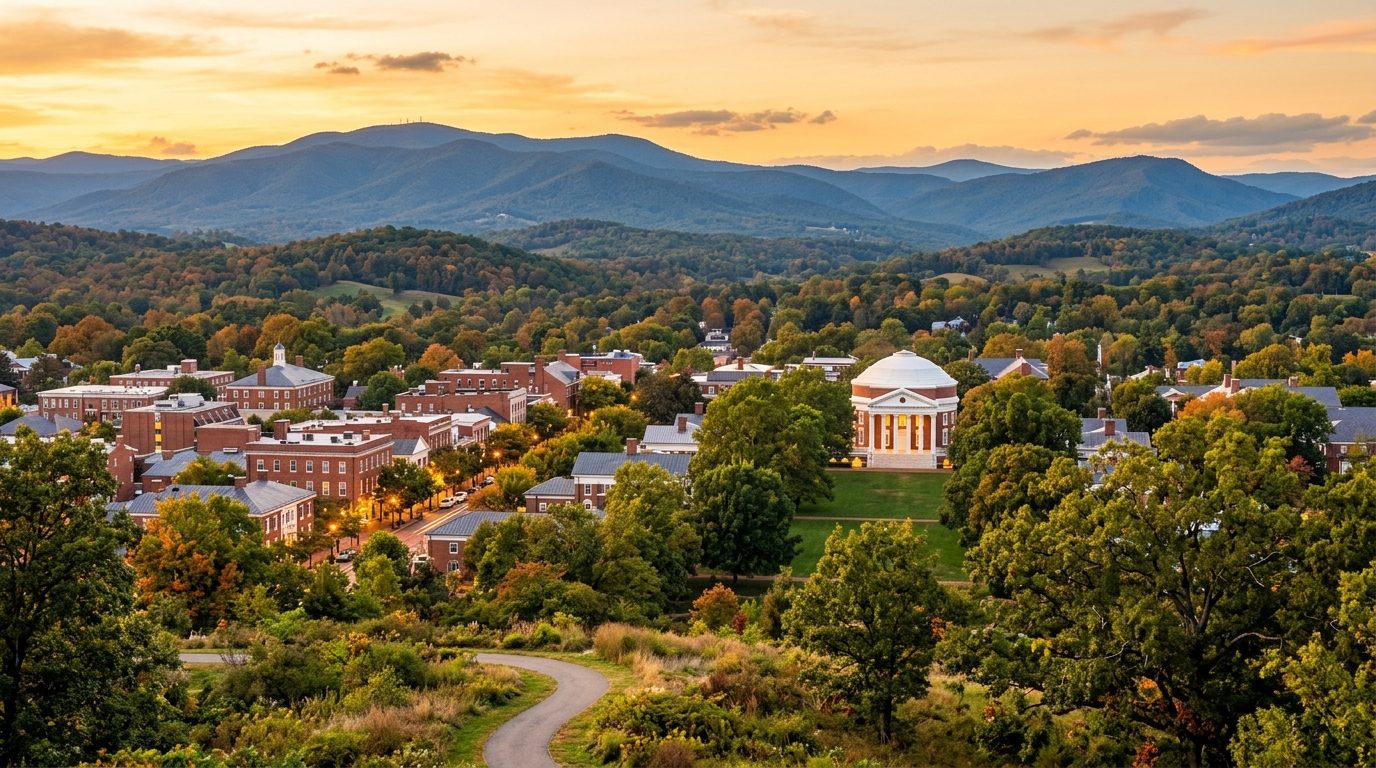
Charlottesville sits in the Piedmont, at the eastern foot of the Blue Ridge Mountains, where the Rivanna River and its tributaries cut through rolling farmland and forest. The city itself is compact and hilly, wrapped almost entirely by Albemarle County, with the University of Virginia’s Jeffersonian academic core anchoring its western edge and a walkable downtown pedestrian mall at its center. Housing stock in the city mixes nineteenth-century brick row houses and Victorian-era homes near downtown with early-twentieth-century bungalows and postwar brick ranches in surrounding neighborhoods. Out in the county, development ranges from mid-century subdivisions along the Route 29 corridor to newer traditional-neighborhood-design communities and large-lot rural properties toward the mountains.
Higher-priced areas cluster to the west and southwest of the city, where proximity to the University, private country clubs, and Blue Ridge views drives demand around Farmington, Ednam, and Ivy. Eastern Albemarle County, toward Keswick, carries its own premium tier built around horse farms and gated golf communities such as Glenmore. Inside the city, Belmont and the areas closest to the downtown mall and UVA grounds command a premium for walkability, while neighborhoods farther from downtown and the university, including parts of the city’s historically Black neighborhoods, remain comparatively more affordable, though prices there have been rising. Suburban growth areas north of the city along Route 29, such as Forest Lakes, offer more moderate pricing tied to newer, larger-scale subdivisions.
The University of Virginia, including UVA Health, is by far the region’s largest employer, and its academic medical center draws patients and staff from across central Virginia. Federal and defense-related work is also significant, centered on the National Ground Intelligence Center and contractors such as Northrop Grumman. State Farm Insurance operates a major regional processing hub in the area, and Crutchfield, the electronics retailer, is headquartered locally. Sentara’s hospital network, including Sentara Martha Jefferson, adds further health care employment alongside UVA Health. Tourism tied to Monticello, other Jefferson-era historic sites, and the surrounding wine and orchard country supports a further layer of hospitality and service jobs.
Land-use policy shapes the market more than most buyers expect. Albemarle County channels nearly all new residential and commercial growth into a small set of designated Development Areas around the city, while the great majority of the county’s land is protected as Rural Area for agriculture and conservation, which constrains the supply of new suburban lots and helps sustain demand in the designated growth corridors. Flooding along the Rivanna River, Meadow Creek, and other urban streams is a recurring concern in low-lying parts of the city and should be checked against current floodplain maps. Rural county properties frequently rely on private wells and septic systems, and many carry conservation easements restricting future subdivision, both worth verifying before purchase. City and county real estate tax rates differ, and buyers should confirm which jurisdiction, and which service district, a given property falls in.
Cities and Towns in the Charlottesville Metro Area
Notable Communities and Neighborhoods
Charlottesville Real Estate Market FAQ
How is the Charlottesville area housing market organized geographically?
The City of Charlottesville is a small, walkable core built around the University of Virginia and a downtown pedestrian mall, entirely surrounded by Albemarle County. The county itself channels most growth into designated Development Areas near the city and along the Route 29 corridor to the north, while the remainder of the county toward the Blue Ridge Mountains is preserved as lower-density Rural Area.
Which parts of the Charlottesville area tend to be pricier, and why?
Areas west and southwest of the city, including Farmington, Ednam, and Ivy, command a premium for proximity to the University, private country clubs, and Blue Ridge views. Eastern Albemarle County toward Keswick, home to gated golf and equestrian communities such as Glenmore, forms another high-priced tier. Inside the city, neighborhoods closest to the downtown mall and UVA grounds, such as Belmont, price higher for walkability.
What should buyers verify locally before purchasing in the Charlottesville area?
Buyers should confirm whether a property lies within the city or in Albemarle County, since real estate tax rates and service districts differ, check current floodplain maps for parcels near the Rivanna River or Meadow Creek, and, for rural county properties, verify well and septic status along with any conservation easements that may restrict future subdivision or development.
What is a distinctive local risk or regulatory factor in the Charlottesville area?
Albemarle County’s long-standing growth management policy limits new subdivisions to a small share of the county’s land, which constrains the supply of new lots and supports demand in the designated growth corridors. Separately, low-lying parts of the city along the Rivanna River and its urban tributaries are subject to periodic flooding, so flood zone status is worth checking for any specific address.
Nearby Markets