
Current real estate market data, news and analysis for the St. Joseph, MO-KS metropolitan area — 119,170 residents across Andrew, MO, Buchanan, MO, DeKalb, MO and Doniphan, KS counties.
Data as of May 2026. Sources: Redfin Data Center, U.S. Census Bureau.
Latest St. Joseph Real Estate News
Coverage of this market is coming soon. Browse all housing market news.
St. Joseph Real Estate Market Overview
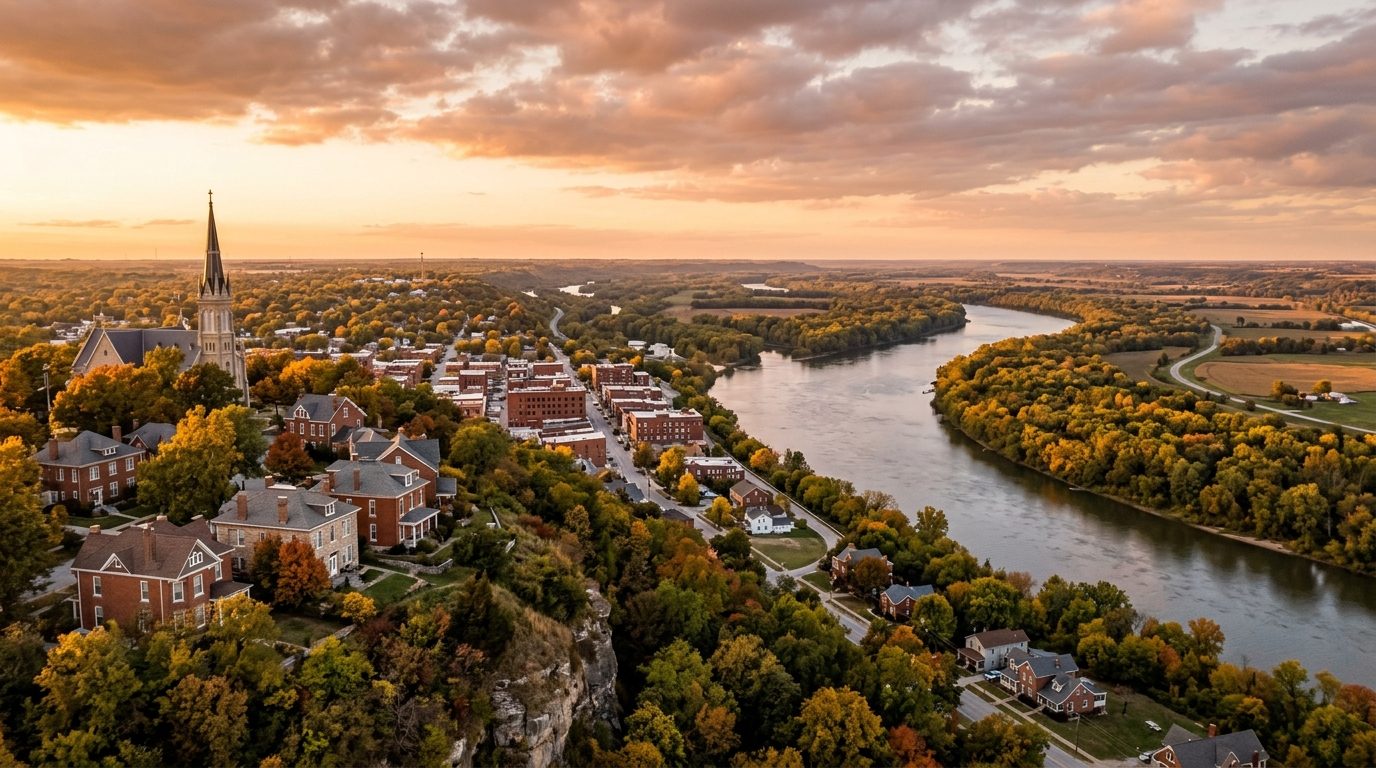
St. Joseph occupies a shelf of bluffs above a bend in the Missouri River in the far northwest corner of Missouri, where the state meets Kansas across the water. The historic core climbs the hillside in tight blocks laid out during the city’s nineteenth-century boom as a jumping-off point for westward wagon trains and the Pony Express, a legacy that shows directly in the housing stock: brick Victorians, Italianate townhouses, and Queen Anne cottages line the bluff-top streets on narrow lots with detailed woodwork predating modern building codes. Moving east away from the river, the terrain flattens onto a plateau where mid-twentieth-century ranch and split-level subdivisions take over, giving way to acreage and farmland in the surrounding counties. Small river towns on both the Missouri and Kansas sides of the water add another layer, with modest, older homes clustered around rail lines and grain elevators rather than a planned suburban grid.
Within the city, the neighborhoods highest on the bluffs overlooking downtown and the river tend to carry the most value, both for the views and for the concentration of large, architecturally distinct homes built by the merchants and packers who made their fortunes in the city’s founding decades; several of these districts carry local historic-preservation oversight, which protects character but adds review for exterior work. Newer subdivisions toward the eastern edge of town and in the surrounding county seats offer contemporary construction at a comparable or gentler price, appealing to buyers who want space without the upkeep of a century-old house. The lower end of the market clusters in older grid neighborhoods closer to the industrial river bottoms and rail corridors, where worker-era cottages sit nearest the plants and warehouses that built the city, as well as in small crossroads towns through the farmland.
The metro’s economy still runs on the industries that built it. Large-scale food and agribusiness processing anchors employment, led by a major pork-processing plant along with a long-running Nestlé Purina pet-care operation. Healthcare is the other pillar, centered on the Mosaic Life Care hospital network, which draws patients from across northwest Missouri and into neighboring Kansas and Nebraska. St. Joseph is also home to a veterinary and animal-health research cluster, with Boehringer Ingelheim operating laboratories in the city, a niche tracing to the area’s longtime role as an animal-health hub. Missouri Western State University adds a public-education presence downtown, feeding graduates into the local healthcare, business, and manufacturing base.
Because the city sits along the Missouri River, flood risk is a recurring consideration: a levee system protects the riverfront and low-lying industrial areas, but the river has overtopped or breached levees in past decades, and property near the floodplain or the small river towns on the Kansas side warrants a direct check of flood maps and levee status. The metro also straddles a state line, so a Missouri address in St. Joseph and a Kansas address across the water fall under different tax and school systems. The age of the housing stock is a factor across the board: even outside the designated historic districts, much of the city’s housing predates modern electrical and plumbing standards, so inspection findings around old wiring, lead paint, or aging foundations are common. The Pony Express and frontier-era history remains part of the city’s identity and its ongoing downtown redevelopment.
Cities and Towns in the St. Joseph Metro Area
Notable Communities and Neighborhoods
St. Joseph Real Estate Market FAQ
What does the housing stock in St. Joseph typically look like?
Much of the city was built out during a nineteenth-century commercial boom, so the housing stock leans older, with Victorian, Italianate, and Queen Anne homes concentrated in the bluff-top neighborhoods near downtown alongside mid-twentieth-century ranch and split-level homes further out. Buyers should expect older wiring, plumbing, and foundations to come up in inspections outside of newer subdivisions.
Is flooding a concern for property in the St. Joseph area?
Because the city sits directly along the Missouri River, flood risk is worth checking on a property-by-property basis. A levee system protects the developed riverfront and industrial low ground, but the levees have been overtopped or breached in past flood events, and low-lying parcels near the river or in the small river towns should be checked against current flood maps.
Does it matter whether a home is on the Missouri or Kansas side of the metro?
Yes. The metro spans the Missouri River into Kansas, and a property just across the water falls under a different state’s income and property tax rules, as well as a different school system, even though it may be only a short drive from St. Joseph itself.
What kinds of jobs anchor the local economy?
Food and agribusiness processing, healthcare, and animal-health research are the largest employment sectors, supplemented by public education and manufacturing. The area has a long-standing specialty in veterinary and animal-health research alongside its food-processing base.
Nearby Markets