
Current real estate market data, news and analysis for the Columbia, MO metropolitan area — 219,062 residents across Boone, Cooper and Howard counties.
Data as of May 2026. Sources: Redfin Data Center, U.S. Census Bureau.
Latest Columbia Real Estate News
Coverage of this market is coming soon. Browse all housing market news.
Columbia Real Estate Market Overview
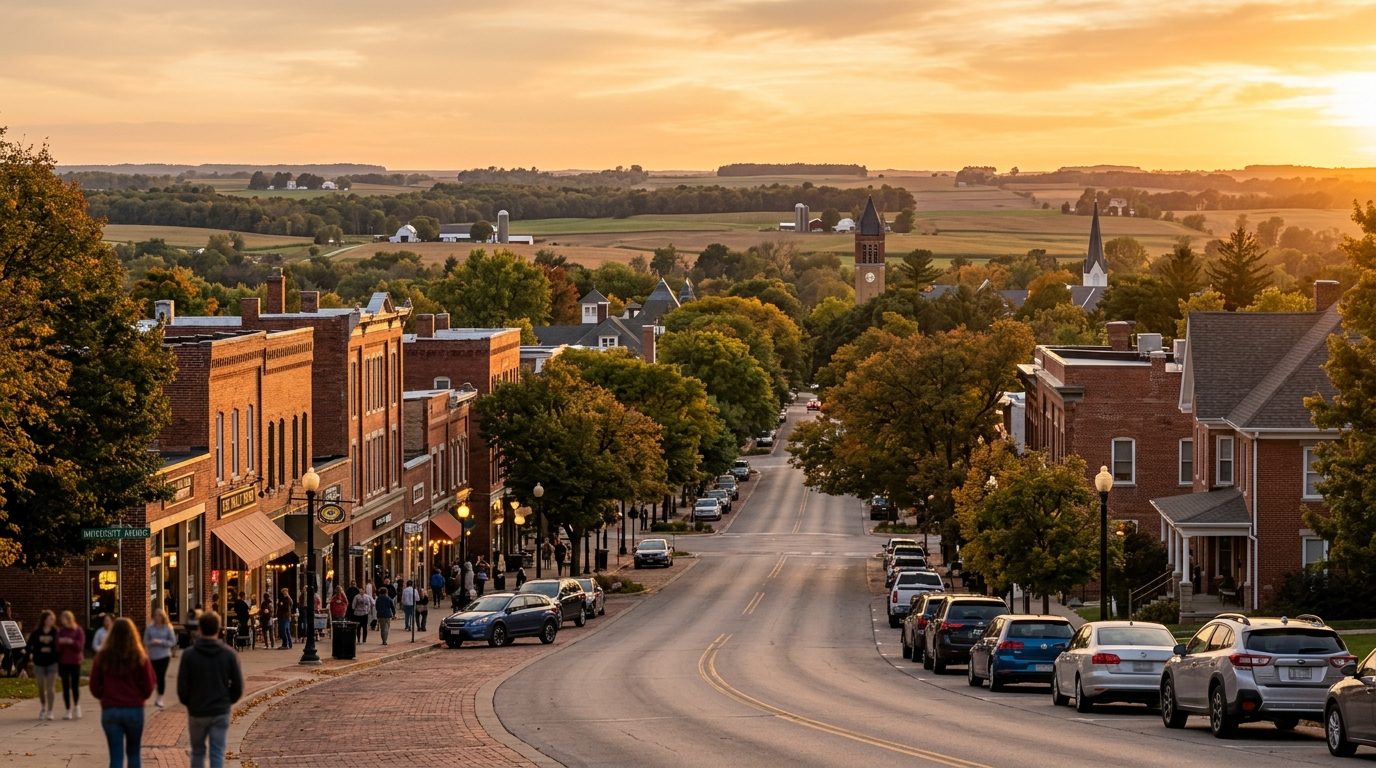
Columbia sits in central Missouri roughly midway between St. Louis and Kansas City, with hillier, cave-pocked terrain south of the city giving way to flatter farmland typical of northern Missouri prairie to the north. The Missouri River runs along the southern edge of the core county. Housing stock in Columbia includes several historic districts ringing downtown with early-twentieth-century homes, concentric rings of postwar and later suburban subdivisions, and a recent wave of downtown high-rise apartment construction, while the two smaller outlying counties hold far more rural, small-town, and agricultural housing stock with much less new construction.
A growth corridor in southwest Columbia offers newer, larger-lot custom construction and has become one of the market’s higher-priced areas, helped along by a well-regarded nearby high school. A historic neighborhood close to downtown, known for its tree-lined streets and walkability to a rail-trail, commands its own premium tied to architectural character and location rather than newness. Neighborhoods near the university see especially strong rental demand given the size of the student population, which shapes pricing differently than in purely owner-occupied areas nearby. Older postwar neighborhoods in the northern part of Columbia tend to be more affordable, and a bedroom community on the metro’s southern edge, in a separate school district from Columbia itself, offers newer construction at a lower price point than the city core. The two smaller outlying counties, built around historic river and farm towns, are consistently the most affordable part of the metro.
The University of Missouri is by a wide margin the dominant institution and employer in the metro, and its presence supports a large university-affiliated health system alongside a separate regional hospital that recently became fully independent after decades under an outside operator. A federal veterans’ hospital adds another layer of healthcare employment. A major insurance company keeps its headquarters in Columbia, and a large private mortgage lender headquartered in the city is another significant employer. The public school district and city government round out the list of the area’s largest employers, and Columbia is not itself the state capital, though the actual capital sits a short drive to the south.
The metro experiences the full range of Midwest seasonal weather, including real tornado risk that has produced actual damage in the city in recent memory, so buyers should take storm shelters and building age seriously rather than treating tornado risk as remote. Missouri assesses residential property at a set share of market value, and effective tax rates vary meaningfully across Columbia’s neighborhoods depending on which school district a property falls into, so it’s worth comparing tax bills by specific address rather than assuming a flat citywide rate. A modest, fare-free city bus system serves Columbia along with a shuttle aimed at university students, but most residents still rely on cars. Growth is managed jointly by the city and county through a shared planning process, particularly around large annexations on the city’s edges. Outside Columbia’s municipal boundaries, in the two smaller counties, well and septic systems are common, and buyers should also confirm which school district a specific property falls into, since Columbia’s own district doesn’t cover the whole metro.
Cities and Towns in the Columbia Metro Area
Notable Communities and Neighborhoods
Columbia Real Estate Market FAQ
How is the Columbia-area housing market organized?
The metro centers on Columbia, a university city roughly midway between St. Louis and Kansas City, with a hillier core county and two smaller, far more rural and agricultural counties on its edges.
Which parts of the metro tend to be pricier?
A newer growth corridor in southwest Columbia and a historic in-town neighborhood near downtown tend to price above the city’s older postwar neighborhoods and well above the small river and farm towns in the outlying counties.
What should buyers verify locally before purchasing?
Confirm which school district a specific property falls into, since it affects both the local tax rate and school assignment, and check well and septic status for property outside Columbia’s municipal boundaries.
What’s a region-specific risk buyers should know about?
Tornado risk is real here, including damage inside the city itself in recent memory, so buyers should ask about a home’s construction and shelter options rather than assume severe weather is a rural-only concern.
Nearby Markets