
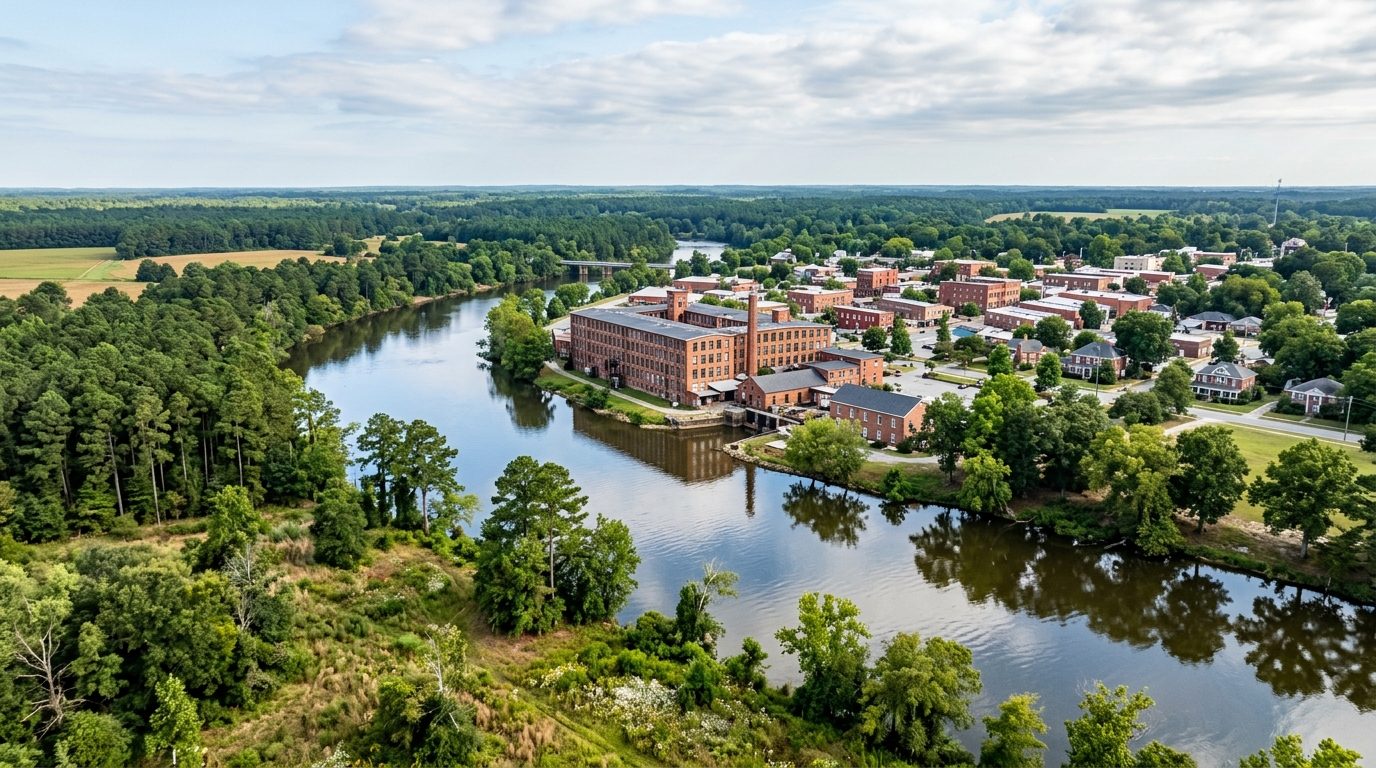
Current real estate market data, news and analysis for the Rocky Mount, NC metropolitan area — 148,486 residents across Edgecombe and Nash counties.
Data as of May 2026. Sources: Redfin Data Center, U.S. Census Bureau.
Latest Rocky Mount Real Estate News
Coverage of this market is coming soon. Browse all housing market news.
Rocky Mount Real Estate Market Overview
Rocky Mount sits at the boundary of Nash and Edgecombe counties in the coastal plain of eastern North Carolina, with the Tar River splitting the city into east and west sides and continuing downstream to the smaller river town of Tarboro. The surrounding metro extends across flat farmland and pine woods dotted with small towns and rural crossroads communities, giving the region a layered character from a historic core to open countryside. Housing stock reflects that range: mill village cottages and brick bungalows cluster near downtown along the river, mid-century ranch homes fill the blocks around them, and newer subdivisions and townhomes extend toward the city’s edge. Outlying towns such as Nashville, Spring Hope, Middlesex, and Tarboro keep their own small downtowns, while unincorporated communities like Bailey, Castalia, and Sharpsburg offer rural acreage and farmhouses rather than platted subdivisions.
The newer growth corridor toward the north and northeast of the city tends to carry stronger demand, sitting closest to newer schools, shopping, and recently built homes on larger lots. The historic districts west of downtown, with their curvilinear streets and architecturally rich blocks, appeal to buyers drawn to older homes with distinctive detailing, and steady preservation interest keeps these areas desirable despite their age. The mill village blocks nearest the river and the historic core tend to be more affordable, reflecting smaller lots and older infrastructure rather than any lack of character. Areas within the Tar River floodplain, most notably across the river in Princeville, carry additional cost considerations tied to flood exposure. Nashville and other small towns hold steady demand thanks to local schools and an easy drive into Rocky Mount or toward Raleigh.
The metro’s economy rests on manufacturing, healthcare, logistics, and agriculture. Pharmaceutical manufacturing has a long history here, with a large Pfizer plant among the anchor employers, alongside engine manufacturing tied to Cummins, tire production connected to Bridgestone, and operations linked to Honeywell and Siemens. Healthcare is centered on Nash General Hospital and the broader UNC Health Nash system, drawing patients and staff from the surrounding counties. Boddie-Noell Enterprises, a longtime restaurant franchise operator, is headquartered locally. Rail and logistics matter too: Rocky Mount is a longstanding CSX rail hub, now home to the Carolina Connector intermodal terminal, drawing distribution and warehousing activity, and the city is also served by Amtrak. Agriculture remains meaningful to the wider county economy, with tobacco, sweet potatoes, and other row crops grown across the surrounding farmland.
A few local factors shape the market. The Tar River has a documented history of major flooding tied to hurricanes, especially consequential for low-lying areas near the river, so flood zone status and flood insurance requirements are worth confirming with local officials before buying near the water. Because the metro spans two counties and multiple towns, tax rates, school assignment, and municipal services can differ from one side of a street to the other, so it is worth checking which county and town a property falls into. A major highway corridor runs through the area, but public transit is limited and most residents rely on a car. Away from city limits, well and septic systems are common rather than municipal water and sewer. Growth tends toward new subdivisions on the city’s edge, and historic districts operate under preservation guidelines that can affect exterior changes.
Cities and Towns in the Rocky Mount Metro Area
Notable Communities and Neighborhoods
Rocky Mount Real Estate Market FAQ
How is the Rocky Mount, NC housing market organized?
The metro spans two counties, Nash and Edgecombe, split by the Tar River, with the city of Rocky Mount as the urban core and a ring of smaller towns and unincorporated communities around it. Each town and unincorporated area has its own character, services, and tax structure, so the market is really a collection of smaller local markets rather than one uniform area.
Which parts of the metro tend to be pricier, and why?
Newer subdivisions toward the northern and northeastern edge of Rocky Mount tend to command stronger demand because they sit closest to newer schools, shopping, and recently built housing on larger lots. Historic in-town neighborhoods with distinctive early architecture also hold steady value due to preservation interest and walkability, while older housing nearer the river, downtown core, and industrial rail corridors tends to be more affordable.
What should buyers verify locally before purchasing in this metro?
Buyers should confirm which county and municipality a property sits in, since tax rates, school assignment, and services can change from one side of a boundary to the next. It is also worth checking whether a property relies on municipal water and sewer or on a private well and septic system, and whether any local historic district guidelines apply to exterior changes.
Is flood risk a concern in the Rocky Mount metro?
Yes, the Tar River has a history of significant flooding during tropical storms and hurricanes, and low-lying areas near the river, including communities directly across the water from Rocky Mount, have experienced serious flood damage in past storms. Buyers considering property near the river should check flood zone designation and flood insurance requirements directly with local floodplain officials before purchasing.
Nearby Markets