
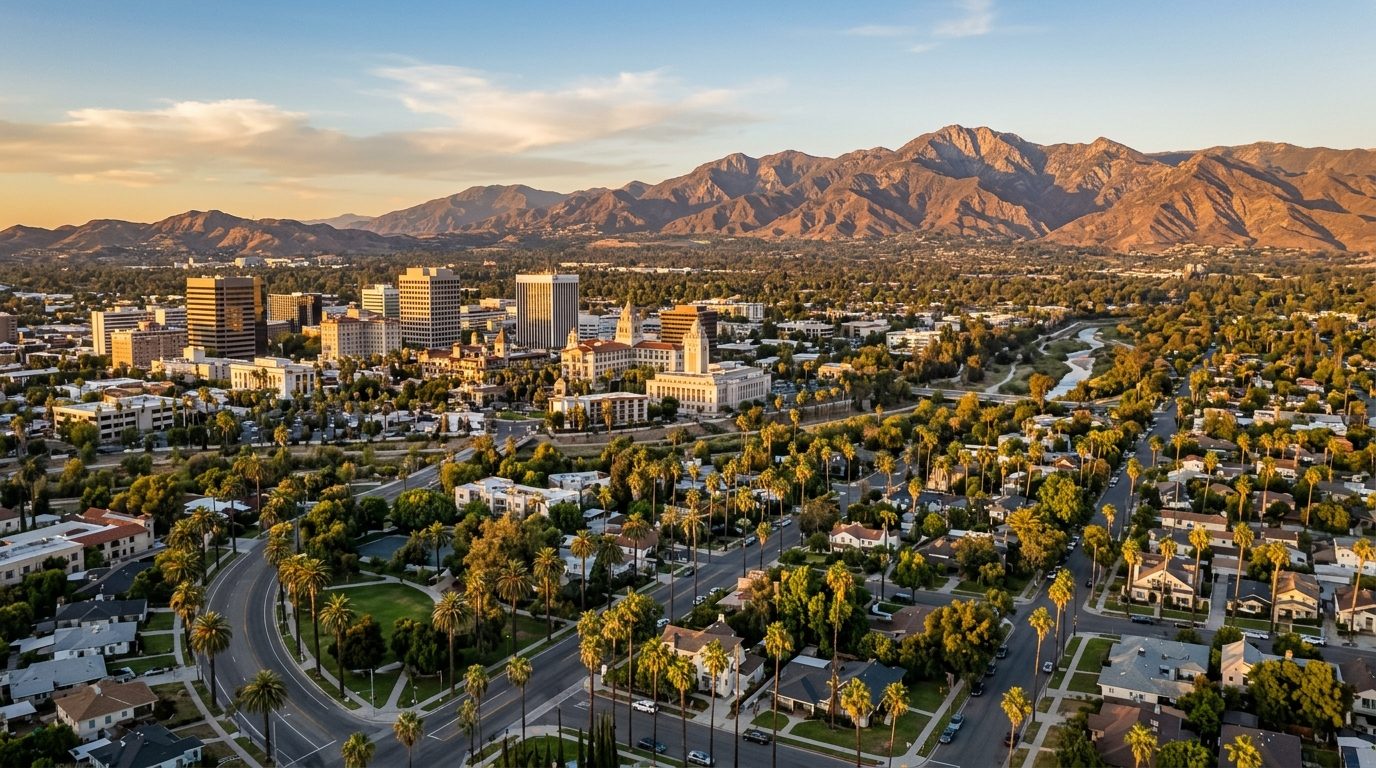
Current real estate market data, news and analysis for the Riverside-San Bernardino-Ontario, CA metropolitan area — 4.8M residents across Riverside and San Bernardino counties.
Data as of May 2026. Sources: Redfin Data Center, U.S. Census Bureau.
Latest Riverside Real Estate News
Riverside Real Estate Market Overview
Riverside-San Bernardino-Ontario covers two expansive Southern California counties extending from the Los Angeles and Orange County edges to Arizona and Nevada. The western Inland Empire contains a largely continuous urban area built around Riverside, San Bernardino, Ontario, Rancho Cucamonga, Fontana, Corona and surrounding cities. Housing there includes older downtown neighborhoods, postwar ranch homes, tract subdivisions, townhouses, apartments and substantial newer development. The region also includes mountain communities around Big Bear, High Desert cities such as Victorville and Apple Valley, the Coachella Valley resort market, agricultural areas and remote desert settlements. These areas share a metropolitan designation but have different climates, employment connections and housing forms.
Higher price tiers are generally found in Indian Wells, Rancho Mirage, gated golf communities in Palm Desert and La Quinta, Temecula’s wine-country edge, Chino Hills, Rancho Cucamonga foothill neighborhoods and selected historic areas of Redlands and Riverside. Premiums may reflect golf or club amenities, views, larger lots, newer schools or access to employment in Los Angeles and Orange counties. More attainable options are commonly found in San Bernardino, Hemet, Perris, parts of Moreno Valley, the High Desert and remote communities such as Barstow, Blythe and Needles. Lower acquisition costs in outer areas can be offset by transportation expenses, summer cooling, insurance, limited services or reliance on wells, septic systems and private roads.
The economy is supported by logistics, warehousing, health care, government, education, manufacturing, construction, tourism and agriculture. Distribution facilities cluster along the interstate corridors near Ontario, Fontana, Eastvale, Moreno Valley and San Bernardino because of access to ports, rail lines and Southern California consumers. Loma Linda University Health, Riverside University Health System, county governments, school districts, the University of California Riverside and California State University San Bernardino provide major institutional employment. Tourism and hospitality are important in Palm Springs and the Coachella Valley, while military installations and related activity influence communities near March Air Reserve Base and Twentynine Palms.
Property risks vary sharply across the metro. Foothill and mountain communities face wildfire, evacuation and insurance concerns; desert areas experience prolonged heat, wind and water constraints; and washes or low-lying areas can be affected by flash flooding. Earthquake hazards apply throughout the region, while air quality can be influenced by basin geography, traffic and industrial activity. Metrolink serves parts of the western corridor, but most residents depend on highways, and cross-county commutes can be lengthy. Newer subdivisions may include homeowners associations and community-facilities district assessments. Buyers should verify hazard zones, insurance availability, utility arrangements, road access, water sources and the status of planned infrastructure rather than applying conditions from one part of the Inland Empire to another.
Cities and Towns in the Riverside Metro Area
Notable Communities and Neighborhoods
Riverside Real Estate Market FAQ
How is the Riverside-San Bernardino metro housing market geographically organized?
The metro includes the urbanized western Inland Empire, mountain communities, the High Desert, the Coachella Valley and remote desert cities near the Arizona and Nevada borders. Housing, climate, commuting patterns and employment access differ substantially among those areas.
Which Inland Empire locations generally sit in higher price tiers?
Indian Wells, Rancho Mirage, selected communities in Palm Desert and La Quinta, Temecula’s wine-country edge, Chino Hills, Rancho Cucamonga foothill neighborhoods and established parts of Redlands and Riverside generally occupy higher tiers. Gated amenities, mountain or golf views, lot size, school access and proximity to coastal employment markets influence those differences.
What should buyers verify in a new Inland Empire subdivision?
Buyers should review homeowners association rules, community-facilities district obligations, builder warranties, utility providers, planned roads and nearby approved land uses. They should also determine whether the location depends on a long freeway commute and whether schools and commercial services are already operating or merely planned.
What environmental risks should Inland Empire buyers consider?
Wildfire, extreme heat, earthquakes, wind, flash flooding and poor air quality can affect different parts of the region. Buyers should obtain property-specific hazard disclosures, insurance quotes and information about water, drainage, defensible space and emergency access.
Nearby Markets