
Current real estate market data, news and analysis for the Paducah, KY-IL metropolitan area — 102,259 residents across 5 counties in Kentucky and Illinois.
Data as of May 2026. Sources: Redfin Data Center, U.S. Census Bureau.
Latest Paducah Real Estate News
Coverage of this market is coming soon. Browse all housing market news.
Paducah Real Estate Market Overview
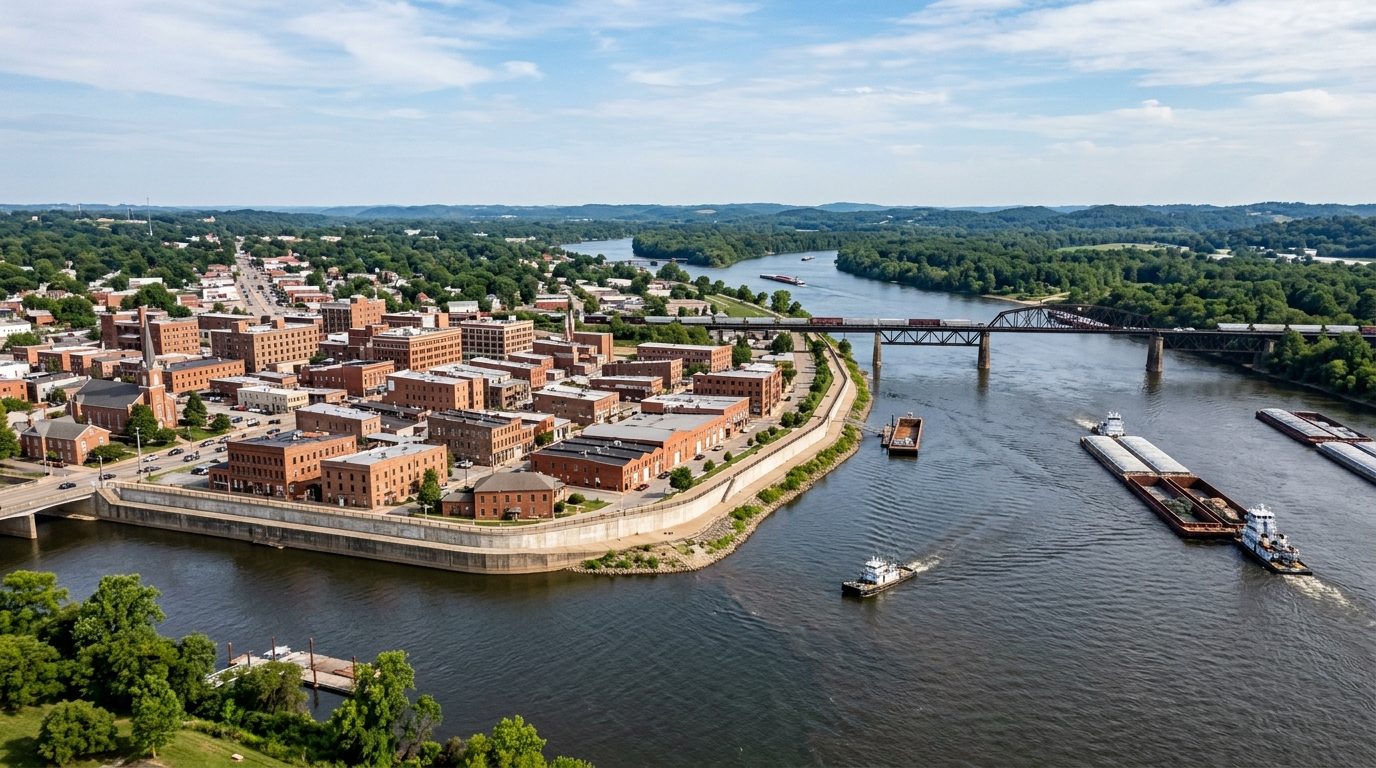
The Paducah metropolitan area sits at the point where the Tennessee River flows into the Ohio, a confluence that shaped the region’s settlement and still defines its geography. Paducah itself, the metro’s urban center, grew up along the riverbank with a compact historic downtown, a concrete floodwall lined with painted murals depicting the city’s past, and residential streets that mix Victorian-era brick homes with mid-twentieth-century ranch houses and newer construction toward the edges. Directly across the Ohio sits Metropolis, Illinois, a small river town that has embraced its official designation as Superman’s hometown, complete with a statue and a museum devoted to the character. Housing stock across the broader metro ranges from restored nineteenth-century homes near the riverfront to postwar subdivisions, newer suburban-style development, and rural acreage farther from the urban core.
Within Paducah, the historic core, including the LowerTown Arts District and the Jefferson Street-Fountain Avenue neighborhood, draws attention for its architecture: Victorian, Queen Anne, and Italianate homes individually restored, many subject to design review under the city’s historic preservation program. Newer subdivisions on the city’s western and southern edges, in areas such as Lone Oak and Reidland, tend to appeal to buyers seeking recently built homes, larger lots, and proximity to newer schools and shopping. Outside the city, the smaller river towns scattered across Ballard, Carlisle, and Livingston counties, places oriented around farming, the river trade, or lake recreation near Kentucky Lake and Lake Barkley, offer a quieter, more rural setting with fewer nearby services, which shapes what buyers are generally willing to pay relative to homes closer to Paducah’s core.
The regional economy has long been tied to the rivers. Ingram Barge and Marquette Transportation run substantial towing and shipping operations from the Paducah area, reflecting its position on a heavily used inland waterway system, while James Marine adds shipbuilding and repair work along the same riverfront. Healthcare is another major pillar, anchored by Baptist Health Paducah and Mercy Health, hospital systems drawing patients from a multi-state area spanning western Kentucky, southern Illinois, and parts of Missouri and Tennessee. Manufacturing also contributes, with employers such as Pilgrim’s Pride, Pella Windows, and Westlake Chemical operating area plants. For decades, the federal Paducah Gaseous Diffusion Plant enriched uranium west of the city; it has since been shut down and is now the site of an ongoing federal environmental cleanup, a legacy that still shapes employment and land use in that part of the county.
Flooding is the defining local risk to understand before buying here. Both rivers can rise substantially, and the concrete floodwall protecting downtown Paducah was built after a catastrophic historic flood; it shields the historic core but does not extend everywhere, so properties outside its line, along smaller creeks, or in low-lying bottomland can carry real flood exposure. Buyers should check flood zone maps for any specific address, ask whether flood insurance is required or advisable, and confirm whether a property relies on city sewer or a septic system, since rural parts of the metro commonly use the latter. Property tax rates and zoning rules vary by county and by whether a property sits inside city limits or a historic district subject to design review, so buyers should confirm both with the local county property valuation office and the relevant planning department before making an offer.
Cities and Towns in the Paducah Metro Area
Notable Communities and Neighborhoods
Paducah Real Estate Market FAQ
How is the Paducah metro area organized geographically?
The metro centers on Paducah, Kentucky, at the confluence of the Ohio and Tennessee rivers, with McCracken County forming the urban core. Ballard, Carlisle, and Livingston counties extend west and east along the Ohio and Cumberland rivers with smaller, more rural river towns, while Massac County, Illinois, sits directly across the Ohio and includes Metropolis. Most everyday commerce, healthcare, and employment are concentrated in and around Paducah, with the outlying counties offering a more rural, small-town setting.
Which areas tend to be pricier, and why?
Paducah’s historic districts, such as the LowerTown Arts District and the Jefferson Street-Fountain Avenue neighborhood, command attention for their restored Victorian and Italianate architecture, though restoration and historic-district design review add cost and complexity. Newer subdivisions on the city’s western and southern edges also draw buyers seeking recently built homes near schools and shopping. The smaller, more remote river towns in the surrounding counties tend to be more affordable, reflecting fewer nearby services and longer commutes to Paducah’s job centers.
What should buyers verify locally before purchasing?
Buyers should confirm a property’s FEMA flood zone designation and whether flood insurance is required, since flood risk varies significantly by location relative to the Ohio and Tennessee rivers and the Paducah floodwall. It’s also worth checking whether a property uses city water and sewer or a private well and septic system, common in the more rural parts of the metro, confirming current zoning and any historic-district design restrictions, and verifying property tax rates and assessment practices with the relevant county property valuation office.
How significant is flood risk in this area?
Flooding is a real and recurring consideration given the area’s location where the Tennessee River meets the Ohio. Downtown Paducah is protected by a concrete floodwall built after a historic flood, but the wall does not cover the entire metro, and low-lying areas, riverside communities, and land near smaller creeks and tributaries can still be subject to periodic flooding. Anyone buying near the rivers should review flood zone maps and factor insurance costs and requirements into their decision.
Nearby Markets