
Current real estate market data, news and analysis for the Evansville, IN metropolitan area — 273,786 residents across Posey, Vanderburgh and Warrick counties.
Data as of May 2026. Sources: Redfin Data Center, U.S. Census Bureau.
Latest Evansville Real Estate News
Coverage of this market is coming soon. Browse all housing market news.
Evansville Real Estate Market Overview
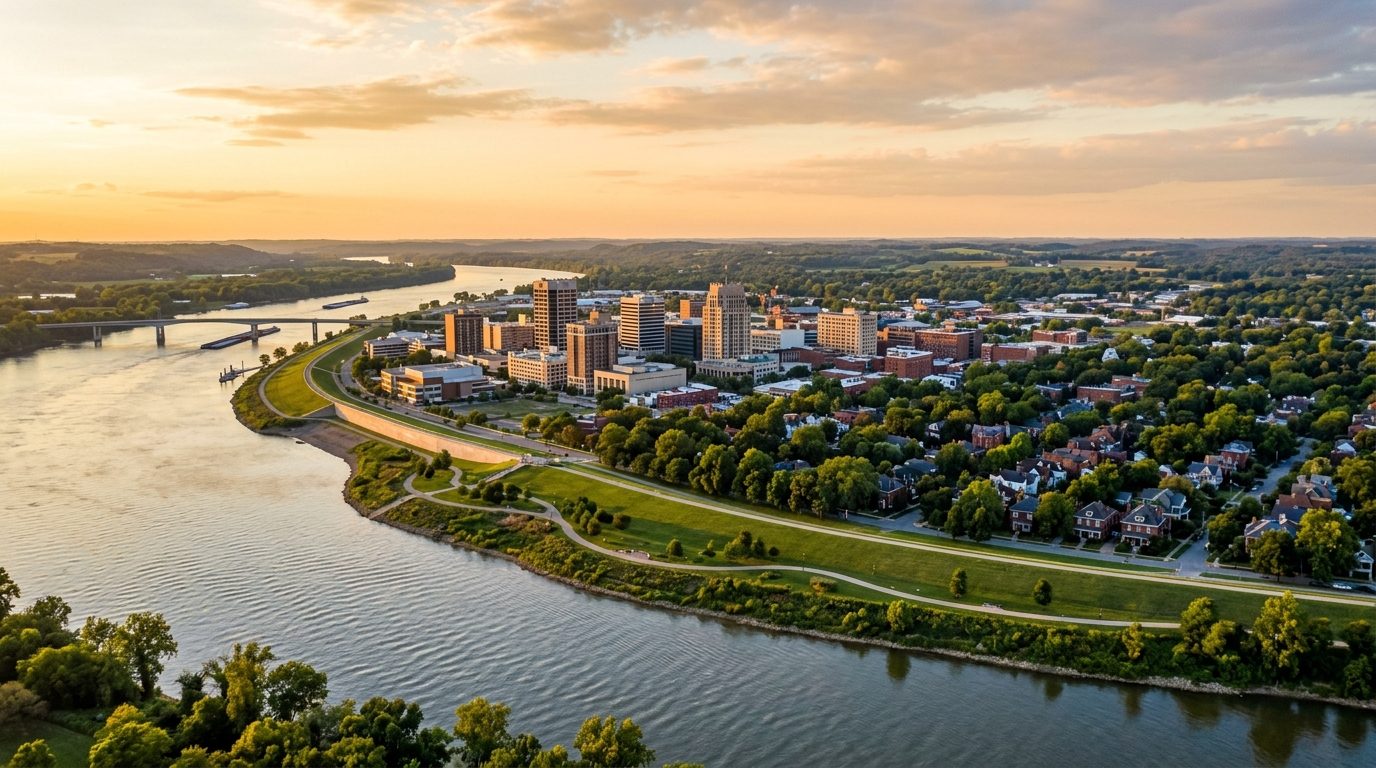
Evansville sits on a wide bend of the Ohio River in southwestern Indiana, where the downtown grid follows the curve of the water and the metro spreads outward across flatter farmland and low rolling hills in Vanderburgh, Warrick, and Posey counties. The urban core is dense and walkable, with brick-and-frame houses from the late nineteenth and early twentieth centuries lining narrow streets near downtown and the riverfront. Ringing that core are mid-century neighborhoods of bungalows, Cape Cods, and brick ranches built as the city expanded after the world wars, followed by larger-lot subdivisions pushing into Newburgh and northern Vanderburgh County. Farther out, Warrick and Posey counties transition into small river towns, crossroads communities, and open farmland, with housing ranging from historic town squares to scattered rural acreages.
Price tiers across the metro track distance from downtown, school reputation, and age of construction more than any single factor. Newburgh and eastern Warrick County, along with newer development near McCutchanville and Darmstadt in northern Vanderburgh County, sit at the upper end of the market, favored for newer construction, larger lots, well-regarded schools, and distance from the older city’s industrial corridors. Historic core neighborhoods near downtown and the riverfront offer architectural character, walkability, and proximity to hospitals, downtown employers, and the arts district, but carry a wider mix of home conditions and generally sit at a lower price tier, drawing buyers interested in renovation or urban living. Western and older northern sections of Evansville proper tend to be more modest, shaped by a history as working-class and industrial neighborhoods. Rural Posey County and smaller towns farther from employment centers generally command lower prices, reflecting longer commutes and fewer services.
The regional economy centers on healthcare, manufacturing, and higher education. Deaconess Health System and Ascension St. Vincent Evansville operate major hospital campuses and rank among the area’s largest employers. Manufacturing has deep roots, anchored by Berry Global, a plastics and packaging company headquartered in Evansville, alongside industrial suppliers tied to the region’s furniture and refrigeration manufacturing history. Toyota’s vehicle assembly plant in nearby Gibson County draws commuters from across the metro. The University of Evansville and the University of Southern Indiana anchor higher education, bringing steady employment, student housing demand, and medical research partnerships. Old National Bank, a regional financial institution, is also headquartered in Evansville.
A few local factors matter before buying here. The Ohio River has flooded historically, and a levee and floodwall system built after the region’s major flood years now protects much of the urban core, though low-lying land outside the levee district, particularly in Posey and Warrick counties, remains subject to real flood risk. Buyers should independently check flood zone maps and elevation certificates near the river or floodplain. Property taxes are set at the county level and vary by taxing district, so rates should be confirmed with the assessor. Public transit is limited to a city bus system serving Evansville proper, so most of the metro, especially Warrick and Posey counties, is car-dependent. Land use is governed separately by area plan commissions in each county, and growth has continued along the Newburgh and Chandler corridor and into northern Vanderburgh County. In rural Posey County and unincorporated areas, many homes rely on private wells and septic systems rather than municipal utilities, which buyers should verify along with zoning.
Cities and Towns in the Evansville Metro Area
Notable Communities and Neighborhoods
Evansville Real Estate Market FAQ
How is the Evansville real estate market organized geographically?
The metro is built around Evansville, the core city on a bend of the Ohio River in Vanderburgh County, and extends into Warrick County to the east (Newburgh, Chandler, Boonville) and Posey County to the west (Mount Vernon, Poseyville, New Harmony). Vanderburgh County is the most urban and densely built, Warrick County mixes established towns with newer suburban growth along the river and Interstate corridors, and Posey County is the most rural, with agricultural land and small river towns.
Which parts of the metro tend to be pricier, and why?
Newburgh and eastern Warrick County, along with newer subdivisions in northern Vanderburgh County near McCutchanville and Darmstadt, tend to command higher prices. These areas generally offer newer housing stock, larger lots, and school corporations with strong local reputations, along with more distance from the older city’s industrial and commercial corridors. Older, historic neighborhoods closer to downtown Evansville offer character and walkability but a wider range of home conditions and typically lower price points.
What should buyers verify locally before purchasing in this area?
Because the metro sits on the Ohio River, buyers should independently confirm a property’s flood zone designation, elevation, and whether it falls inside or outside the protected levee district, especially for homes near the river or its tributaries. In rural parts of Posey and Warrick counties, many properties rely on private wells and septic systems rather than municipal water and sewer, so well and septic condition and permitting should be verified with the county health department. Buyers should also check zoning and floodplain status directly with the relevant county or town office rather than relying on listing descriptions.
What is the main region-specific risk to be aware of in this market?
The Ohio River has flooded the area historically, and while a levee and floodwall system protects much of the urban core of Evansville, low-lying land outside that protected district, including parts of Posey and Warrick counties along the river and its tributaries, remains genuinely exposed to flood risk. Buyers should treat flood history and current FEMA flood zone status as a standard part of due diligence for any property near the river, rather than assuming the levee system extends everywhere.
Nearby Markets