
Current real estate market data, news and analysis for the Medford, OR metropolitan area — 221,795 residents across Jackson county.
Data as of May 2026. Sources: Redfin Data Center, U.S. Census Bureau.
Latest Medford Real Estate News
Coverage of this market is coming soon. Browse all housing market news.
Medford Real Estate Market Overview
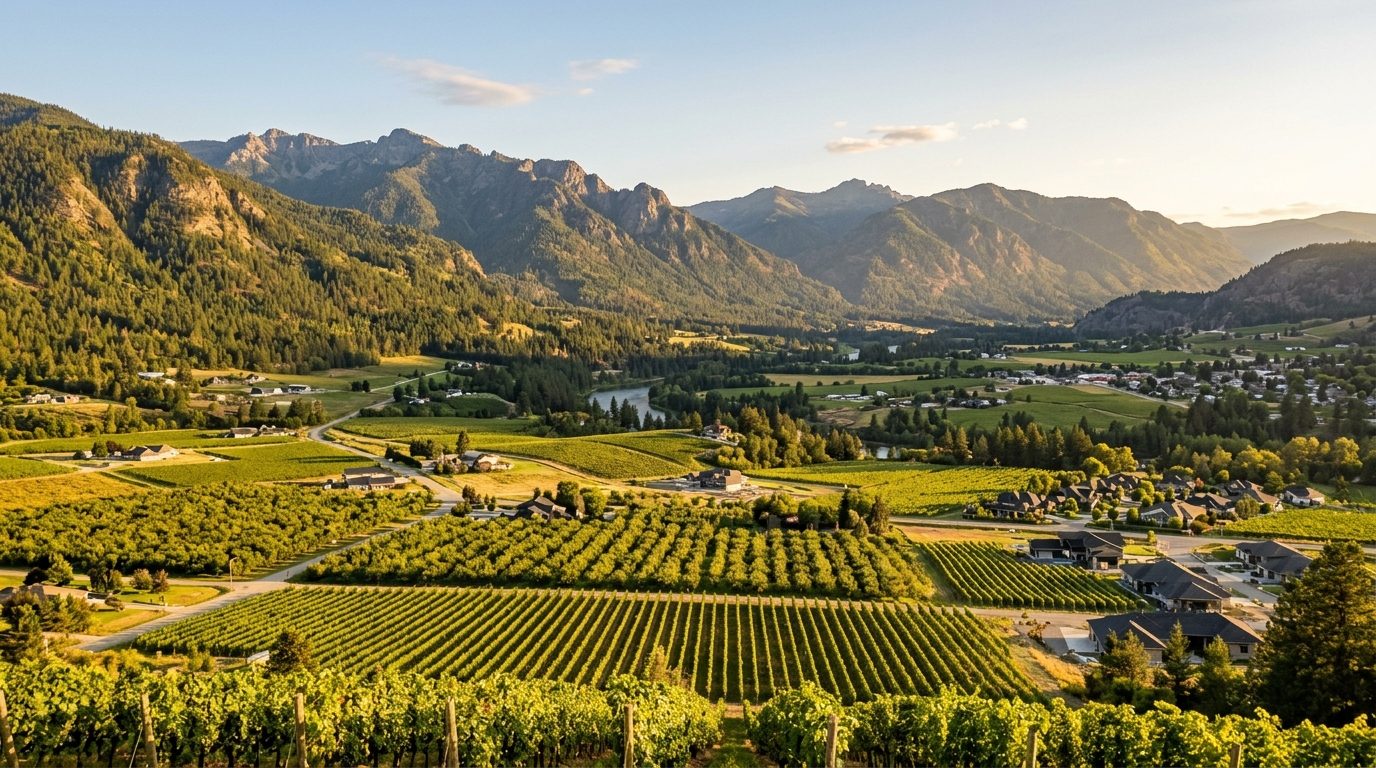
Medford sits in the Rogue Valley, a rain-shadow valley wedged between the Cascade Range and the Siskiyou Mountains that gets noticeably drier and sunnier than the coastal Pacific Northwest. A creek running through the city and a volcanic peak on its eastern edge are the area’s defining natural landmarks. Housing stock in Medford’s core includes early-twentieth-century railroad-era neighborhoods with Craftsman and period-revival homes, ringed by extensive mid- and late-twentieth-century suburban growth, while the smaller cities up and down the valley range from a nearly untouched nineteenth-century gold-rush town to newer, fast-growing bedroom communities.
An established neighborhood on Medford’s east side, near the area’s country club, along with a couple of historic districts near downtown, tend to price at the higher end for their architecture, mature landscaping, and central location. A small nearby town, almost entirely preserved as a historic landmark from its gold-rush-era beginnings, carries a premium tied to that scarcity and its tourism-driven character, and the valley’s university and festival town carries similar cultural cachet. Newer subdivisions on Medford’s southwest side and in the smaller cities along the interstate corridor are more moderately priced, and the fastest-growing of those smaller cities has become the valley’s clearest affordability option as it has absorbed much of the region’s recent population growth.
Healthcare is the single largest private employment sector, with two hospital systems, one a large nonprofit network based in Medford and the other a national health system, together accounting for a substantial share of local jobs. A well-known mail-order fruit and gift company remains headquartered in Medford and traces its roots to the valley’s historic pear orchards, and a Fortune 500 auto retailer is also headquartered in the city. An organic food manufacturer operates a major production facility in the area, and a regional senior-living operator is also based here. A public university in the valley’s southernmost city, along with a community college with a Medford campus, round out the area’s larger institutions, and the region’s timber industry, while a smaller share of today’s economy than in past decades, remains part of the area’s identity.
Wildfire and smoke are a real, well-documented seasonal risk in this valley, driven partly by its rain-shadow geography, and one fire in recent memory swept through several communities along the main creek corridor in a matter of hours, destroying a large number of homes. Buyers should check wildfire-hazard zone mapping and insurance availability specifically for any property, especially in foothill or wildland-adjacent areas. Oregon caps how quickly a property’s taxable assessed value can rise each year regardless of actual market appreciation, which can create a meaningful gap between the tax bills on a long-held home and a recently purchased one nearby. The state’s land-use system requires every city in the valley to operate within a defined urban growth boundary, which shapes where new subdivisions can be built and has led to more coordinated regional planning than is typical in fast-growing metros elsewhere. Outside the incorporated cities, many rural and foothill properties rely on private wells and septic systems permitted through the state’s environmental agency, and buyers there should verify well yield and septic status directly.
Cities and Towns in the Medford Metro Area
Notable Communities and Neighborhoods
Medford Real Estate Market FAQ
How is the Medford-area housing market organized?
The metro runs the length of the Rogue Valley, with Medford as the largest city and job center, a historic gold-rush town and a university and festival town nearby, and several smaller, faster-growing cities strung along the valley’s main highway corridor.
Which parts of the metro tend to be pricier?
An established east-side Medford neighborhood, a handful of historic districts near downtown, and the valley’s preserved historic and college towns tend to price above the newer subdivisions in Medford’s southwest side and the smaller valley cities.
What should buyers verify locally before purchasing?
Check wildfire-hazard zone mapping and insurance availability for any specific property, confirm well and septic status for rural or foothill parcels, and ask how a property’s assessed value compares with its actual market value given Oregon’s assessment-growth cap.
What’s a region-specific risk buyers should know about?
Wildfire and smoke are a documented seasonal risk across this valley, and a fire in recent memory moved through several communities quickly, so defensible space and insurance terms are worth scrutinizing closely regardless of a specific address’s history.
Nearby Markets