
Current real estate market data, news and analysis for the Grants Pass, OR metropolitan area — 87,867 residents across Josephine county.
Data as of May 2026. Sources: Redfin Data Center, U.S. Census Bureau.
Latest Grants Pass Real Estate News
Coverage of this market is coming soon. Browse all housing market news.
Grants Pass Real Estate Market Overview
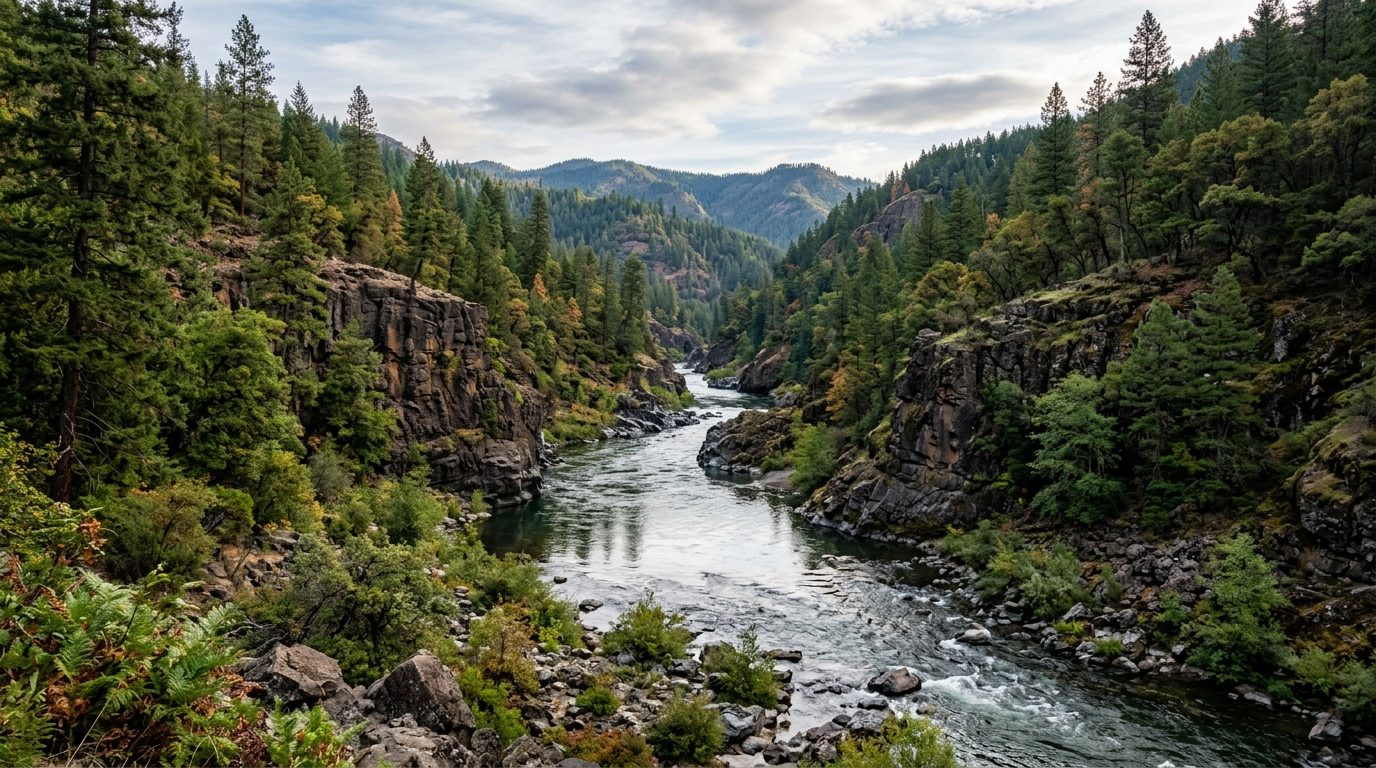
Grants Pass and the rest of Josephine County occupy the Rogue Valley and the surrounding Klamath Mountains in southwestern Oregon, a rugged, heavily forested landscape where the federal government owns the majority of the land as national forest and BLM holdings. The Rogue River runs through Grants Pass itself, while the Illinois River winds through the more remote Illinois Valley around Cave Junction. Housing stock ranges from a small historic core of pre-1940s bungalows and farmhouses near downtown’s original townsite, through mid-century subdivisions built during the area’s timber-industry boom, to newer subdivisions on the edges of town and abundant rural acreage, ranchette-style parcels, and manufactured homes scattered across the county’s checkerboard pattern of private and former timber land.
River-frontage and river-view parcels along the Rogue, along with newer subdivisions on the growth edges of Grants Pass and acreage in the Applegate Valley wine country around Williams and Murphy, tend to command the highest prices in the metro, largely for land, views, and privacy. Older in-town neighborhoods near downtown are generally more affordable, as are the county’s manufactured-home areas and communities farther from the river or wine country. Cave Junction and the rest of the Illinois Valley typically price below Grants Pass proper, reflecting the added distance to the regional hospital, retail, and Interstate 5.
Timber once dominated the local economy, and federal harvest restrictions beginning in the 1990s led to decades of mill closures, including the shutdown of the area’s last major sawmill in Cave Junction. Since then, the economy has diversified into healthcare, retail, education, outdoor recreation and tourism, and light manufacturing. Asante Three Rivers Medical Center is the area’s hospital and a major employer, alongside Rogue Community College, the local school districts, and county government. Fire Mountain Gems and Beads, a jewelry-supply company headquartered in Grants Pass, and MasterBrand Cabinets are among the larger private employers, and the Rogue River’s whitewater and jet-boating trade, along with a sizable retiree population, supports much of the area’s tourism and service economy.
Wildfire risk is high across most of Josephine County, and the region has seen rising insurance premiums and non-renewals tied to that exposure, so buyers should check defensible-space requirements and confirm insurability before committing to a purchase. Oregon has no state sales tax, and the county’s property tax rates are relatively low, though that same limited tax base has periodically strained funding for local public safety. Transit is limited to a handful of fixed and commuter routes connecting Grants Pass, Cave Junction, and Medford, and the area has no passenger rail. Buyers looking at rural or unincorporated parcels should confirm septic and well status, local zoning — much of the outlying land is forest- or resource-zoned — and fire-district coverage before closing.
Cities and Towns in the Grants Pass Metro Area
Notable Communities and Neighborhoods
Grants Pass Real Estate Market FAQ
How is the Grants Pass-area housing market organized?
Grants Pass itself is the commercial and residential core, with river-frontage and newer edge-of-town subdivisions at the higher end. The Applegate Valley wine country around Williams and Murphy and the more remote Illinois Valley around Cave Junction form distinct sub-markets with their own price levels and character.
Which parts of the metro tend to be pricier?
River-view and river-frontage parcels along the Rogue, newer subdivisions on the edges of Grants Pass, and acreage in the Applegate Valley wine country generally command the highest prices. Older in-town neighborhoods and the more remote Illinois Valley communities tend to be more affordable.
What should buyers verify before purchasing here?
Given how much of the county sits in a high wildfire-hazard zone, buyers should confirm defensible-space requirements and check with an insurer on availability and cost before making an offer. On rural parcels, it’s also worth verifying septic and well status along with the property’s forest- or resource-zoning designation.
What is the biggest region-specific risk for homeowners here?
Wildfire exposure and the insurance market strain that comes with it are the defining local risk, with much of Josephine County mapped as high hazard. The area’s history of timber-driven boom-and-bust cycles is also worth understanding for anyone evaluating the durability of local job demand.
Nearby Markets