
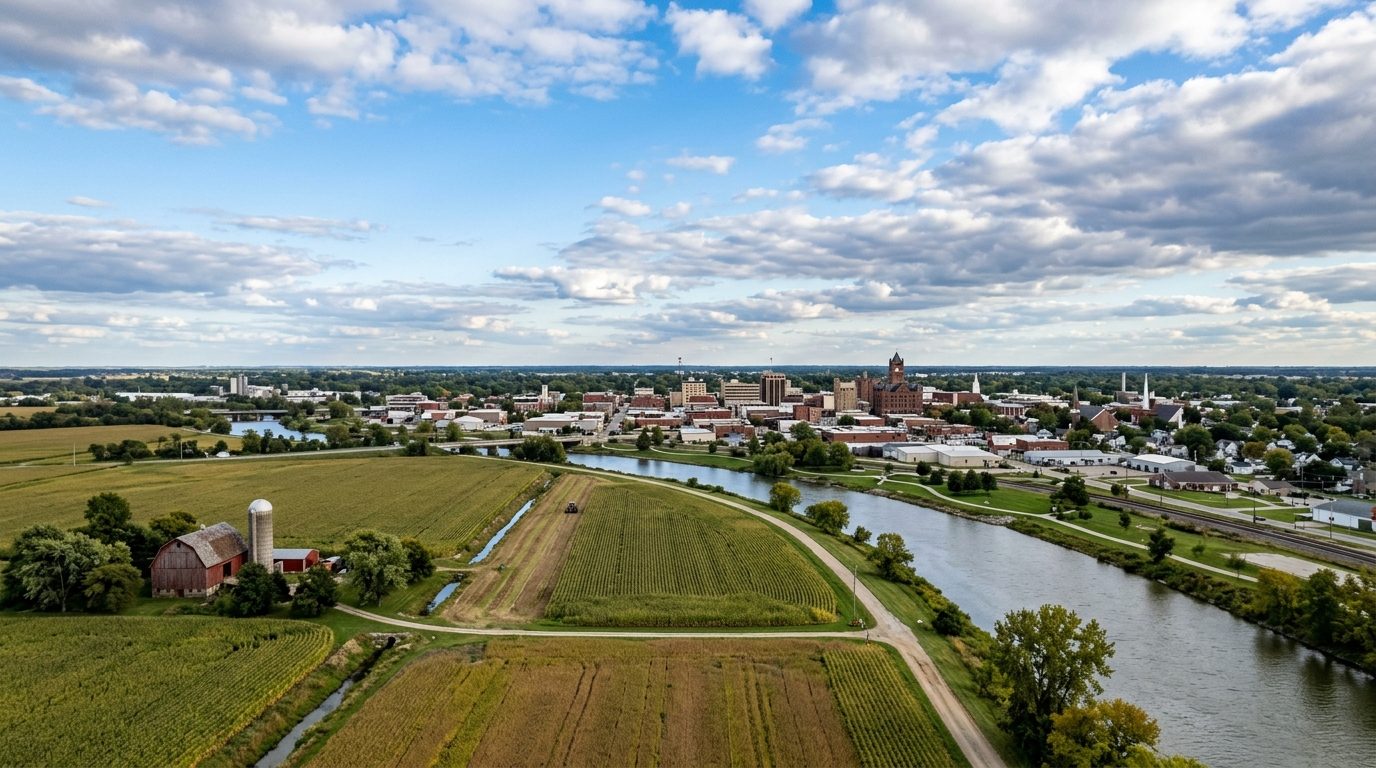
Current real estate market data, news and analysis for the Lima, OH metropolitan area — 100,881 residents across Allen county.
Data as of May 2026. Sources: Redfin Data Center, U.S. Census Bureau.
Latest Lima Real Estate News
Lima Real Estate Market Overview
The Lima metro area sits in Allen County in the till plains of northwest Ohio, a landscape of flat to gently rolling farmland drained by the Ottawa River, which runs through the city itself, and the Auglaize River, which crosses the county’s southern townships. Corn and soybean fields surround the built-up areas, and the region’s small towns, including Beaverdam, Bluffton, Cairo, Delphos, Elida, Harrod, Lafayette, and Spencerville, sit as compact, distinct villages separated by open cropland rather than continuous suburban sprawl. Housing stock reflects this layered settlement history: the city of Lima carries a core of early-to-mid twentieth century homes, including modest bungalows and worker housing tied to its industrial past along with pockets of larger Victorian and Craftsman-era residences; surrounding townships and villages mix postwar ranch houses with newer subdivision construction; and rural parcels include farmhouses and acreage lots.
Price tiers within the metro generally track distance from Lima’s older industrial core and the quality of adjacent school districts. Townships bordering the city to the north and east, along with the Shawnee, Bath, and Elida areas, tend to carry newer housing stock, larger lots, and well-regarded local school systems, which push them toward the upper end of the local range. Lima’s central and south side neighborhoods, closer to the historic downtown and former industrial corridors, feature older, smaller homes and trend toward the lower end. Bluffton, anchored by its university, holds a distinct position with well-maintained older homes and a walkable village core. The outlying villages of Delphos, Spencerville, Cairo, Harrod, Lafayette, and Beaverdam offer modest, small-town housing stock priced in line with their rural, low-density character.
The regional economy is anchored by manufacturing and refining alongside healthcare and education. The Lima refinery, one of the longest continuously operating refineries in the country, is now owned by Cenovus Energy and remains a major industrial employer. Ford Motor Company operates an engine plant in Lima that has built six-cylinder engines since the 1950s, and Procter & Gamble runs a large detergent manufacturing and bottling operation in the city. The Joint Systems Manufacturing Center, operated by General Dynamics Land Systems, produces Abrams tank hulls and other combat vehicle components and is the country’s last active tank assembly plant, an unusual defense-manufacturing presence for a metro of this size. Healthcare is centered on Mercy Health’s St. Rita’s Medical Center, a large regional hospital, while Bluffton University and Rhodes State College add higher-education employment to the local base.
Buyers evaluating property in this metro should understand a few distinctive local factors. Allen County lies within a Midwest tornado-risk corridor, and localized flooding tied to the Ottawa River has affected some low-lying parcels historically, so flood zone status and drainage history are worth confirming through county floodplain records. Agricultural land can be taxed under Ohio’s Current Agricultural Use Valuation program, which treats working farmland differently from residential parcels for tax purposes, a distinction that matters for rural purchases. Public transit is limited to a small bus system run by the Allen County Regional Transit Authority, serving Lima and a rush-hour route to Delphos, so most of the metro is car-dependent. Zoning and permitting authority is split between the city of Lima, incorporated villages, and township governments, so confirming which jurisdiction governs a given parcel is an early step for any purchase or renovation.
Cities and Towns in the Lima Metro Area
Notable Communities and Neighborhoods
Lima Real Estate Market FAQ
How is the Lima, Ohio metro area organized geographically?
The metro is built around the city of Lima in Allen County and includes several smaller incorporated villages and townships surrounding it, including Beaverdam, Bluffton, Cairo, Delphos, Elida, Harrod, Lafayette, and Spencerville. The terrain is flat glacial till plain given over largely to row-crop agriculture, with the Ottawa River running through Lima and the Auglaize River draining the southern part of the county. Each town remains geographically distinct, bordered by open farmland rather than connected suburban development.
Which parts of the Lima metro tend to be pricier, and why?
Townships and areas east and north of Lima’s core, including the Shawnee, Bath, and Elida areas, tend to trend higher due to newer housing construction, larger lots, and well-regarded local school districts. Lima’s older central and south side neighborhoods, closer to former industrial corridors, feature smaller and older homes and trend lower. Bluffton, as a university village, holds its own middle position with a well-kept historic housing stock.
What should buyers verify locally before purchasing in this metro?
Buyers should confirm which jurisdiction governs a given parcel, since zoning and permitting authority is split between the city of Lima, individual incorporated villages, and township governments, each with separate rules. For rural or semi-rural parcels, it is also worth checking whether land is enrolled in Ohio’s Current Agricultural Use Valuation program, since that affects how the property is taxed relative to straight residential land.
What regional weather or flood risks are relevant to homes in this area?
Allen County sits within a Midwest corridor with meaningful tornado risk, and low-lying parcels near the Ottawa River and other local waterways have experienced flooding in the past. Anyone evaluating a specific property should check its floodplain designation with county floodplain management records and ask about the property’s drainage and flood history directly rather than assuming risk based on the general area.
Nearby Markets