
Current real estate market data, news and analysis for the Springfield, OH metropolitan area — 135,340 residents across Clark county.
Data as of May 2026. Sources: Redfin Data Center, U.S. Census Bureau.
Latest Springfield Real Estate News
Coverage of this market is coming soon. Browse all housing market news.
Springfield Real Estate Market Overview
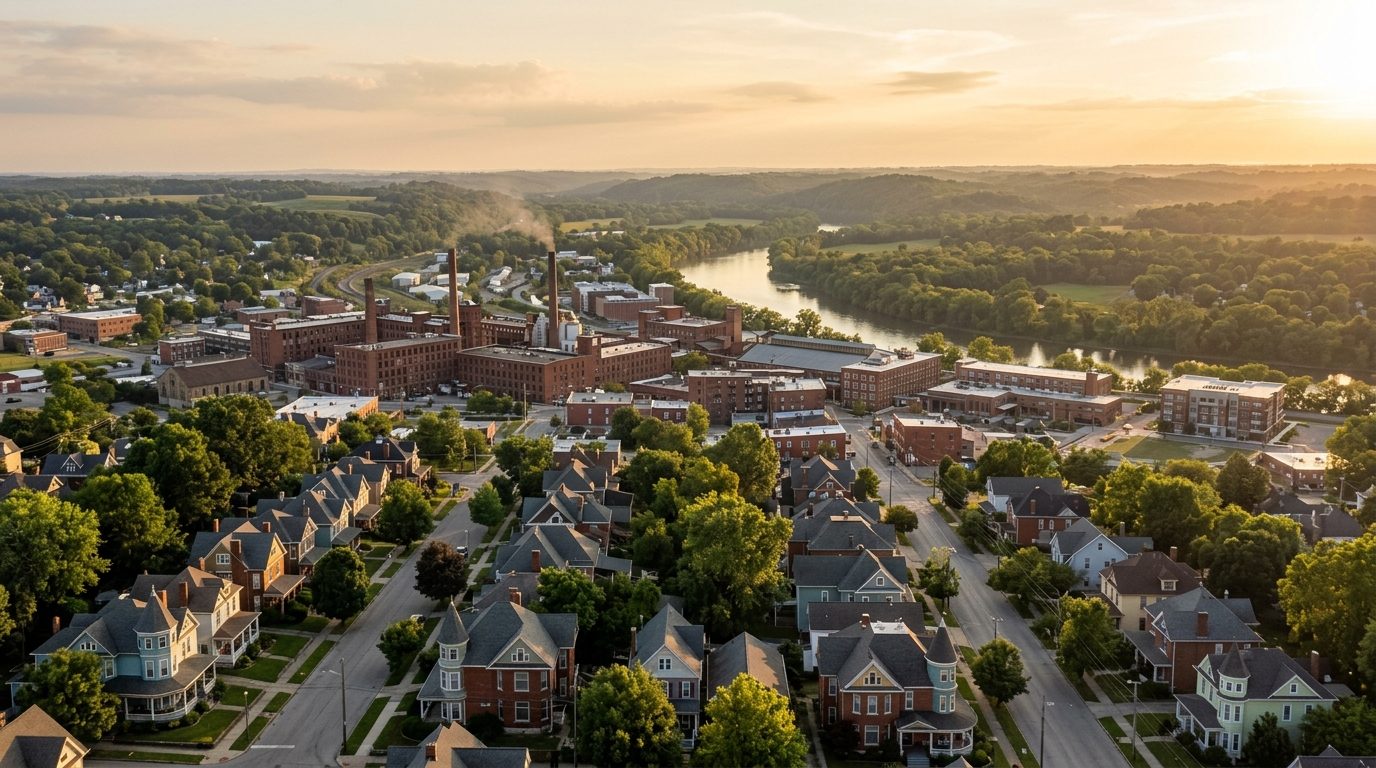
Springfield sits in western Ohio’s Clark County, in the valley cut by the Mad River, which forms the city’s western edge, and Buck Creek, which runs through downtown. The city grew up along the National Road, now US-40, and today Interstate 70 links Springfield to Dayton and Columbus; Interstate 675, the Dayton bypass serving Wright-Patterson Air Force Base, feeds into I-70 near the Clark County line. The terrain is gently rolling, transitional between the Miami Valley and the flatter plains toward central Ohio. Housing stock reflects a long industrial history: the core holds large Victorian-era, Queen Anne, Italianate, and Romanesque houses built by manufacturing families in the late 1800s and early 1900s, alongside blocks of smaller frame worker cottages and early-20th-century bungalows near the old factory corridors. Ranch and split-level houses from the postwar decades ring the city, and outlying towns, including Enon, New Carlisle, South Charleston, Catawba, Donnelsville, North Hampton, South Vienna, and Tremont City, mix farmhouses and rural acreage with newer subdivisions.
Within the city, the highest-value housing sits in the historic districts east and south of downtown, including East High Street and South Fountain Avenue, where large architect-designed mansions from Springfield’s industrial boom command a premium for scale, detailing, and mature tree canopy; Ridgewood, a west-side neighborhood of early-1900s houses, holds a similar reputation for well-kept, tree-lined blocks. Lagonda, one of the city’s oldest settled areas, retains historic housing but at a more modest tier than the grander mansion districts. Toward the county’s edges, in Enon, New Carlisle, and outlying townships, newer subdivisions trade architectural pedigree for updated systems, larger lots, and shorter drives toward Dayton. The lower end of the market concentrates in older, denser blocks close to downtown and the historic manufacturing corridors, where smaller lots and proximity to industrial land hold prices down relative to the historic districts and newer county subdivisions.
The local economy still carries the imprint of Springfield’s manufacturing past alongside newer service and logistics employment. Wittenberg University, a private liberal arts college founded in 1845, anchors a campus near downtown and is one of the area’s larger employers. Mercy Health’s Springfield Regional Medical Center is the county’s principal medical employer. The truck-manufacturing plant long associated with International Harvester and its successor Navistar/International Motors has operated in Springfield for more than a century, underscoring how much local employment still rides on that single industrial site. Speedway LLC, the convenience-store chain now owned by 7-Eleven, operates its store-support center in Enon, and public schools and county and city government round out the base of major employers.
Buyers evaluating this metro should factor in a few local realities. Springfield’s manufacturing history has left brownfield and formerly industrial parcels scattered near the older core, so a site history or environmental check is worth doing before purchasing land near legacy factory corridors. Property taxes are set locally through the Clark County Auditor based on voted levies that vary by taxing district, so it’s worth checking the specific rate for a given parcel. Public transit is limited to city bus service within Springfield itself; outlying towns and townships are car-dependent. Flood-prone ground exists along the Mad River and Buck Creek corridors, and much of the city’s housing predates 1978, meaning lead-based paint and aging wiring or plumbing are common inspection issues in the historic core.
Cities and Towns in the Springfield Metro Area
Notable Communities and Neighborhoods
Springfield Real Estate Market FAQ
How is the Springfield, Ohio metro area organized?
The metro centers on the city of Springfield, Clark County’s seat, which holds most of the area’s historic housing stock, downtown institutions, and employment. Surrounding it are smaller incorporated towns and villages, including Enon, New Carlisle, South Charleston, Catawba, Donnelsville, North Hampton, South Vienna, and Tremont City, along with unincorporated township land. Many of these outlying communities function as bedroom areas with a shorter commute toward Dayton and Wright-Patterson Air Force Base via I-70 and I-675 than toward Springfield’s own job centers, so commute patterns in the metro run in more than one direction.
Which parts of the Springfield area are more expensive, and why?
The city’s designated historic districts east and south of downtown, built during the late-1800s and early-1900s industrial boom, hold the largest and most architecturally distinctive houses and carry a corresponding premium. Established close-in neighborhoods with mature tree cover and well-kept early-1900s housing occupy a similar tier. Newer subdivisions in Enon, New Carlisle, and other outlying areas toward the Dayton side of the county also price higher, largely because the construction is newer and the commute to Wright-Patterson and Dayton-area jobs is shorter. Older, denser blocks near downtown and former industrial corridors tend to sit at the lower end of the local price range.
What should buyers verify before purchasing in this market?
Given the age of much of the housing stock, a full inspection covering wiring, plumbing, roofing, and foundation condition is worth prioritizing, along with a lead-paint disclosure review for houses built before 1978. Because Springfield has a long industrial history, it’s worth checking whether a property or nearby parcels have any recorded environmental or brownfield history, particularly near former factory sites. Buyers should also confirm the property’s taxing district and current levy rate with the Clark County Auditor, verify flood-zone status for anything near the Mad River or Buck Creek, and check whether a parcel sits inside city limits or an unincorporated township, since that affects zoning, permitting, and available services.
Is severe weather a meaningful risk factor in this area?
Yes. Clark County sits in a part of Ohio that sees periodic tornado activity. Buyers should ask about a property’s storm history, check whether it has a basement or safe room, and review homeowners insurance coverage for wind and storm damage as a standard part of due diligence in this market.
Nearby Markets