
Current real estate market data, news and analysis for the Lexington-Fayette, KY metropolitan area — 535,174 residents across 6 counties in Kentucky.
Data as of May 2026. Sources: Redfin Data Center, U.S. Census Bureau.
Latest Lexington Real Estate News
Lexington Real Estate Market Overview
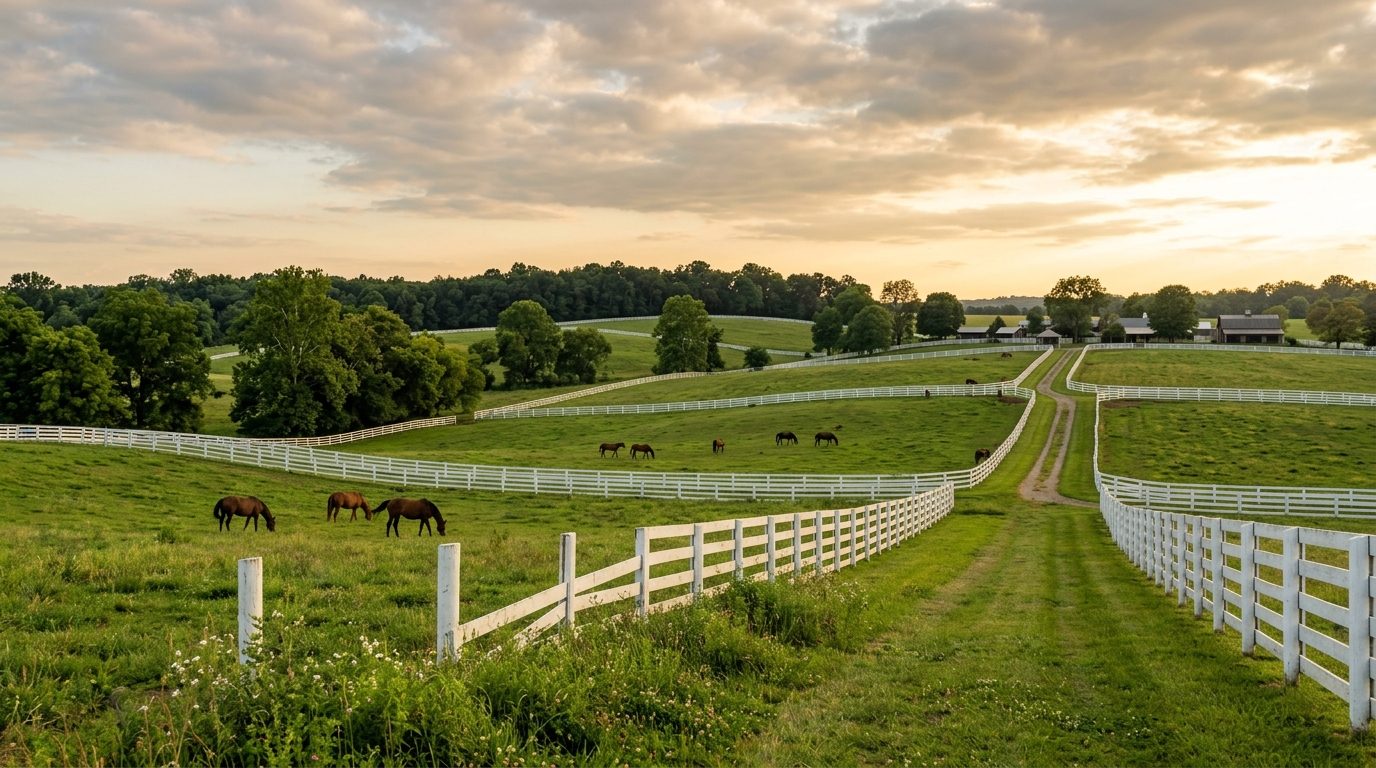
Lexington-Fayette sits at the center of Kentucky’s Bluegrass region, with the urban core of Fayette County ringed by five more rural counties, Bourbon, Clark, Jessamine, Scott, and Woodford, known for rolling pasture, limestone-fed creeks, and thoroughbred horse farms lined with plank fencing. Development inside Fayette County is contained by a long-standing urban growth boundary separating dense in-town living from surrounding farmland, so the housing stock shifts block by block: brick bungalows and early-20th-century Craftsman and Victorian homes near downtown and the University of Kentucky, mid-century ranch subdivisions built outward through the postwar decades, and newer traditional-style subdivisions filling the remaining land near the boundary’s edge. Outside that line, homes thin into large-acreage farms and estate properties.
Within the boundary, the closer-in neighborhoods built before and just after World War II, shaded by mature hardwoods and walkable to downtown and the university, carry a premium for their architecture, lot size, and short commute, even where the houses themselves are modest in square footage. Newer subdivisions toward the south and southeast, built from the 1980s onward with larger lots, community amenities, and newer schools, occupy the middle-to-upper tier. Areas nearer the older industrial corridors and commercial strips sit at the more affordable end. Outside Fayette County, the small cities of Nicholasville, Georgetown, and Winchester offer a lower-cost, longer-commute alternative, while acreage in horse-farm country around Versailles and Midway trades at a premium tied to the land itself rather than the house.
The area’s economy centers on the University of Kentucky and UK HealthCare, the region’s largest employer, alongside Fayette County Public Schools and Baptist Health in education and healthcare. Automotive manufacturing is anchored by Toyota Motor Manufacturing Kentucky’s assembly and engine plant in Georgetown, one of the company’s largest plants worldwide and a continuing source of expansion and supplier investment across Scott County. Logistics and distribution employ a substantial workforce as well, led by an Amazon fulfillment operation, and aerospace and defense manufacturer Lockheed Martin also maintains a Lexington presence. Beyond payroll employers, the surrounding Bluegrass counties host a concentration of thoroughbred breeding and training farms, and bourbon production has a growing footprint in the surrounding countryside, both tied closely to tourism.
Lexington’s urban growth boundary is the area’s defining land-use fact: it has held for decades, so land inside it is scarcer than the surrounding acreage, and any expansion of the boundary is a recurring local policy debate worth watching for its effect on future supply. The Bluegrass region’s limestone bedrock produces karst terrain, meaning sinkholes and drainage quirks turn up in some neighborhoods and rural parcels, so a soil and drainage check is worth the cost before buying. Winters bring occasional ice storms, and the region sees periodic flash flooding and tornado risk rather than hurricane or wildfire exposure. Kentucky assesses property through the county Property Valuation Administrator, and Fayette County’s effective tax rate runs above the national median, so buyers should confirm current assessments rather than rely on a prior owner’s tax bill. Outside Fayette County, well water and septic systems are common and should be inspected individually, and school district lines can change meaningfully from one side of a county line to the other.
Cities and Towns in the Lexington Metro Area
Notable Communities and Neighborhoods
Lexington Real Estate Market FAQ
How is the Lexington-Fayette metro organized geographically?
Fayette County forms the dense urban core, contained by a decades-old urban growth boundary that separates in-town neighborhoods from the surrounding countryside. Five more rural counties, Bourbon, Clark, Jessamine, Scott, and Woodford, ring that core with small cities like Georgetown, Nicholasville, Winchester, Paris, and Versailles, and with open horse-farm and agricultural land in between.
Which parts of the metro tend to be pricier, and why?
Established close-in neighborhoods near downtown and the University of Kentucky command a premium for mature trees, walkability, and short commutes, even when the homes themselves are older and modest in size. Newer subdivisions built from the 1980s onward toward the south and southeast add a premium for larger lots and newer schools. In the surrounding counties, horse-farm and estate acreage around Versailles and Midway is priced on land and frontage rather than square footage, while the smaller outlying cities generally cost less but require a longer commute.
What should buyers verify locally before making an offer?
Confirm which county and school district a property falls in, since lines can split neighborhoods that otherwise look similar. Outside Fayette County, ask whether the home is on public water and sewer or on a private well and septic system, and have the septic inspected separately. In newer subdivisions, review the homeowners association’s rules and dues. Because the region sits in a growth-boundary-constrained market, it’s also worth checking whether a property is inside or outside the current urban service line, since that affects future development and utility access.
What is the main region-specific risk to know about?
The Bluegrass region’s limestone bedrock produces karst terrain, which can mean sinkholes or unusual drainage patterns on individual lots; a soil and drainage review is worth doing before buying, especially on larger or older rural parcels. Standard homeowners insurance often excludes sinkhole-related damage, so buyers in known karst areas should ask their insurer directly. The area is not exposed to hurricane or wildfire risk, but does see periodic flash flooding, ice storms, and tornado activity.
Nearby Markets