
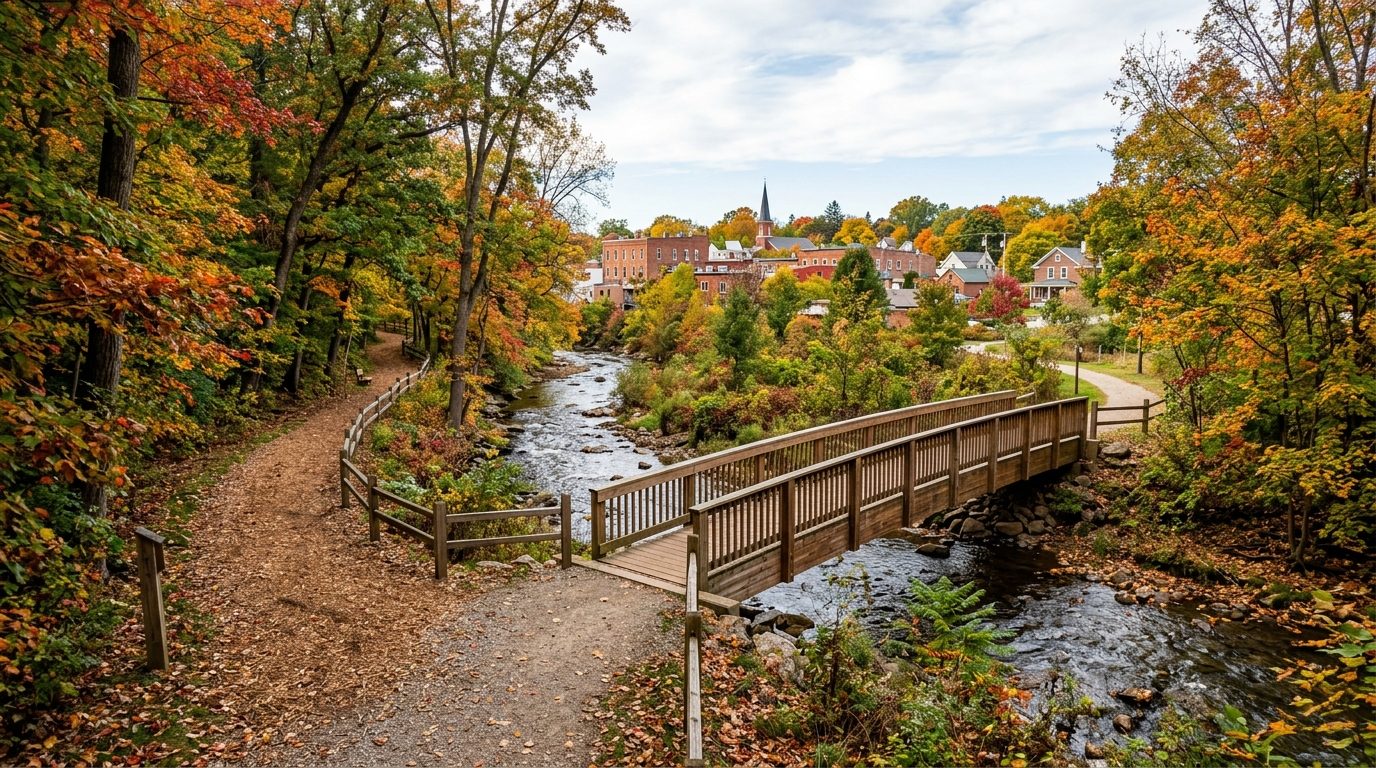
Current real estate market data, news and analysis for the Kokomo, IN metropolitan area — 83,904 residents across Howard county.
Data as of May 2026. Sources: Redfin Data Center, U.S. Census Bureau.
Latest Kokomo Real Estate News
Coverage of this market is coming soon. Browse all housing market news.
Kokomo Real Estate Market Overview
Kokomo sits in flat central Indiana farmland on Wildcat Creek, about sixty miles north of Indianapolis, with Howard County otherwise given over mostly to agriculture outside the city itself. Housing stock follows a familiar industrial-Midwest pattern: turn-of-the-century homes fill the grid neighborhoods near downtown, large belts of mid-century ranch houses were built through the 1950s and 60s for the area’s auto-plant workforce, and newer suburban-style subdivisions have filled in the city’s south and west edges more recently. Greentown and Russiaville, the county’s two other towns, keep a traditional small-town Indiana character, with older town-core homes surrounded by farmland and newer rural-residential lots.
South Kokomo, with its larger lots and newer construction near the golf course, and select acreage and estate properties on the city’s fringe and in the surrounding county tend to sit at the higher end of the local market. Older core neighborhoods near downtown carry real architectural character but mixed values tied to age and lot size, while mid-century subdivisions built for the auto industry’s workforce remain solidly affordable, middle-market housing valued for their proximity to schools and shopping. The smallest unincorporated communities and farmland-adjacent lots tend to be the most affordable overall, trading commute time and amenity access for land.
Manufacturing, and automotive manufacturing in particular, dominates the local economy. Stellantis operates several plants in the area producing transmissions and castings, and a joint venture with a battery manufacturer is building new production capacity in Kokomo tied to electric-vehicle components, a significant recent driver of local employment and inbound workers. Haynes International, a specialty alloy maker founded in Kokomo more than a century ago, remains headquartered there, serving aerospace, energy, and chemical customers. The area’s economic history includes real volatility tied to the auto industry’s cycles, including past layoffs connected to strikes and tariffs.
Wildcat Creek has produced significant flooding historically, and the city has since carried out flood-mitigation work and updated its floodplain regulations, so buyers near the creek should check current FEMA flood maps before purchasing. The area has also seen damaging tornadoes on more than one occasion, which is worth keeping in mind when evaluating a home’s construction and any available storm shelter. Effective property tax rates in Howard County run somewhat below the Indiana state median, though rates vary by school district and specific location. Local transit is limited to a small free municipal bus system, and given the area’s recent wave of large manufacturing investment, buyers should factor in that housing demand here can move with a small number of major employers’ hiring cycles.
Cities and Towns in the Kokomo Metro Area
Notable Communities and Neighborhoods
Kokomo Real Estate Market FAQ
How is the Kokomo-area housing market organized?
Kokomo itself is the core of the metro, with newer south-side subdivisions at the higher end and older mid-century neighborhoods forming the bulk of the middle market. Greentown and Russiaville, along with the surrounding unincorporated county, offer smaller, more rural, and generally more affordable options.
Which parts of the metro tend to be pricier?
South Kokomo’s newer subdivisions and select acreage or estate properties on the city’s fringe tend to command the highest prices. Mid-century subdivisions built for the area’s manufacturing workforce remain solid, affordable middle-market housing.
What should buyers verify before purchasing here?
Buyers near Wildcat Creek should check current FEMA flood maps given the area’s history of significant flooding, and it’s worth asking about storm shelters or safe rooms given the region’s tornado history. Anyone considering a home tied closely to a specific employer’s hiring cycle should also weigh how sensitive local demand can be to manufacturing investment.
What is the biggest region-specific risk for homeowners here?
Flooding along Wildcat Creek and periodic severe tornadoes are the area’s most significant physical risks, both with a documented local history. The local economy’s heavy concentration in automotive manufacturing also means housing demand can be more cyclical here than in a more diversified metro.
Nearby Markets