
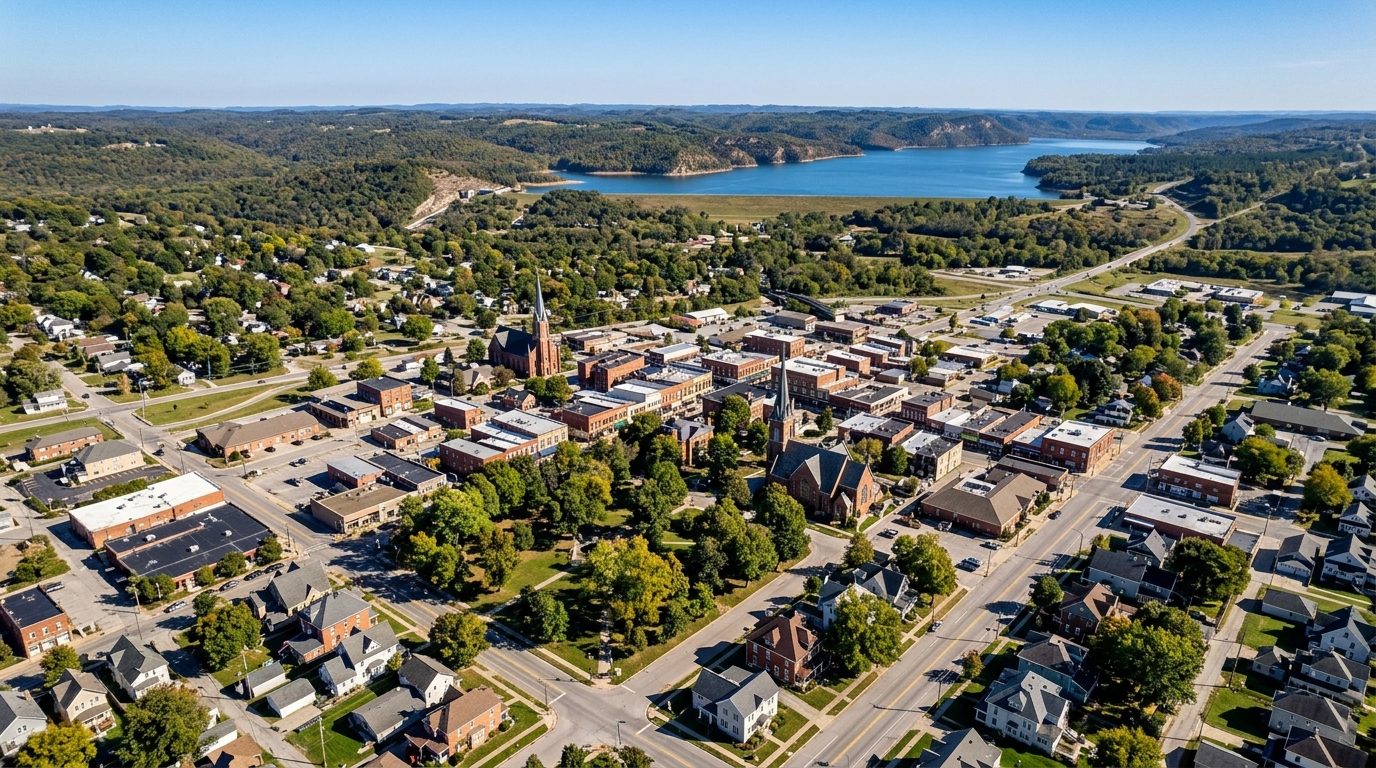
Current real estate market data, news and analysis for the Hickory-Lenoir-Morganton, NC metropolitan area — 376,890 residents across Alexander, Burke, Caldwell and Catawba counties.
Data as of May 2026. Sources: Redfin Data Center, U.S. Census Bureau.
Latest Hickory Real Estate News
Coverage of this market is coming soon. Browse all housing market news.
Hickory Real Estate Market Overview
The Hickory metro sits in the western Piedmont of North Carolina, where the land begins rising into the foothills of the Blue Ridge Mountains. It covers Alexander, Burke, Caldwell, and Catawba counties, anchored by Hickory itself, with the county-seat towns of Newton, Morganton, Lenoir, and Taylorsville around it, plus smaller communities such as Conover, Granite Falls, Valdese, and Maiden. The Catawba River and its reservoirs, including Lake Hickory, Lake Rhodhiss, Lake James, and part of Lake Norman, thread through the region and shape much of its residential pattern. Housing stock is varied: mill-village houses and brick bungalows from the textile and furniture boom, mid-century ranch subdivisions, newer suburban construction near Hickory and Conover, and lake-oriented homes along the shorelines. Alexander County and outlying Caldwell and Burke counties remain more rural, with farmland, larger parcels, and manufactured housing.
Waterfront and golf-course settings tend to draw the strongest demand, including shoreline homes along Lake Hickory, Lake Rhodhiss, Lake James, and the Sherrills Ford stretch of Lake Norman, plus club communities such as Rock Barn near Conover. Restored homes in the historic in-town districts of Hickory, Morganton, and Newton also carry a premium tied to character and downtown proximity. Farther from the lakes and historic cores, in former mill villages, rural Alexander County, and parts of Caldwell County still working through decades of furniture-industry contraction, homes tend to be more modestly priced. Catawba County generally carries a stronger economic base than its western neighbors, owing to manufacturing and technology diversification, and that difference shows up in relative demand across the four counties.
The metro’s economy grew up around furniture and textile manufacturing, and that legacy still shapes the region: Hickory has long promoted itself as a furniture-making center, and manufacturers such as Bernhardt Furniture in Lenoir and Hickory Chair in Hickory still build furniture locally. Manufacturing later broadened into fiber optics, with CommScope and Corning running major operations centered on Hickory, and into automotive electronics, with Continental operating plants in Morganton. Technology investment has reshaped the smaller counties: Apple runs a data center campus in Maiden, in Catawba County, and Google has operated one in Lenoir since the mid-2000s that has become one of the area’s most significant employers. Other notable employers include Packaging Corporation of America in Morganton, grocery distributor Alex Lee, headquartered in Hickory, Catawba Valley Medical Center, Frye Regional Medical Center, Lenoir-Rhyne University, and Catawba Valley Community College.
Flooding is the region’s most tangible physical risk. The Catawba River and its mountain tributaries have produced serious flood events, most recently when a major hurricane’s remnants moved through in 2024, pushing rivers and creeks past prior records and damaging homes and businesses around Morganton. Buyers should check flood maps and drainage history before purchasing, particularly near the river, its lake shorelines, and foothill creeks, and confirm whether a property has municipal water and sewer or relies on well and septic, common outside the incorporated towns. Property tax rates and fire-district levies vary by county and municipality. Public transit is limited to small local bus systems, so daily life is largely car-dependent. Lakefront and golf-community parcels often carry homeowners’ association rules and, near the reservoirs, watershed ordinances limiting shoreline alteration. Buyers of older properties near former mill sites may also want to ask about prior industrial use.
Cities and Towns in the Hickory Metro Area
Notable Communities and Neighborhoods
Hickory Real Estate Market FAQ
How is the Hickory metro organized geographically?
The metro spans four counties in the North Carolina foothills: Catawba, Burke, Caldwell, and Alexander. Hickory, in Catawba County, is the largest city and functions as the region’s commercial hub, while Newton, Morganton, Lenoir, and Taylorsville serve as the county seats for their respective counties. The Catawba River and a chain of reservoirs it feeds, including Lake Hickory, Lake Rhodhiss, and Lake James, run through the middle of the metro and connect many of its towns, while Alexander County to the east is more rural and agricultural.
Which areas tend to be pricier and why?
Homes along the region’s lakes and golf-course communities generally command the most interest, valued for water access, views, and recreational amenities. Restored properties in the historic in-town districts of Hickory, Morganton, and Newton also carry a premium, reflecting their older architecture and walkable proximity to downtown centers. Areas farther from the lakes and historic cores, including older mill villages and more rural stretches of the outer counties, tend to be more affordably priced.
What should buyers verify locally before purchasing?
Buyers should confirm whether a specific property is served by municipal water and sewer or depends on a private well and septic system, since this varies block by block outside incorporated towns. It is also worth checking flood-zone status for anything near the Catawba River, its lake shorelines, or foothill creeks, along with the applicable property tax rate, fire-district levy, and school district, since these can differ significantly between adjoining municipalities and counties. Any homeowners’ association rules attached to lake or golf-community lots should be reviewed as well.
What is the main regional risk buyers should understand?
The most concrete physical risk is river and stream flooding. The Catawba River and the smaller creeks that feed it in this foothill terrain can rise quickly during heavy rain, and the region experienced significant flood damage in 2024 when a hurricane’s remnants moved through the mountains and foothills. Properties near the river, its reservoirs, or low-lying creek corridors warrant a careful look at flood history and elevation before purchase.
Nearby Markets