
Current real estate market data, news and analysis for the Greenville-Anderson-Greer, SC metropolitan area — 1.0M residents across Anderson, Greenville, Laurens and Pickens counties.
Data as of May 2026. Sources: Redfin Data Center, U.S. Census Bureau.
Latest Greenville Real Estate News
Greenville Real Estate Market Overview
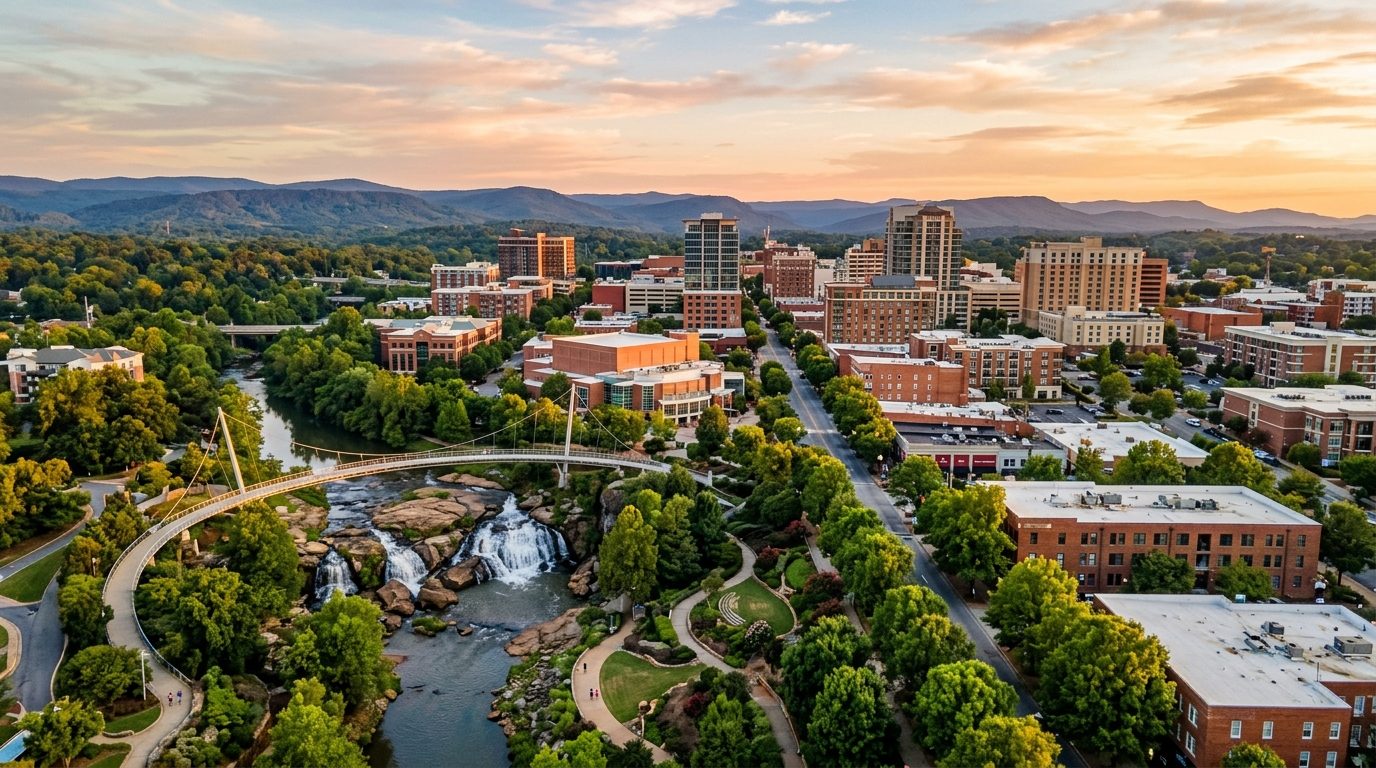
The Greenville metro sits in South Carolina’s Piedmont, rising from gentle rolling hills in the south toward the Blue Ridge foothills along its northern edge near the North Carolina line. The climate is humid subtropical with clear seasons, hot summers, and mild winters, and the metro lies well inland, outside the hurricane-landfall zone that affects the state’s coast. Downtown Greenville’s Main Street and Reedy River corridor form a walkable, revitalized urban core, ringed by a dense band of established suburbs and a much more rural fringe across the metro’s outer counties. Housing stock reflects the region’s textile-mill history: small early-20th-century mill-village houses, many now renovated, sit alongside in-town historic neighborhoods, mid-century suburban ranches, and large volumes of new-construction subdivisions on the metro’s rapidly expanding edges.
The strongest demand generally clusters north and northeast of downtown Greenville, in newer-construction suburbs with top-rated schools, and around the mountain and lake communities toward the metro’s northern edge, where waterfront and view lots carry a clear premium. In-town historic districts near downtown also command a premium tied to walkability and architectural character. More affordable options tend to be found southwest of downtown, in older mill-village neighborhoods still in the process of reinvestment, and more broadly across the metro’s outer counties, which carry a stronger manufacturing and agricultural base, lower land costs, and greater distance from the interstate corridor’s job centers.
Manufacturing is central to the regional economy: a major tire manufacturer is headquartered in Greenville, and Clemson University operates a well-known automotive research center in the city in addition to its main campus in the metro’s western county. A large regional health system operates multiple hospitals across the Upstate, and the metro’s position along the interstate corridor toward the Spartanburg-area automotive plants has drawn a broader base of manufacturing and logistics employers to the area.
Because the metro is inland, its primary severe-weather exposure is spring thunderstorms, tornadoes, and hail rather than direct hurricane landfall, and buyers should check whether a wind or hail deductible applies separately from standard coverage. South Carolina taxes an owner-occupied primary residence at a lower assessment ratio than a second home or rental, so buyers should confirm a property’s current tax classification and file for the owner-occupied exemption after closing. Public transit is limited to a city bus network, and the region leans on an expanding trail system rather than rail for alternative transportation; the metro overall is car-dependent. This is among the faster-growing metros in the Southeast, and new subdivisions continue to spread across former farmland at the edges of Greenville County, so buyers in newer developments should check school capacity and the status of any pending nearby rezoning. Lake-community buyers should also ask about shoreline-management rules tied to the utility that manages the reservoir.
Cities and Towns in the Greenville Metro Area
Notable Communities and Neighborhoods
Greenville Real Estate Market FAQ
How is the Greenville metro housing market organized?
The market centers on a walkable, revitalized downtown along the Reedy River, ringed by established suburbs and a more rural fringe across the metro’s outer counties. Housing ranges from renovated early-20th-century mill-village homes to large volumes of new-construction subdivisions at the metro’s expanding edges.
Which parts of the Greenville area tend to be more expensive?
Newer-construction suburbs north and northeast of downtown with top-rated schools, plus mountain and lake communities toward the metro’s northern edge, sit at the top of the market. Older mill-village neighborhoods southwest of downtown and the metro’s outer counties tend to be more affordable.
What should buyers verify before purchasing in the Greenville metro?
Confirm a property’s tax classification, since South Carolina assesses owner-occupied primary residences differently than second homes or rentals, and file for the owner-occupied exemption after closing. In newer developments, check school capacity and any pending nearby rezoning, and ask about shoreline-management rules for any lake-community property.
What severe-weather risks should Greenville-area buyers plan for?
Because the metro is inland, its main exposure is to spring thunderstorms, tornadoes, and hail rather than direct hurricane landfall. It’s worth checking whether a homeowners policy applies a separate wind or hail deductible.
Nearby Markets