
Current real estate market data, news and analysis for the Hammond, LA metropolitan area — 141,346 residents across Tangipahoa Parish county.
Data as of May 2026. Sources: Redfin Data Center, U.S. Census Bureau.
Latest Hammond Real Estate News
Coverage of this market is coming soon. Browse all housing market news.
Hammond Real Estate Market Overview
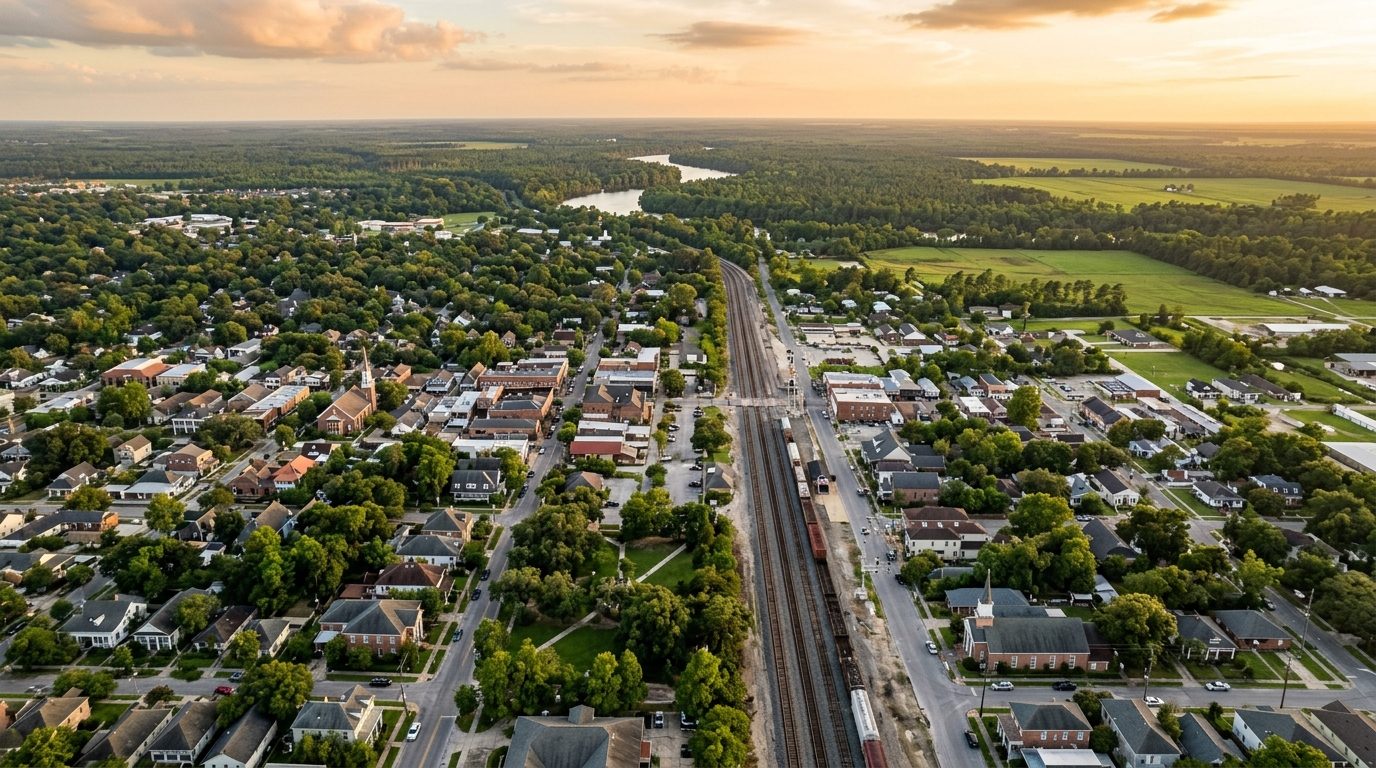
The Hammond metro sits in Tangipahoa Parish, in the Florida Parishes region of southeast Louisiana, occupying the corridor between Baton Rouge and New Orleans where Interstate 12 crosses Interstate 55. The parish stretches from the Mississippi state line south to Lake Pontchartrain, and its terrain shifts from flat, low-lying coastal plain near the lake to gently rolling, pine-covered hills toward the north around Kentwood and Amite City. The Tangipahoa and Tickfaw Rivers run roughly parallel through the parish toward the lake, shaping drainage and where development has occurred. Housing reflects this layered history: early twentieth-century homes cluster around the old rail-town cores of Hammond and Ponchatoula, mid-century ranch and brick homes fill established grids around them, and newer subdivisions and manufactured-home communities extend along the highway corridors into the parish’s rural parts.
Within Hammond, the downtown core and adjacent older neighborhoods carry a premium tied to walkability, mature tree canopy, and proximity to Southeastern Louisiana University and the restored railroad district, while newer subdivisions on the city’s eastern and southern edges draw buyers wanting larger, newer homes on more standardized lots. Ponchatoula’s downtown, known for its antique trade and strawberry-growing heritage, commands similar interest for its walkable historic character, though surrounding low-lying farmland keeps its edges less developed. Smaller towns such as Independence, Amite City, Kentwood, Roseland, Tangipahoa, and Tickfaw offer more affordable, rural-feeling housing on larger lots, reflecting distance from the I-12 corridor. Elevation and drainage also factor into value, since parcels near the rivers face more scrutiny over water management than higher ground away from the floodplain.
The area’s economy blends institutional, healthcare, logistics, and manufacturing employment with an agricultural base that predates all of it. Southeastern Louisiana University, based in downtown Hammond, is one of the parish’s largest employers and anchors a steady population of students, faculty, and staff. North Oaks Health System, headquartered in Hammond, operates the region’s principal acute-care hospital and draws patients and staff from beyond the parish line. Manufacturing and distribution have grown alongside interstate access: Intralox, a division of the New Orleans-based Laitram Corporation, runs a modular conveyor-belt plant in Hammond, while Medline Industries, Wayfair, and Graham Packaging operate distribution facilities on I-12 and I-55. Kentwood Spring Water has bottled water in Kentwood for decades. Agriculture, particularly the strawberry farms around Ponchatoula along with dairy and timber operations, still shapes the rural economy and the region’s seasonal festivals.
Buyers should weigh a handful of factors specific to this part of Louisiana. Flood risk varies block by block given the parish’s rivers and low gradient toward Lake Pontchartrain, so checking a parcel’s FEMA flood zone designation and elevation certificate, rather than assuming based on the neighborhood, is essential; the parish has worked with FEMA on map revisions that shifted zone boundaries in recent years. Hurricane exposure and the cost of homeowners and flood insurance are ongoing considerations, and buyers should get insurance quotes before finalizing a purchase. Louisiana’s parish-based property tax and homestead exemption system differs from many other states, and some outlying properties rely on private wells and septic systems rather than parish service, worth confirming during due diligence. Zoning is relatively permissive outside the incorporated towns, allowing agricultural, residential, and light industrial uses to sit close together, so verifying adjacent land use and permits is a standard step before buying.
Cities and Towns in the Hammond Metro Area
Notable Communities and Neighborhoods
Hammond Real Estate Market FAQ
How is the Hammond, LA metro area organized?
The metro corresponds to Tangipahoa Parish and is anchored by Hammond, the largest city, where Interstate 12 and Interstate 55 cross. Ponchatoula sits just southwest of Hammond along I-55 and is known for its historic downtown, while smaller towns including Independence, Amite City, Kentwood, Roseland, Tangipahoa, and Tickfaw are spread along Highway 51 and the parish’s rail corridor to the north. Most commuting flows toward Hammond for jobs, healthcare, and university activity, with I-12 also carrying commuters west toward Baton Rouge and east toward the north shore of Lake Pontchartrain and New Orleans.
Which parts of the Hammond metro tend to be pricier, and why?
Homes in Hammond’s downtown historic core and the neighborhoods bordering Southeastern Louisiana University tend to draw a premium for their walkability, mature landscaping, and proximity to campus and downtown amenities. Ponchatoula’s historic commercial district carries similar appeal tied to its antique shops and small-town character. Newer subdivisions on Hammond’s eastern and southern edges, including gated communities with larger, newer-built homes, also sit at the higher end of the local market. Smaller, more rural towns farther from the I-12 corridor generally offer larger lots at lower cost, reflecting their distance from major employers and retail.
What should buyers verify before purchasing a home in this area?
Because the parish includes both incorporated cities and large unincorporated areas, buyers should confirm whether a property is served by municipal water and sewer or relies on a private well and septic system, and should check with the relevant town or parish government on permitting history for any additions or renovations. Given the parish’s rivers and low-lying terrain, pulling the current FEMA flood zone designation and elevation certificate for the specific parcel, rather than relying on the neighborhood’s general reputation, is an important step. Buyers considering a home in a gated or deed-restricted subdivision should also review any homeowners association covenants and fees before closing.
What is the biggest region-specific risk to know about in the Hammond metro?
Flooding and hurricane exposure are the primary risks, given the parish’s position between the Tangipahoa and Tickfaw Rivers and its proximity to Lake Pontchartrain and the Gulf coast. Flood zone boundaries have been revised in recent years as FEMA and local officials update mapping, so a property’s flood status can change over time even if the physical risk hasn’t. Homeowners and flood insurance costs and availability vary significantly by elevation and flood zone, making it worthwhile to obtain insurance quotes for a specific address early in the buying process rather than assuming coverage will be routine or inexpensive.
Nearby Markets