
Current real estate market data, news and analysis for the Grand Forks, ND-MN metropolitan area — 105,046 residents across Grand Forks, ND and Polk, MN counties.
Sources: U.S. Census Bureau.
Latest Grand Forks Real Estate News
Coverage of this market is coming soon. Browse all housing market news.
Grand Forks Real Estate Market Overview
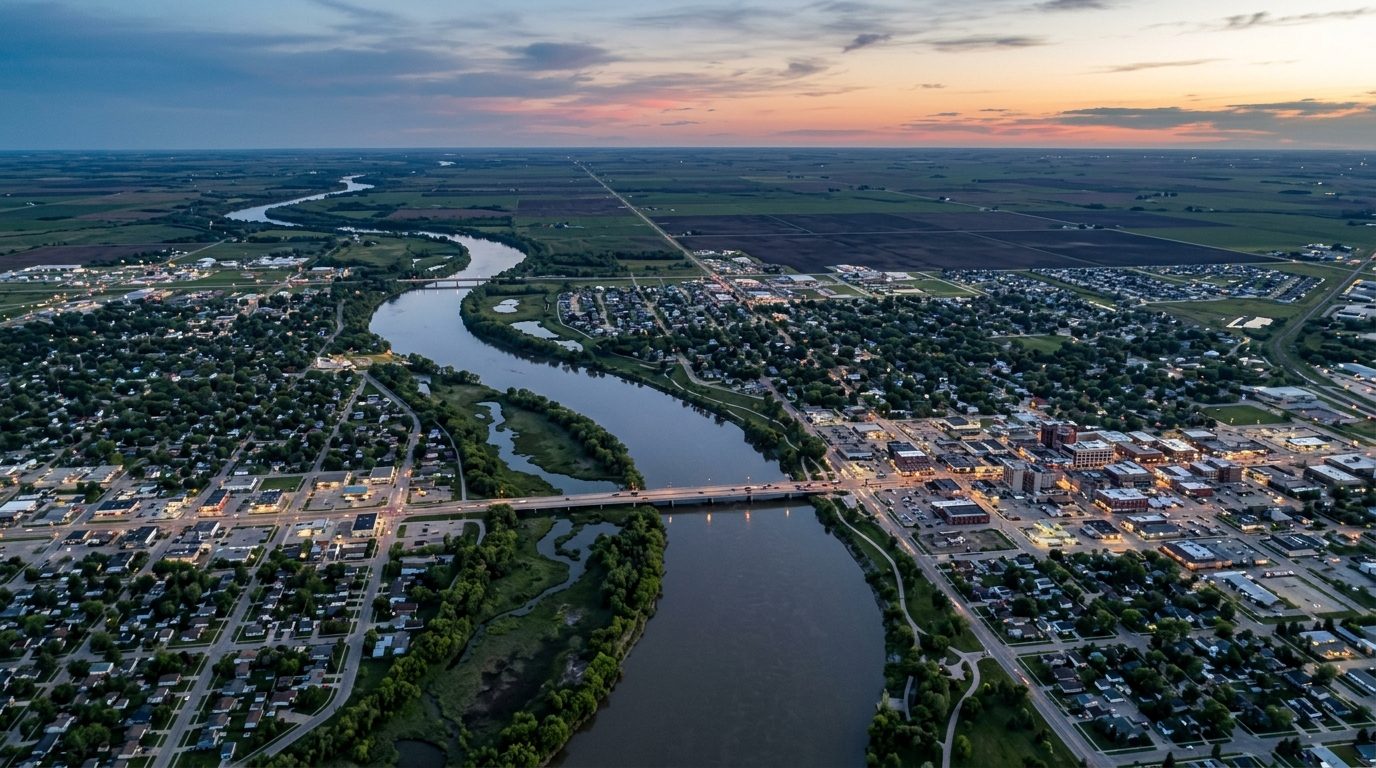
Grand Forks, North Dakota, and East Grand Forks, Minnesota, form a twin-city metro divided by the Red River of the North, which flows north toward Canada and forms the state line. Grand Forks sits on the western bank; East Grand Forks sits on the eastern bank; the Red Lake River joins the Red River near downtown. The metro lies in the Red River Valley, an unusually flat former glacial lakebed with almost no elevation change, so drainage and flood control shape development on both sides of the river. Housing stock reflects this layered history: the oldest homes cluster near downtown and the University of North Dakota campus along the river corridor, while newer subdivisions with contemporary floor plans have spread toward the southern and western edges of both cities, away from the river channel and closer to open farmland.
Within Grand Forks, the south end and newer western subdivisions tend to sit at the higher end of the local market, largely because homes there were built more recently, sit on larger lots, and cluster near newer schools, retail corridors, and recreation amenities such as the King’s Walk golf community. The near-southside and downtown-adjacent neighborhoods, along with blocks close to the UND campus, skew older and carry a mix of historic single-family homes and rental housing serving students and university staff, which tends to place them in a lower price tier despite their walkable, established character. In East Grand Forks, the pattern mirrors Grand Forks: housing closer to the river core is older, while newer construction toward the edge of town commands a premium tied to age and lot size rather than location on either side of the state line.
The local economy centers on education, health care, and the military, supplemented by agribusiness and manufacturing. The University of North Dakota, based in Grand Forks, is the metro’s largest employer and anchors programs in aerospace and aviation, medicine, and engineering. Grand Forks Air Force Base, northwest of the city, hosts a wing built around remotely piloted aircraft and has drawn a cluster of unmanned-aircraft-systems companies to the area. Altru Health System operates the region’s primary hospital and clinic network. Agribusiness remains significant, led by American Crystal Sugar’s sugar-beet processing in East Grand Forks and grain-handling plants around Grand Forks, alongside manufacturers such as Cirrus Aircraft and Alerus Financial, which is headquartered in Grand Forks.
Flooding is the defining local risk: the Red River has flooded the valley repeatedly, most severely in the late nineteen-nineties, and the metro responded by building an extensive system of levees, floodwalls, pump stations, and a diversion channel that now rings both cities. Buyers should confirm a property’s location relative to the levee system, its flood-zone designation, and whether flood insurance is required, since protection levels and drainage infrastructure vary by neighborhood. Property taxes are set locally by the city and county assessor’s offices and are worth confirming directly, as are zoning designations, since agricultural land still borders much of the metro and annexation continues to convert farmland into new subdivisions on the edges of both cities. The climate is a cold, snowy continental one with a pronounced spring melt season, which is itself tied to flood timing and worth factoring into any assessment of drainage and site grading.
Cities and Towns in the Grand Forks Metro Area
Notable Communities and Neighborhoods
Grand Forks Real Estate Market FAQ
How is the Grand Forks metro area organized geographically?
The metro is really two cities facing each other across the Red River of the North: Grand Forks on the North Dakota side and East Grand Forks on the Minnesota side, connected by bridges over the river. Surrounding the twin cities is flat, largely agricultural land in Grand Forks County and Polk County, with smaller towns spread along highways and rail lines radiating outward. A greenway of parks and trails runs along both riverbanks through the urban core, separating older riverside neighborhoods from the water.
Which parts of the metro tend to be pricier, and why?
Newer subdivisions on the south and west edges of Grand Forks, and similarly newer construction on the outer edge of East Grand Forks, tend to command higher prices because the homes are more recently built, sit on larger lots, and are closer to newer schools and retail. Older housing near downtown, along the river, and around the University of North Dakota campus tends to be less expensive, reflecting its age and a higher share of rental and student housing.
What should a buyer verify locally before purchasing in this metro?
Buyers should confirm a property’s flood-zone designation and its relationship to the levee and floodwall system, since protection levels differ by neighborhood and side of the river. It is also worth checking current zoning, whether the parcel was ever affected by post-flood buyouts or remains platted for agricultural use, which school district and city or township jurisdiction applies, and current property tax figures directly with the city or county assessor rather than relying on listing estimates.
Is flooding a real concern for property in the Grand Forks metro?
Yes. The Red River of the North has a long history of spring flooding driven by snowmelt and ice jams, and the most severe flood in recent memory inundated large parts of both Grand Forks and East Grand Forks. In response, the cities and the Army Corps of Engineers built an extensive levee, floodwall, pump station, and diversion channel system that now protects the urban core. Buyers should still confirm flood insurance requirements and the specific protection level for any given property rather than assuming uniform protection across the metro.
Nearby Markets